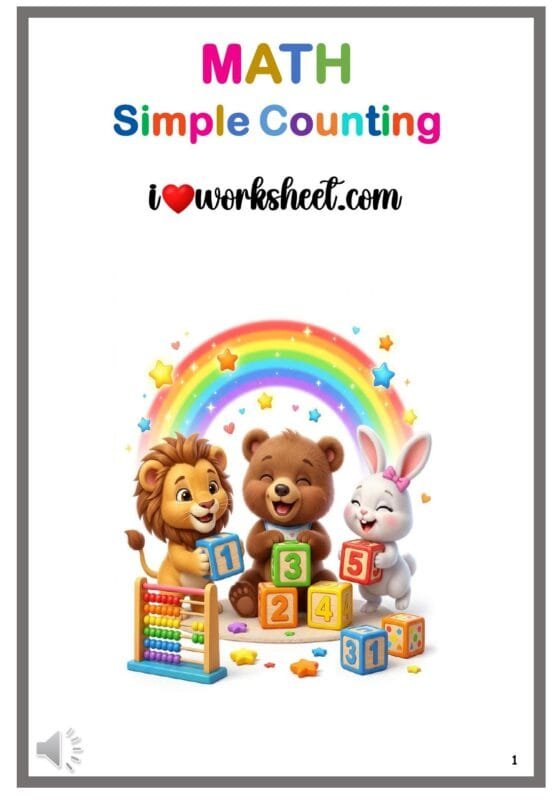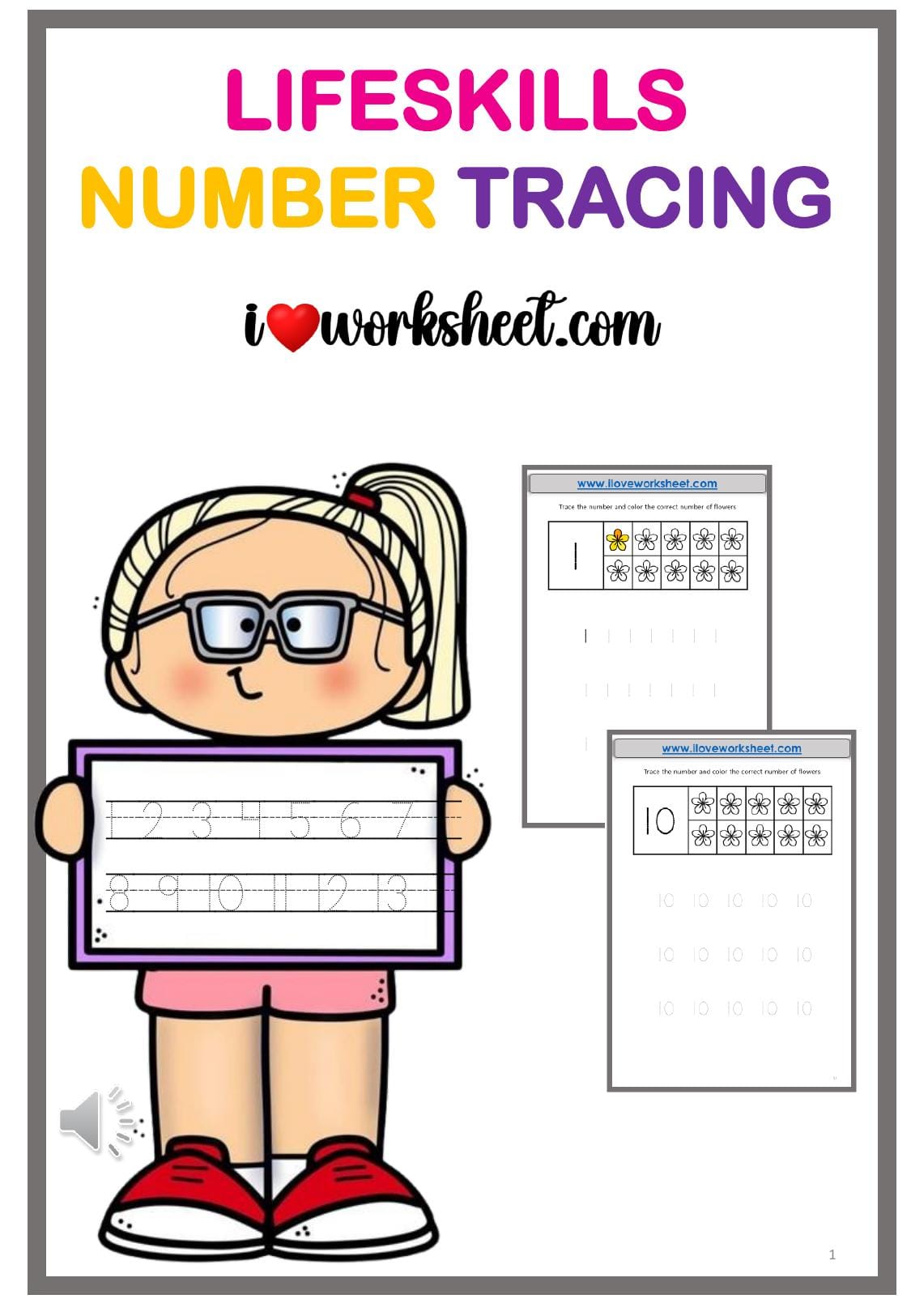
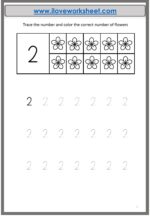
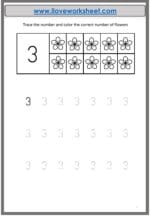
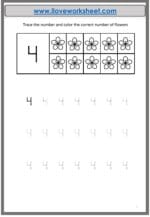
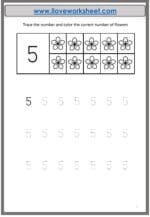

Number tracing is one of the most effective early‑learning activities for building strong numeracy foundations. Children learn best through repetition, visual cues, and hands‑on practice, and number tracing worksheets combine all three. The Number Tracing worksheet introduces numbers from 1 to 10 through tracing lines, individual number models, and counting tasks involving flowers. Each page encourages children to trace a number and then “colour the correct number of flowers.” This simple structure supports number recognition, counting accuracy, and fine motor development.
The worksheet begins with a colourful display of numbers from 1 to 10, followed by dedicated pages for each number. Children trace large numbers, smaller versions, and then count flowers to match the number they are learning. This approach helps children connect written symbols with real quantities.
Number tracing plays a key role in early math development. It supports several essential skills:
Tracing numbers strengthens the small muscles in the hands and fingers. These muscles are needed for writing, drawing, and everyday tasks like buttoning clothes or using utensils.
Seeing and tracing numbers repeatedly helps children memorise number shapes. Recognising numbers quickly is a major milestone in early numeracy.
The worksheet reinforces counting by asking children to colour a matching number of flowers. This helps children understand that numbers represent actual quantities.
Following tracing lines improves visual tracking and pencil control, both important for writing readiness.
Completing each number page gives children a sense of accomplishment, motivating them to continue learning.
Each page focuses on a single number, offering tracing practice and a counting activity.
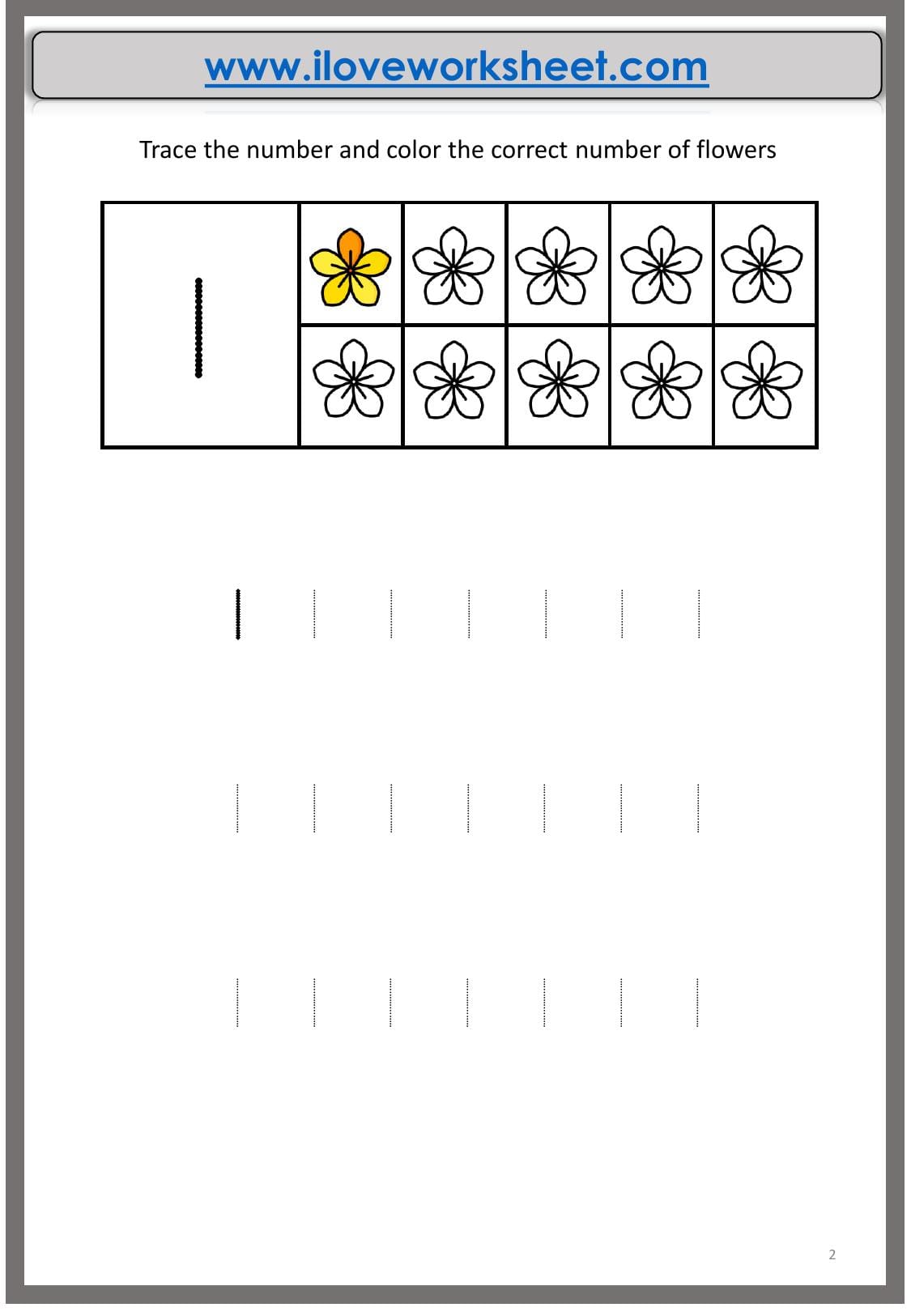
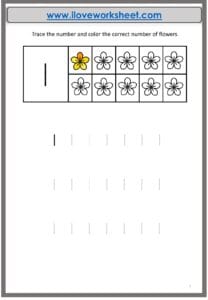
The page includes a large number 1 and several smaller versions for tracing. Children then colour one flower. This reinforces the straight‑line formation of the number.
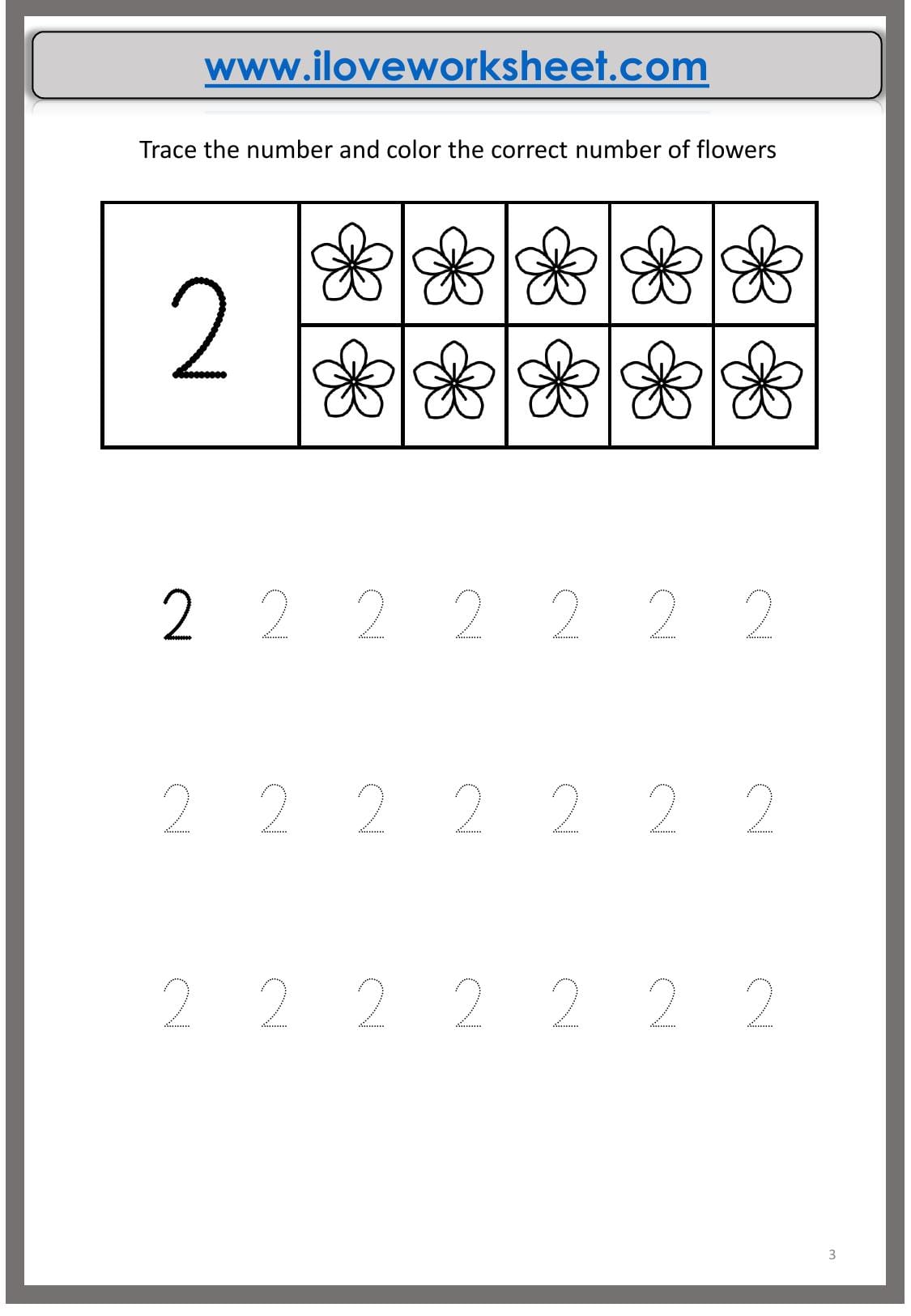
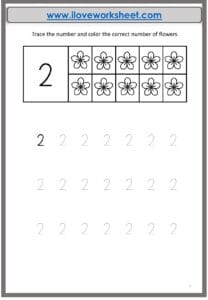
The number 2 page includes multiple tracing lines that help children practice the curved top and diagonal stroke. After tracing, they colour two flowers to reinforce the concept of quantity.
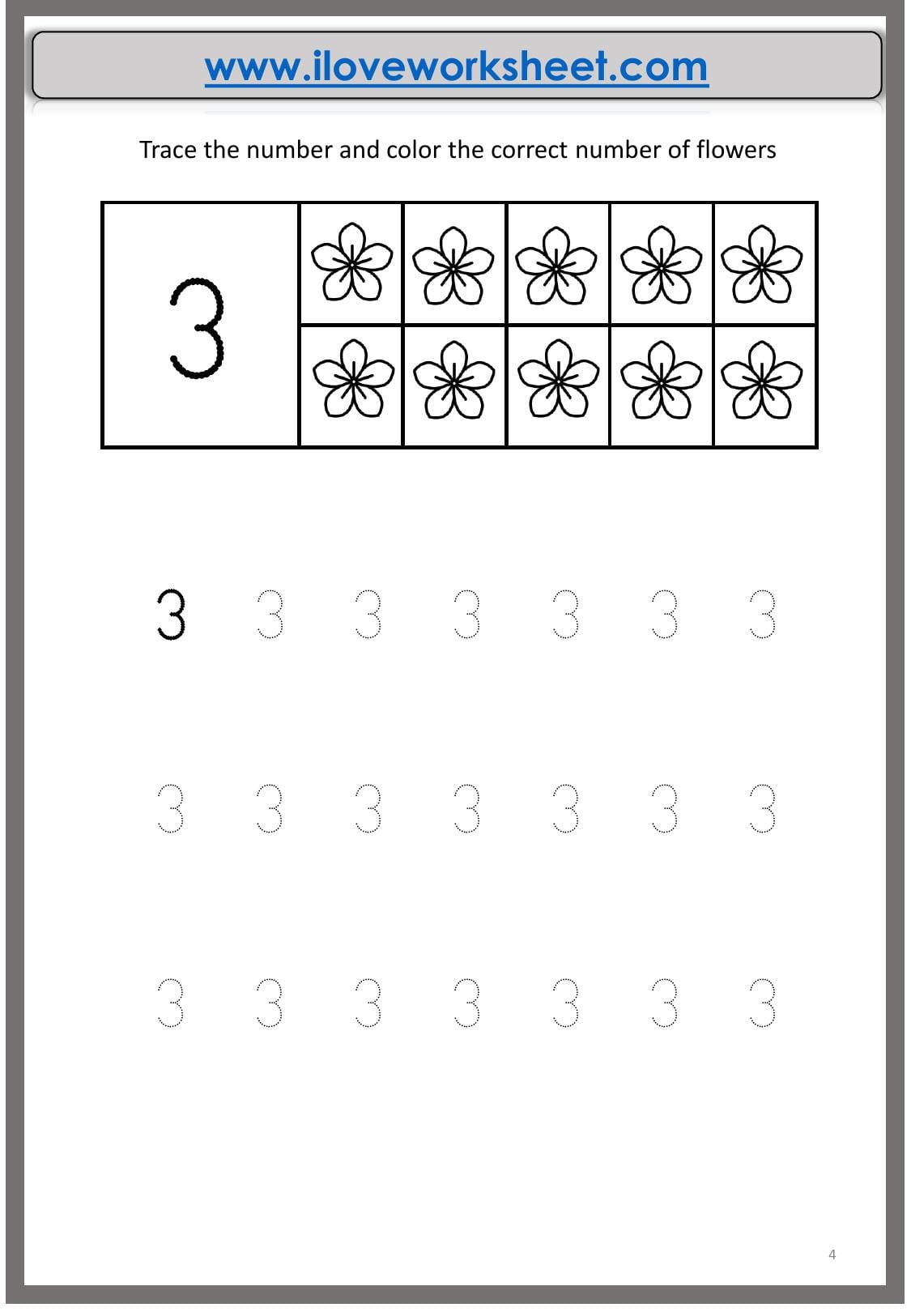
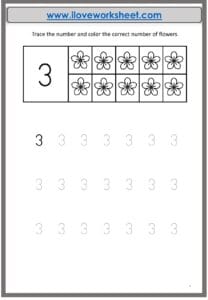
The number 3 page includes several opportunities to trace the double‑curve shape. Children then colour three flowers, helping them connect the written number with a real amount.
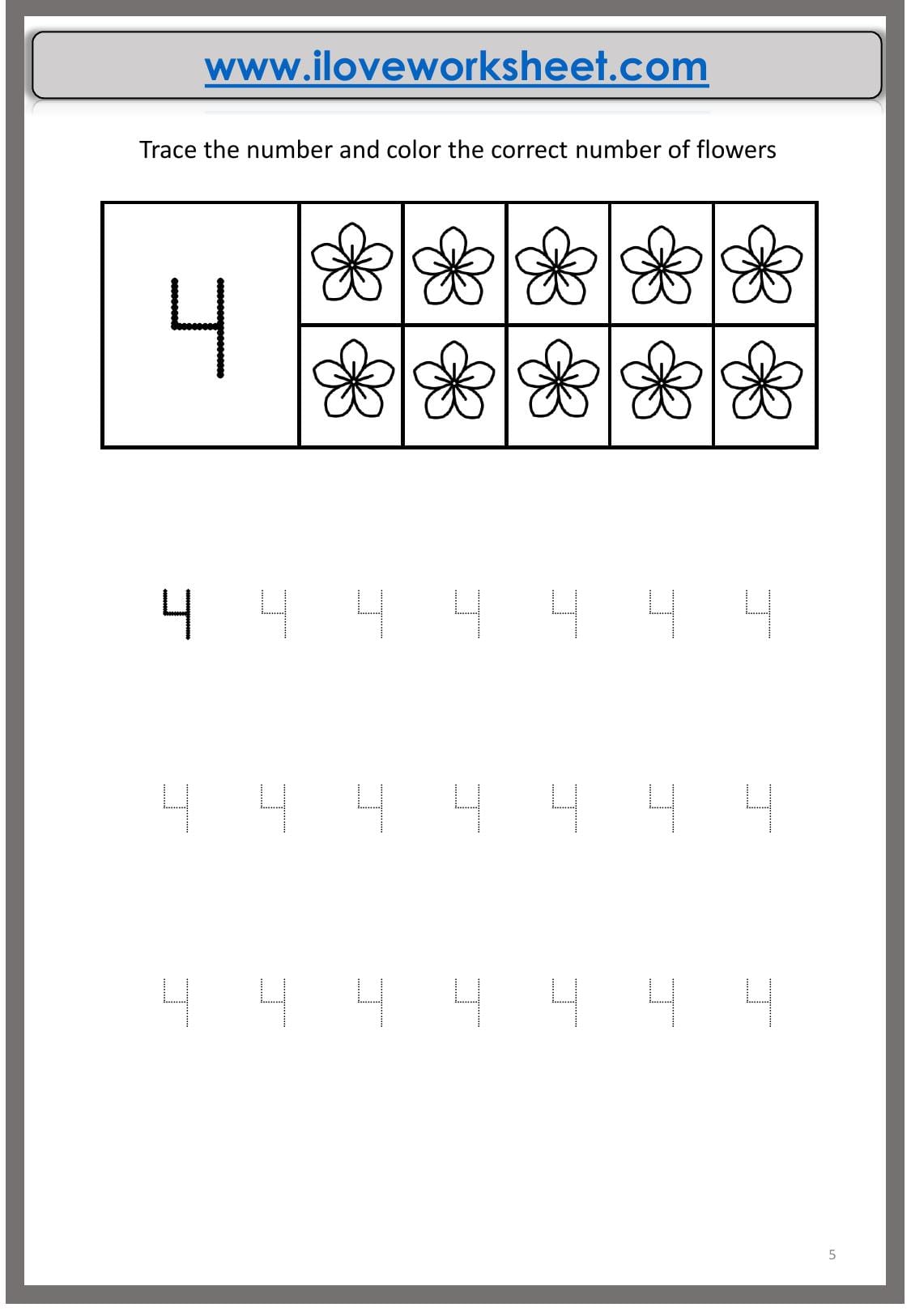
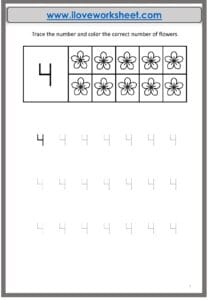
The number 4 page includes repeated tracing lines that help children practice the angled lines and crossbar. The counting activity reinforces the value of four.
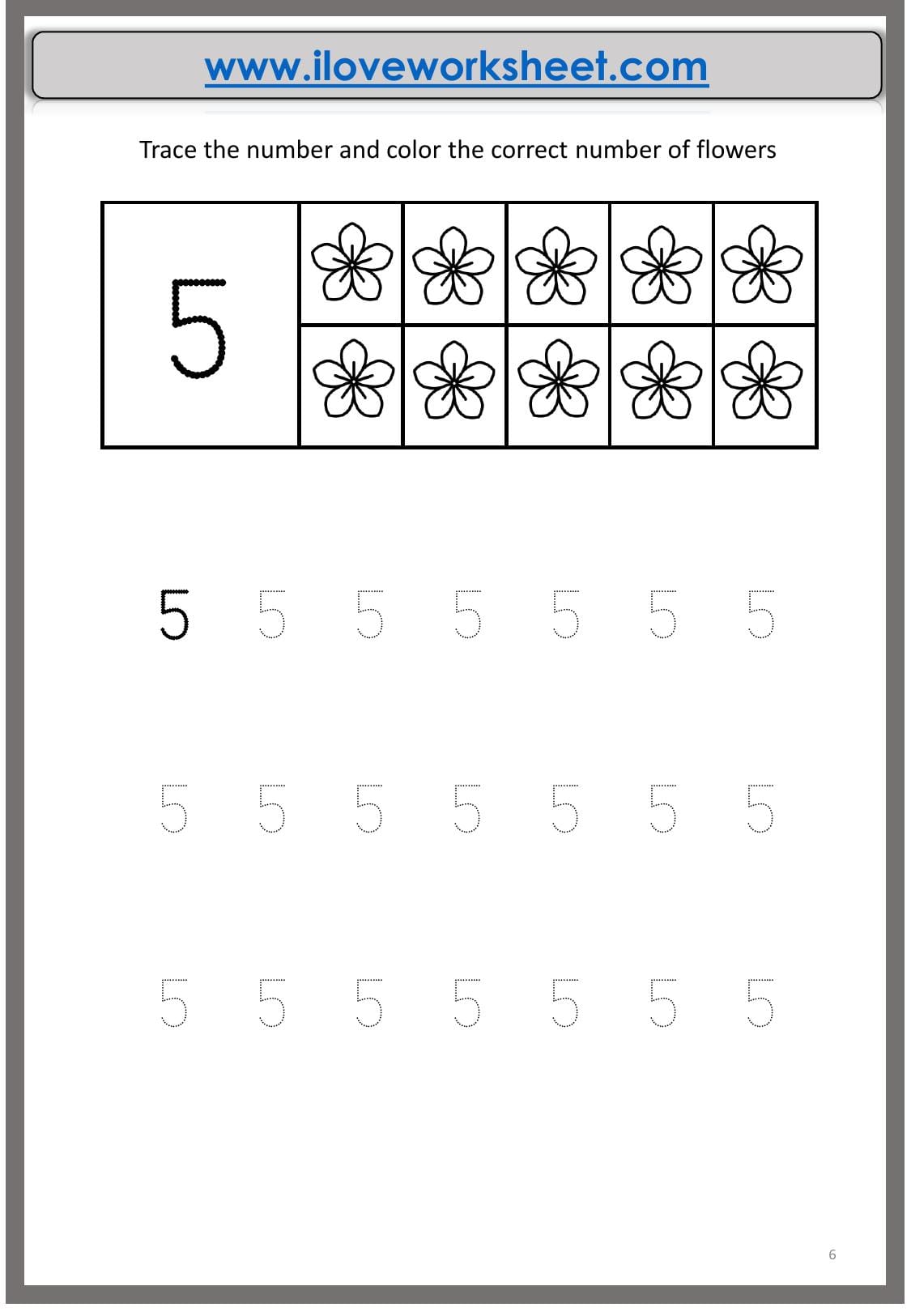
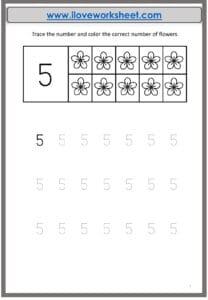
The number 5 page includes multiple tracing lines that help children learn the curved top and straight bottom line. Children then colour five flowers.
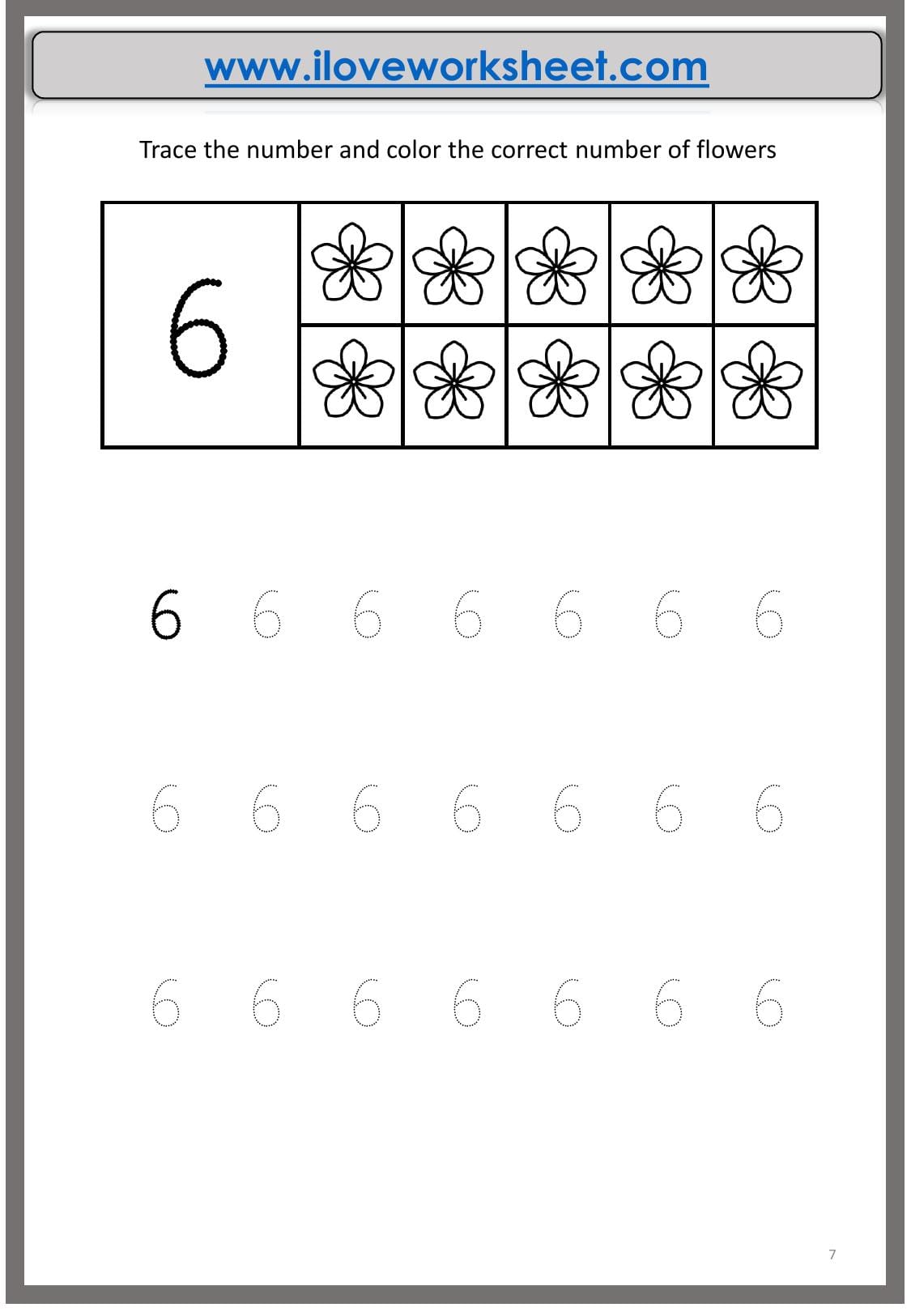
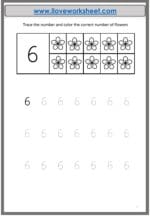
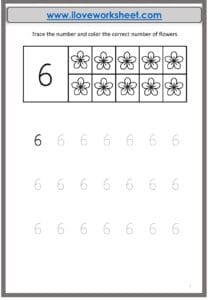
The number 6 page includes tracing lines that help children practice the circular motion needed for the number. The counting activity reinforces the value of six.
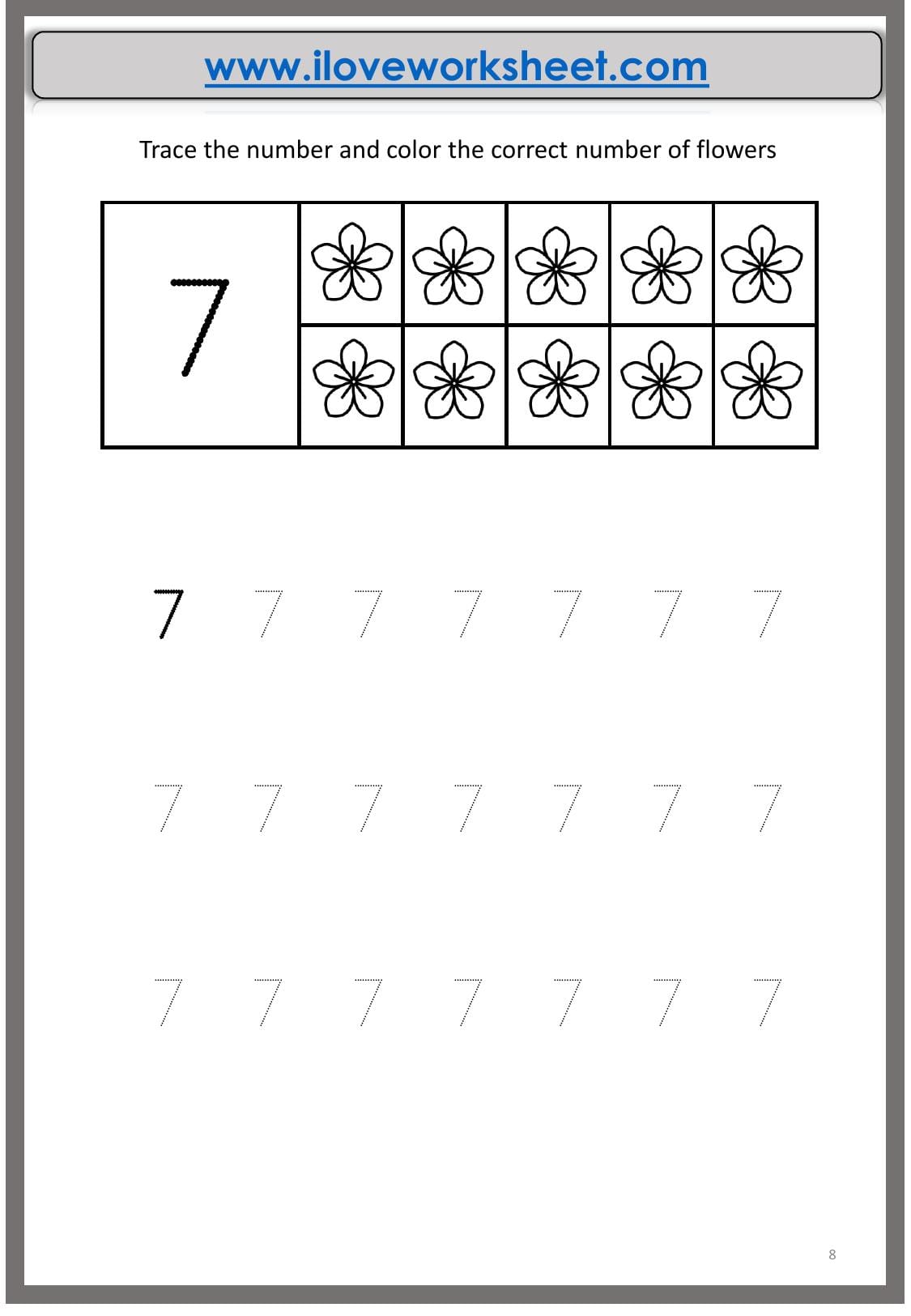
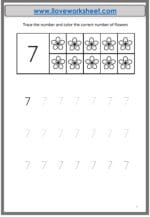
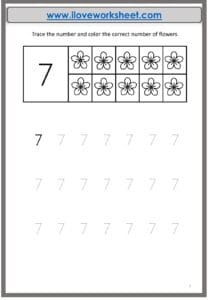
The number 7 page includes tracing lines that help children practice the angled top and straight downward stroke. Children then colour seven flowers.
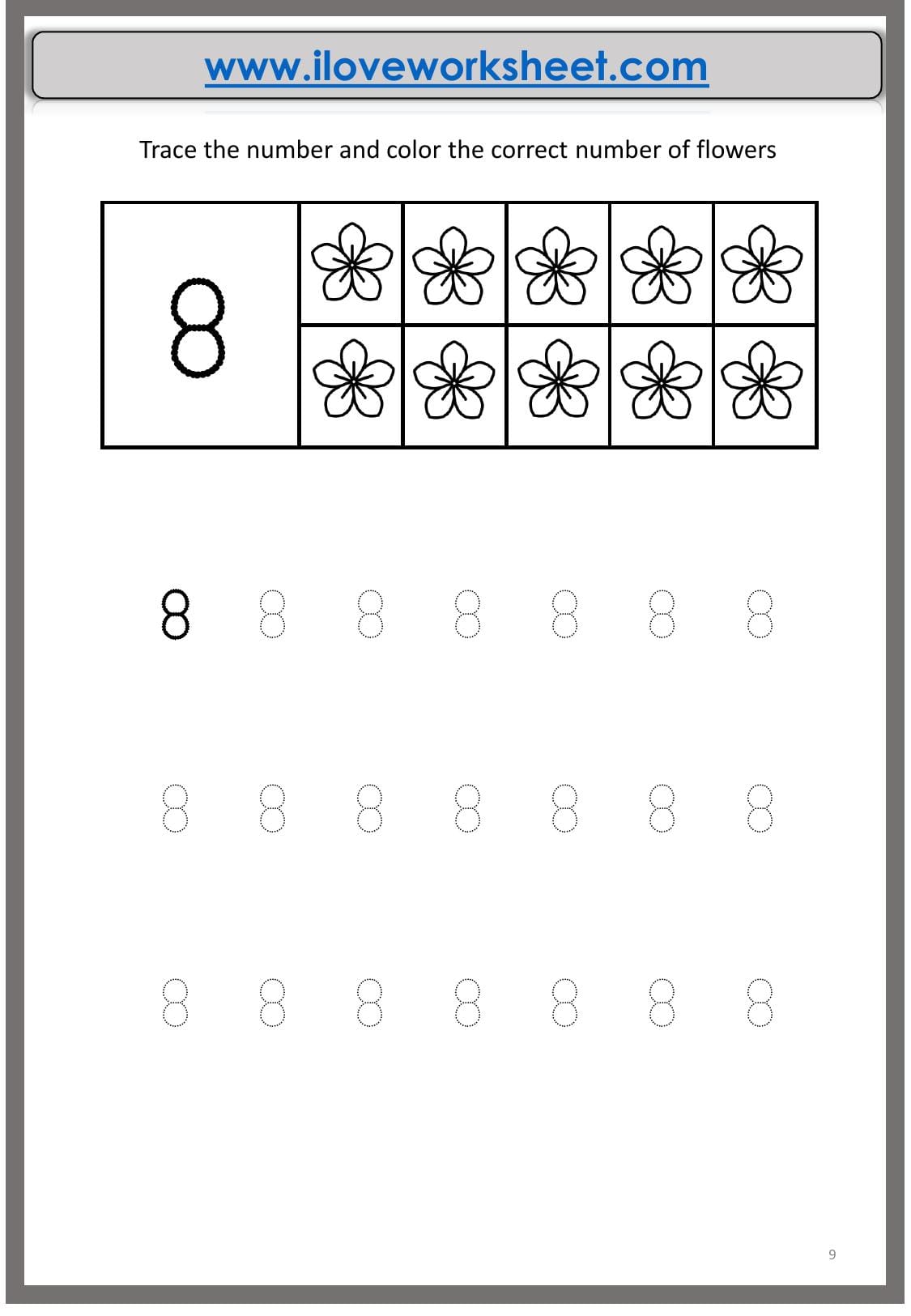
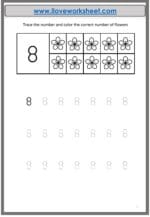
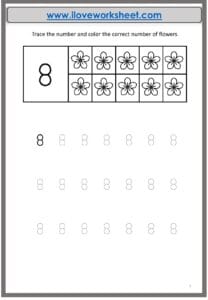
The number 8 page includes tracing lines that help children practice the looping motion of the number. The counting activity reinforces the value of eight.
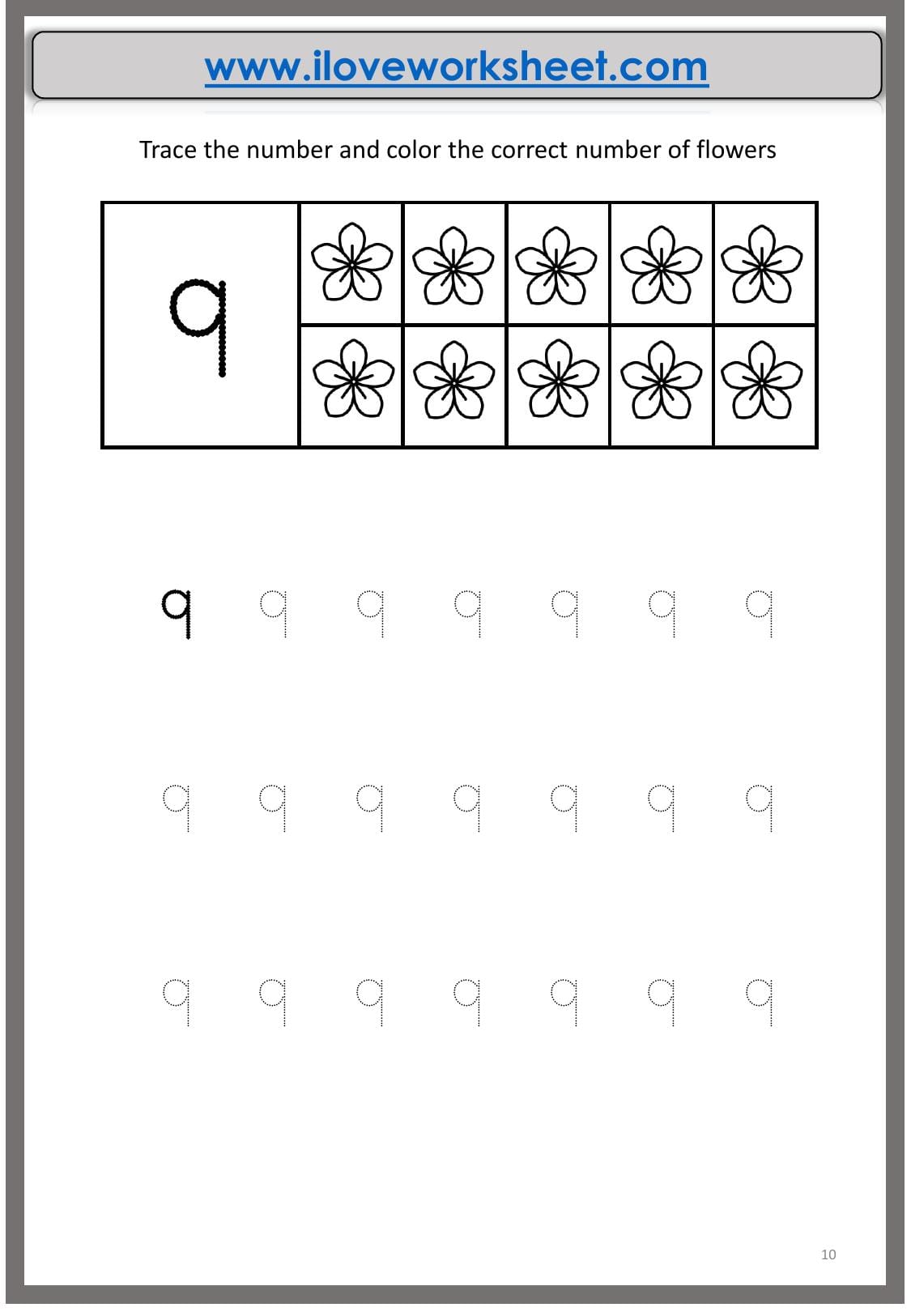
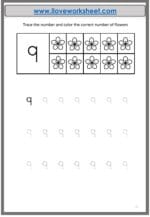
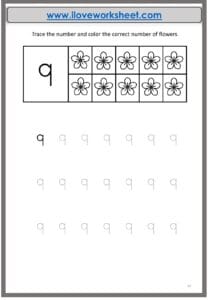
The number 9 page includes tracing lines that help children practice the circular top and straight downward line. Children then colour nine flowers.
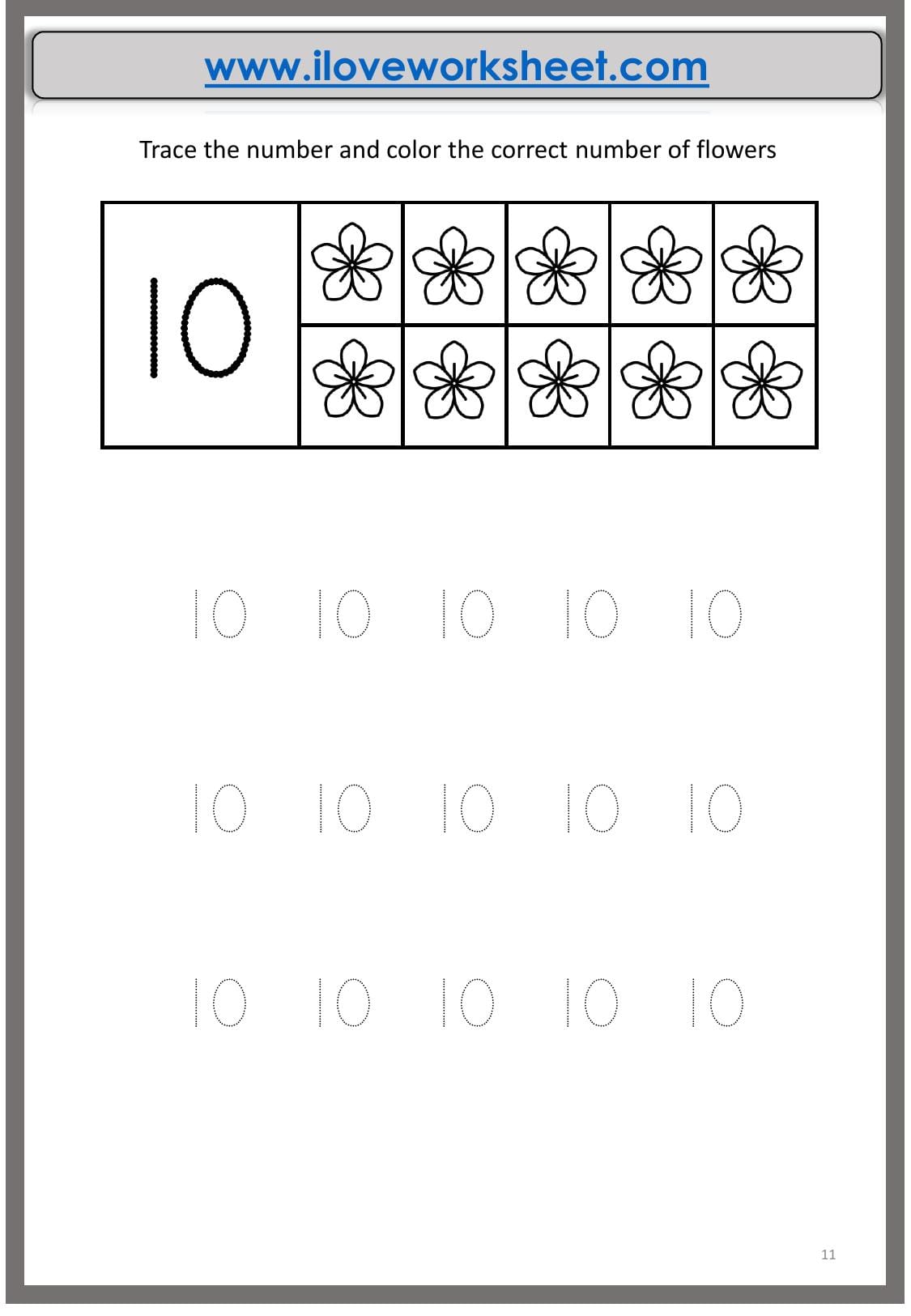
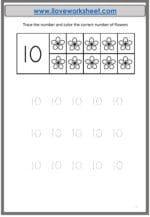
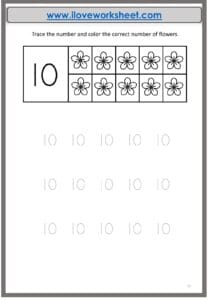
The number 10 page introduces children to two‑digit numbers. They trace the number and colour ten flowers, helping them understand that numbers can be made of more than one digit.
Tracing helps children learn the correct way to write each number. This prevents confusion later when writing independently.
Colouring flowers helps children understand that numbers represent real amounts. This builds a strong foundation for addition and subtraction.
Repeated tracing helps children memorise number shapes, improving recognition speed.
Counting flowers reinforces one‑to‑one correspondence — a key early math skill.
Tracing numbers of different sizes helps children develop control and precision.
The worksheet uses flowers as counting objects. This theme is simple, friendly, and visually appealing for young learners.
Flowers are easy to count and recognise, making them ideal for early learners.
Each page repeats the same instruction: “Trace the number and colour the correct number of flowers.” This consistency helps children focus on the number itself.
Bright, simple visuals keep children motivated and interested.
Number tracing worksheets can be used in many settings:
Teachers can use them during math centres or handwriting practice sessions.
Parents can support early math skills through simple tracing activities.
Number tracing fits perfectly into early numeracy lessons.
Occupational therapists often use tracing to strengthen fine motor skills.
Slow, careful tracing helps children learn correct number formation.
A comfortable grip improves control and reduces fatigue.
Saying numbers while tracing reinforces memory.
Positive reinforcement builds confidence and motivation.
Number tracing worksheets remain a favourite because they combine:
The worksheet includes clear instructions such as “Trace the number and colour the correct number of flowers.” This simple structure makes learning accessible and enjoyable.