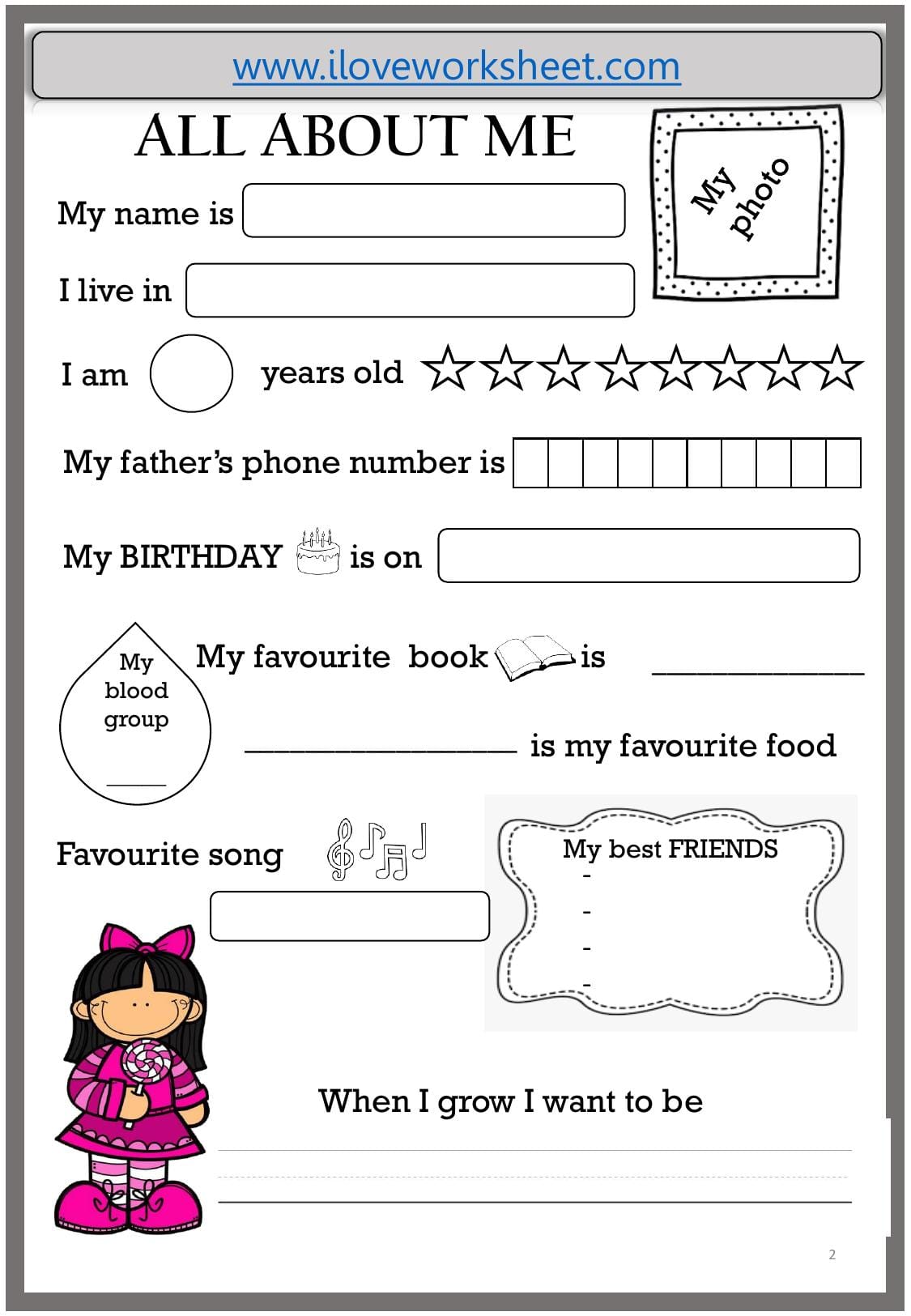
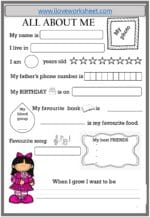

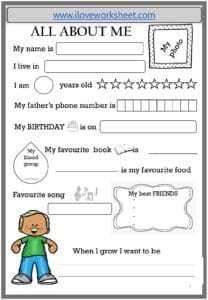
Self‑introduction activities play an important role in early childhood development. They help children express who they are, understand personal identity, and communicate confidently with others. The Self-Introduction worksheet presents a simple, child‑friendly layout that encourages young learners to talk about themselves through writing, drawing, and sharing personal details. With prompts such as “My name is”, “I live in”, and “I am ___ years old”, children learn to describe their identity in clear and meaningful ways.
The worksheet also includes spaces for a photo, favourite things, family information, and future dreams. These elements make the activity engaging, personal, and emotionally supportive for young learners.
Self‑introduction worksheets support several important developmental areas:
Children learn to form simple sentences about themselves. Phrases like “My favourite book is” and “Favourite song” help them practice vocabulary and sentence structure.
Talking about oneself helps children feel seen and valued. Filling in details such as “My best friends” or “When I grow I want to be” encourages self‑expression.
Sharing personal information helps children connect with classmates. It becomes easier to make friends when they can talk about their interests and background.
Children learn to identify their likes, dislikes, and personal preferences. This builds self‑awareness and emotional intelligence.
Remembering details such as birthdays, phone numbers, and favourite items strengthens memory skills.
The worksheet includes several sections that help children describe themselves in a structured and enjoyable way.
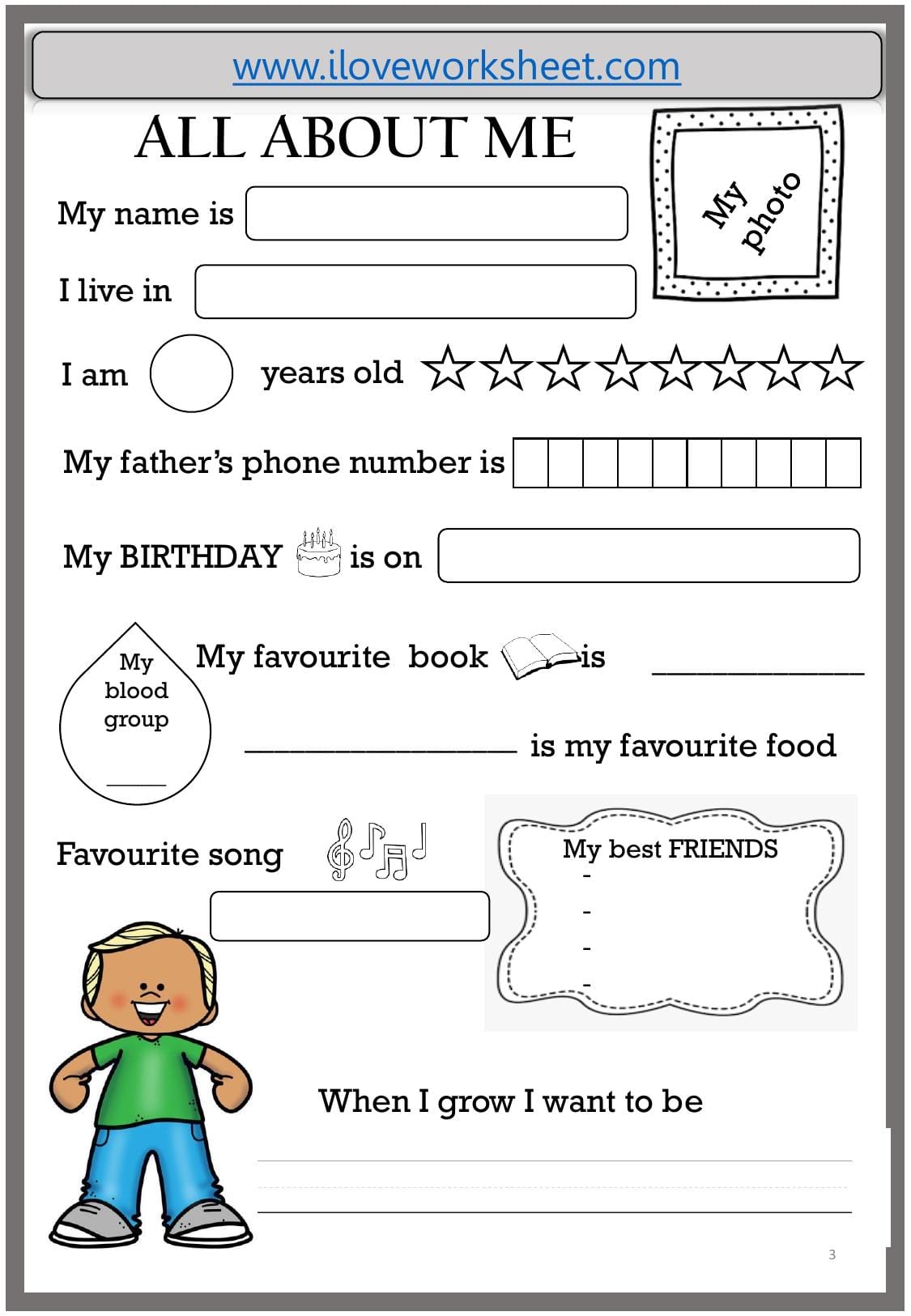
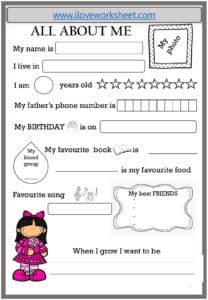
The activity begins with two simple prompts: “My name is” “I live in” These help children practice writing their name and identifying their home or city.
The worksheet includes the prompt: “I am ___ years old” This helps children understand age as part of personal identity.
A box labelled “My photo” encourages children to paste a picture or draw themselves. This visual element makes the activity more personal and fun.
The worksheet includes: “My father’s phone number is” This helps children learn important contact information in a safe, structured way.
The prompt “My birthday is on” helps children remember and celebrate their special day.
The worksheet includes a space for “My blood group”, introducing children to basic health information.
Several prompts help children express their preferences:
These sections encourage children to think about what they enjoy and why.
The worksheet includes a list titled “My best friends” with four lines. This helps children identify important social connections.
The final prompt reads: “When I grow I want to be” This encourages imagination, ambition, and early career awareness.
Children learn to talk about themselves in a positive and structured way. This builds communication skills and emotional confidence.
Writing simple sentences helps children practice handwriting, spelling, and sentence formation.
When children share their completed worksheets, classmates learn about one another. This builds a sense of belonging.
Educators gain insight into each child’s background, interests, and personality.
Children learn to recall and write personal information on their own.
The worksheet uses simple, relatable prompts that children can easily understand. Each section focuses on a different aspect of identity, making the activity both educational and meaningful.
Short phrases like “My name is” and “I live in” are easy for young learners to complete.
The photo box and open spaces for writing make the worksheet visually appealing.
Children enjoy talking about their favourite food, book, or song. This emotional connection increases engagement.
The prompt about future aspirations encourages imagination and long‑term thinking.
Self‑introduction worksheets can be used in many settings:
A perfect activity for helping children get to know one another.
Supports sentence formation, vocabulary, and speaking practice.
Parents can use the worksheet to help children express themselves.
Speech and occupational therapists often use self‑expression activities to build communication skills.
Children can share traditions, foods, or celebrations from their background.
Children should feel free to write what they truly enjoy or believe.
Young learners may need support writing longer words like “birthday” or “favourite.”
If children struggle to write, they can draw their favourite food, book, or song.
Displaying completed worksheets helps children feel proud of their identity.
These worksheets remain widely used because they combine: