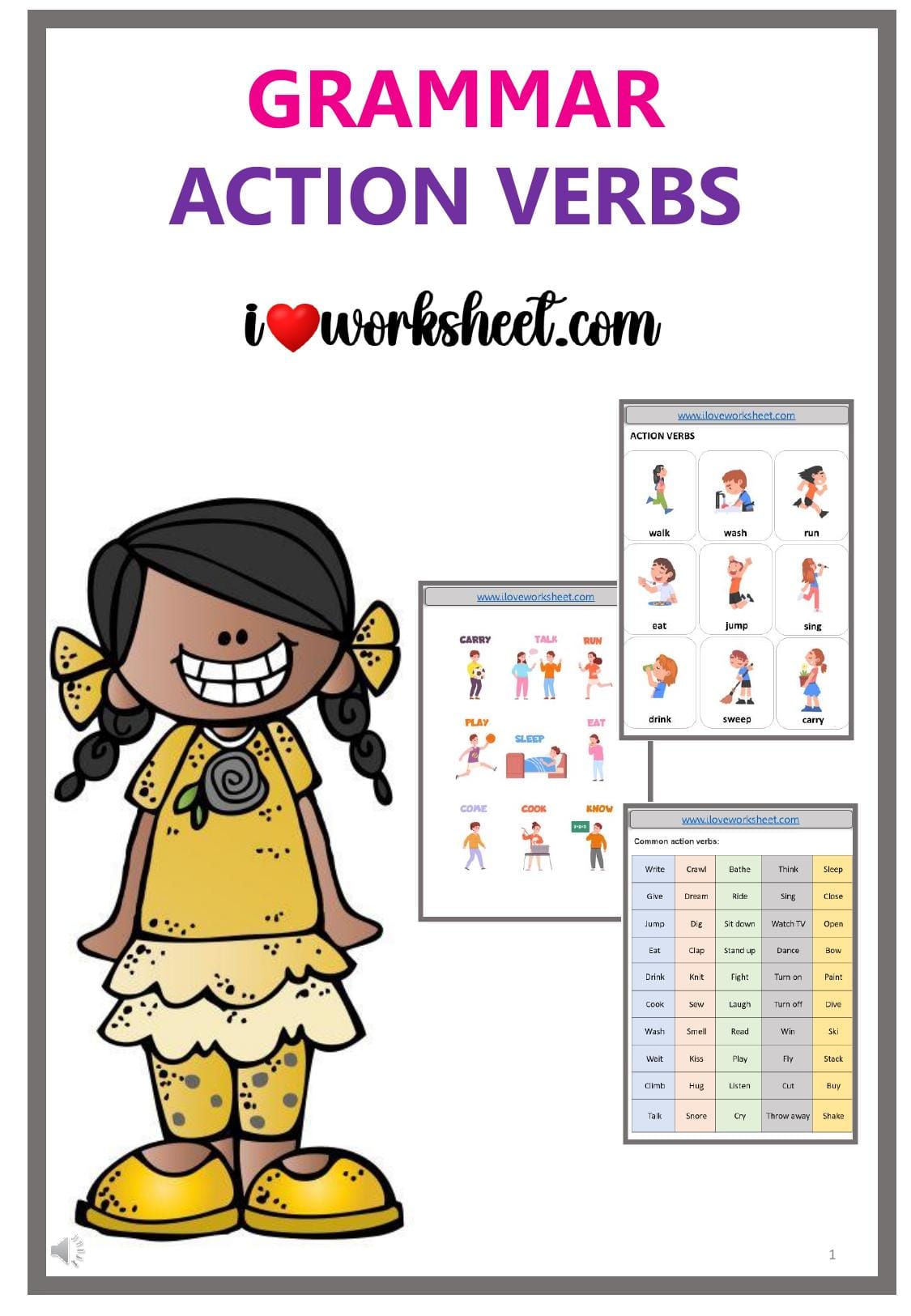
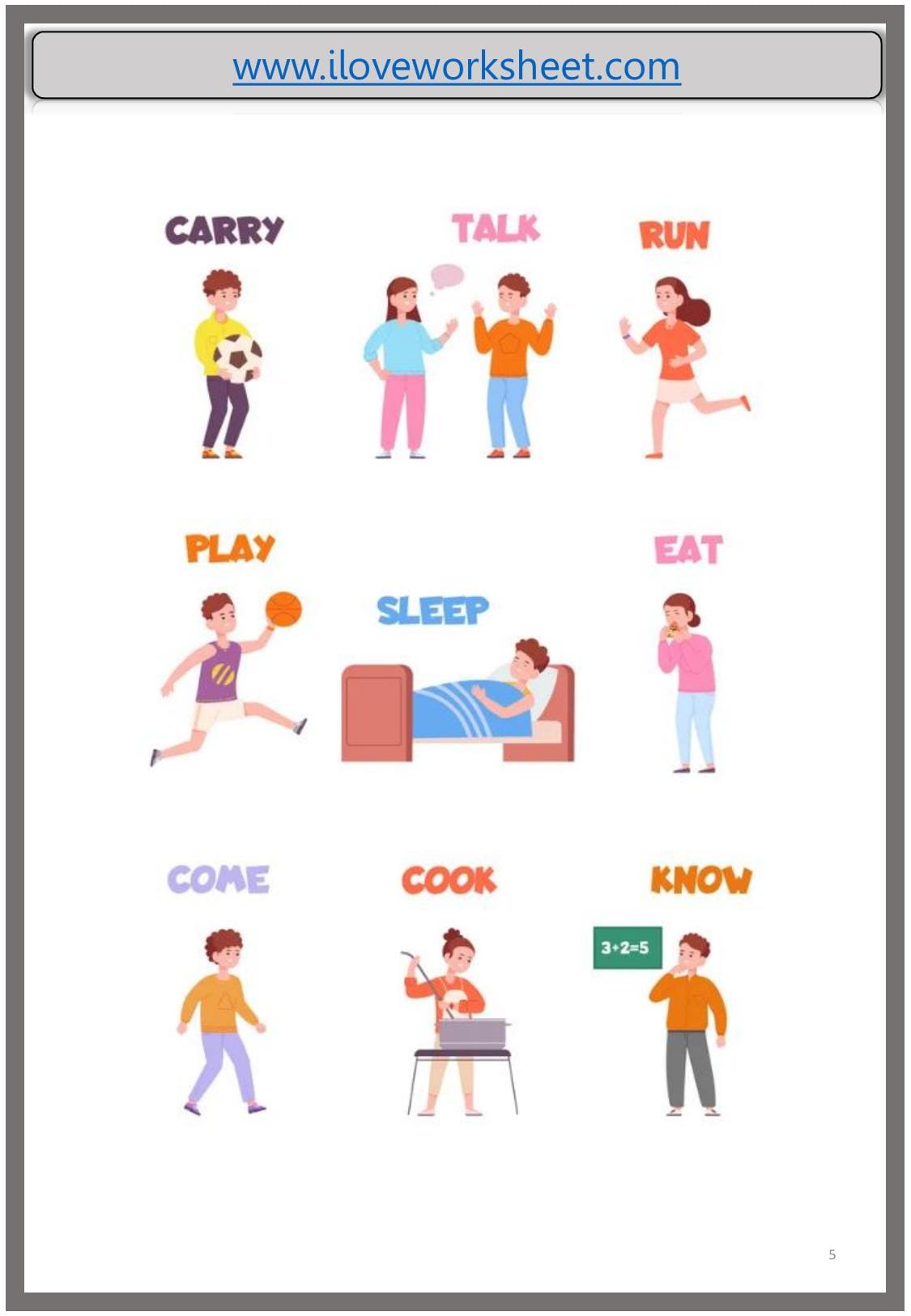
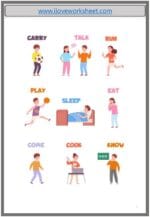

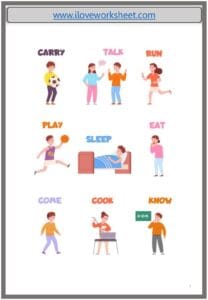
Action verbs are the heartbeat of language. They describe what someone does, how something moves, and what is happening in a moment. For young learners, understanding action verbs is essential because these words appear in almost every sentence they speak, hear, read, or write. The Action Verbs worksheet introduces children to a wide range of everyday actions through bold words, pictures, puzzles, and repeated exposure. Words such as CARRY, TALK, RUN, PLAY, EAT, and SLEEP appear prominently, helping children connect language with movement and meaning.
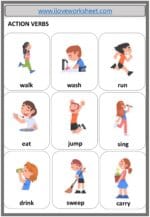
The worksheet begins with large action words paired with illustrations. This visual approach helps children associate each verb with a clear action. When a child sees the word RUN next to a picture of someone running, the meaning becomes instantly clear. The same happens with PLAY, EAT, or SLEEP. Visual learning is powerful at early ages because children understand images long before they master text. By pairing words with pictures, the worksheet strengthens memory and builds confidence in recognising verbs.
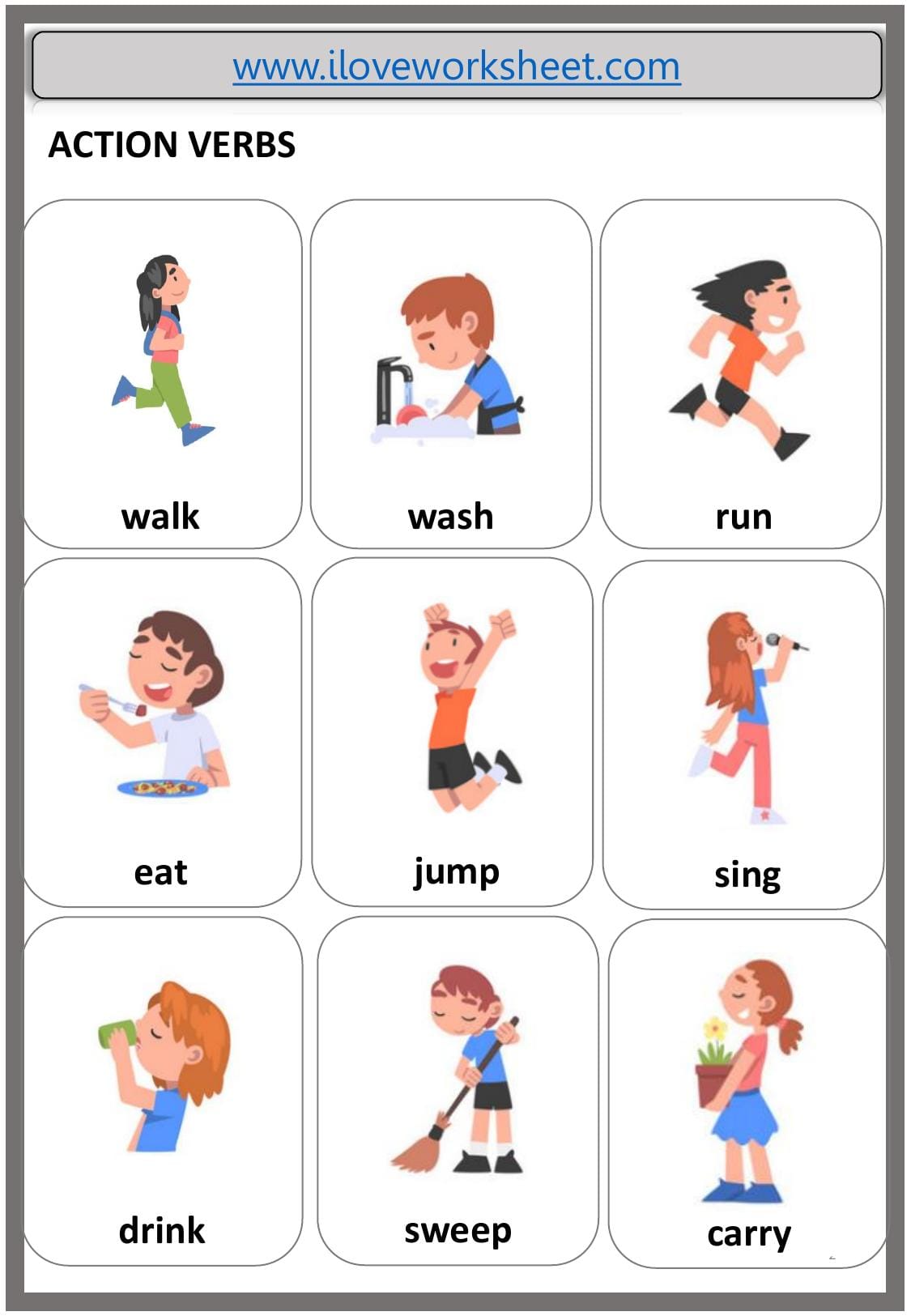
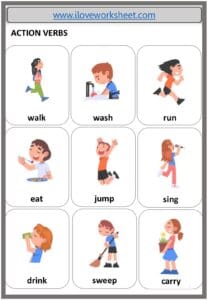
A second section presents a set of action verbs in lowercase, including walk, wash, run, eat, jump, sing, drink, sweep, carry. These words are simple, familiar, and easy to act out. Children can physically perform each action, which makes learning more interactive. When a child jumps, sings, or sweeps while saying the word, the connection between language and movement becomes stronger. This type of kinesthetic learning is especially effective for young learners who learn best through doing.
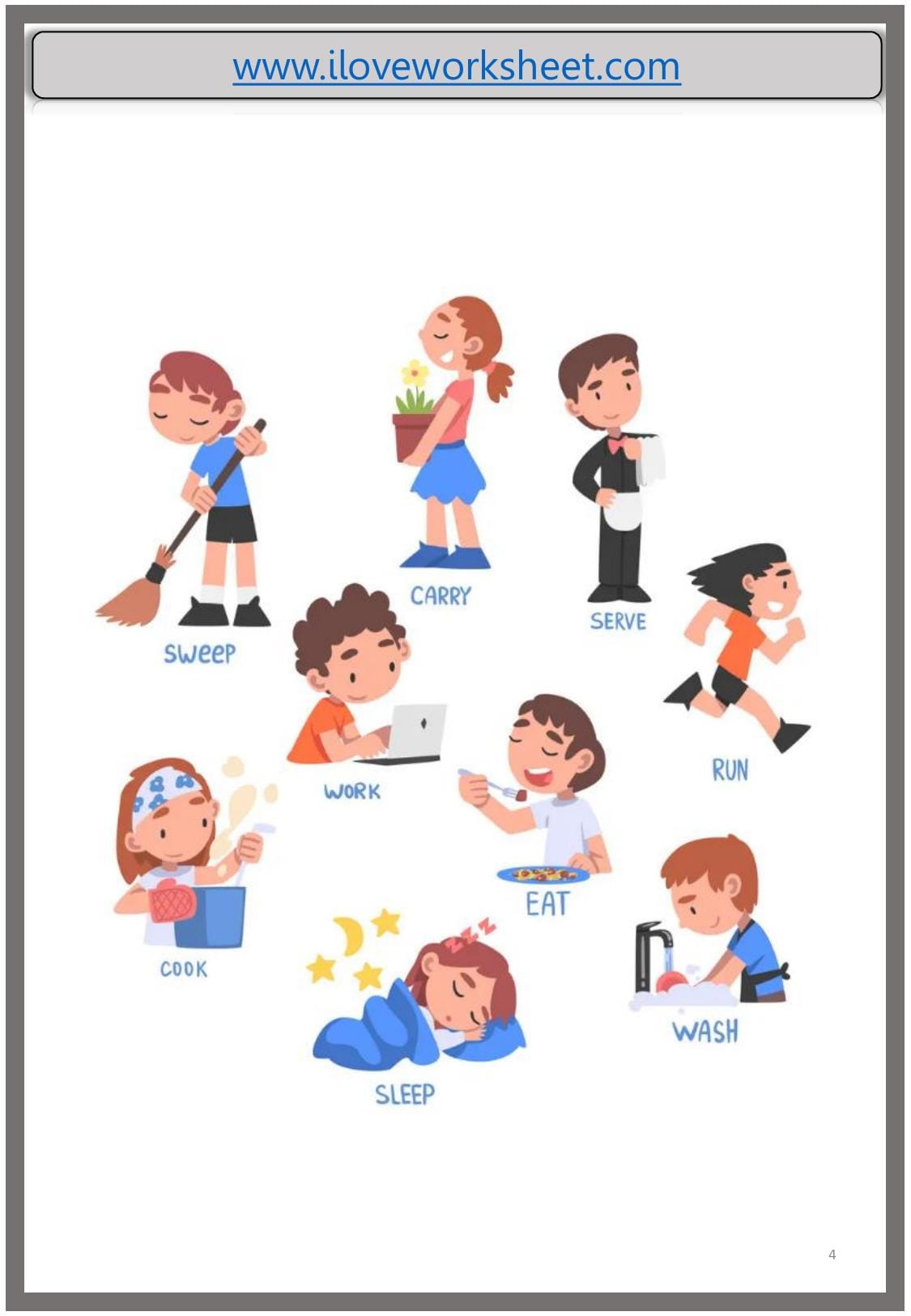
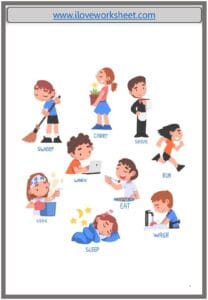
The worksheet also includes a group of action verbs presented in uppercase and lowercase together, such as CARRY, SERVE, sweep, RUN, WORK, EAT, COOK, WASH, and SLEEP. Seeing verbs in different formats helps children recognise them in various reading contexts. Uppercase words often appear in headings or posters, while lowercase words appear in sentences and storybooks. Exposure to both forms prepares children for real‑world reading.
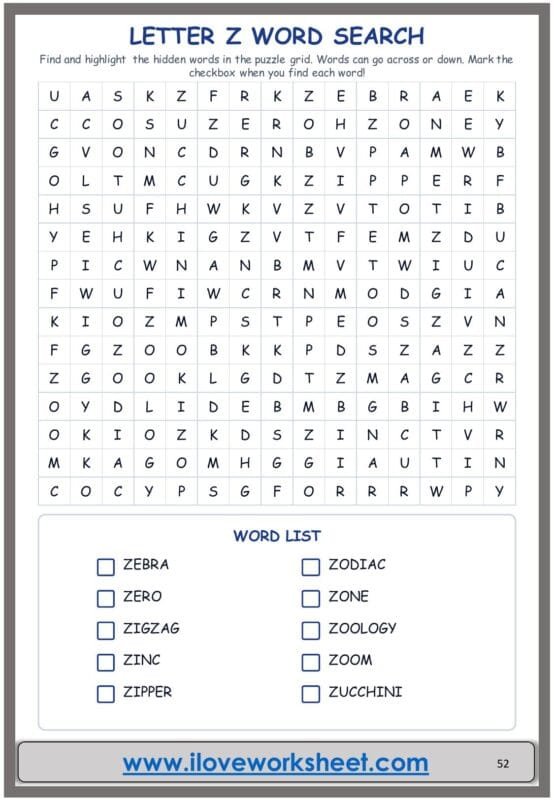
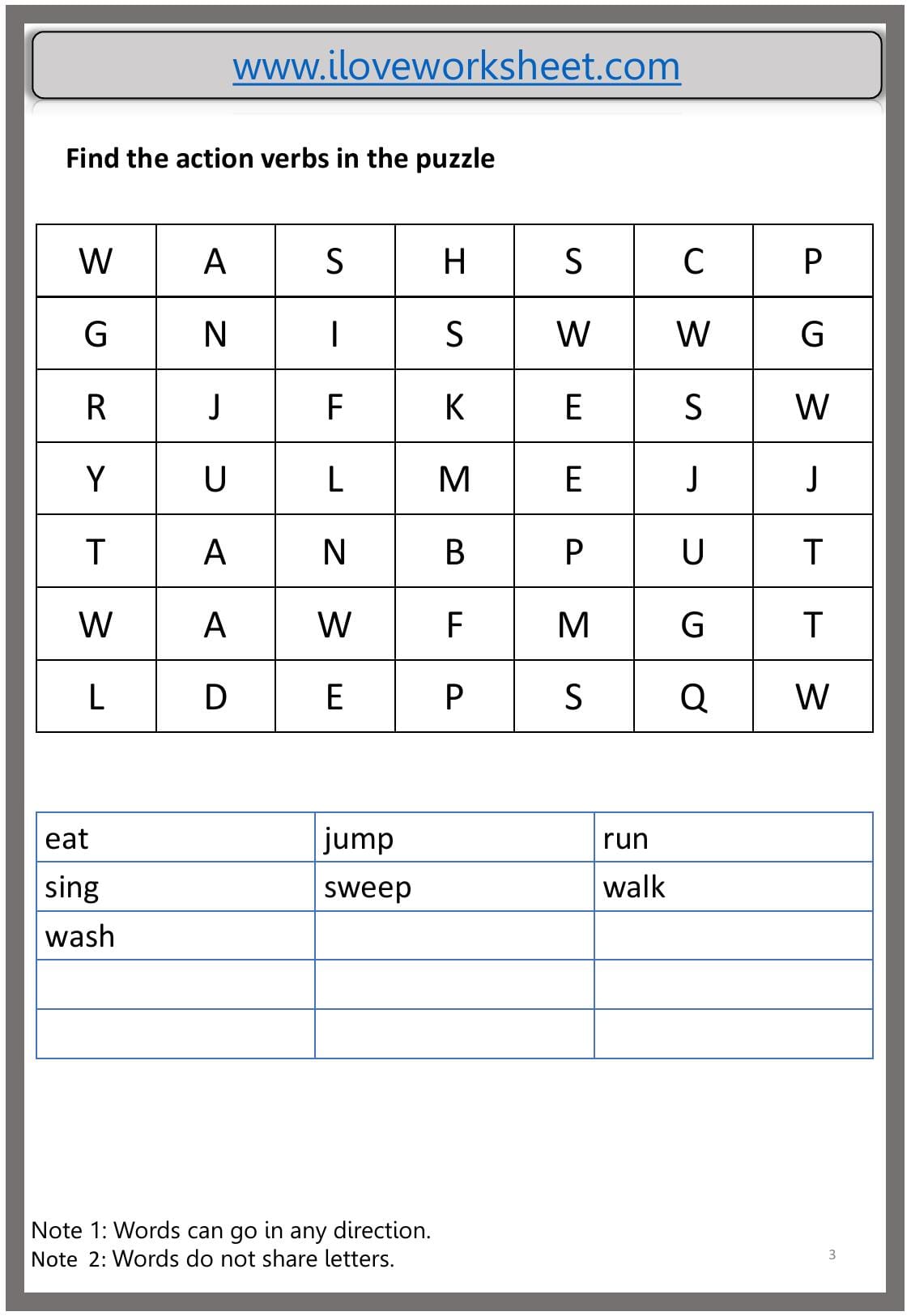
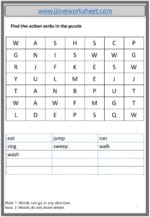
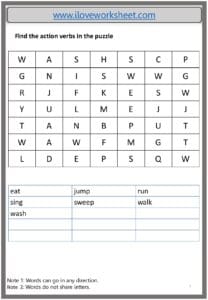
One of the most engaging parts of the worksheet is the action verb puzzle. The instruction invites children to “Find the action verbs in the puzzle,” and the grid contains letters arranged in rows and columns. Hidden within the grid are verbs such as eat, jump, run, sing, sweep, walk, and wash. The notes explain that words can appear in any direction and do not share letters. This type of puzzle strengthens visual scanning, spelling, and problem‑solving skills. Children learn to recognise verbs quickly, even when surrounded by random letters. It also encourages patience and focus, two skills that support reading development.
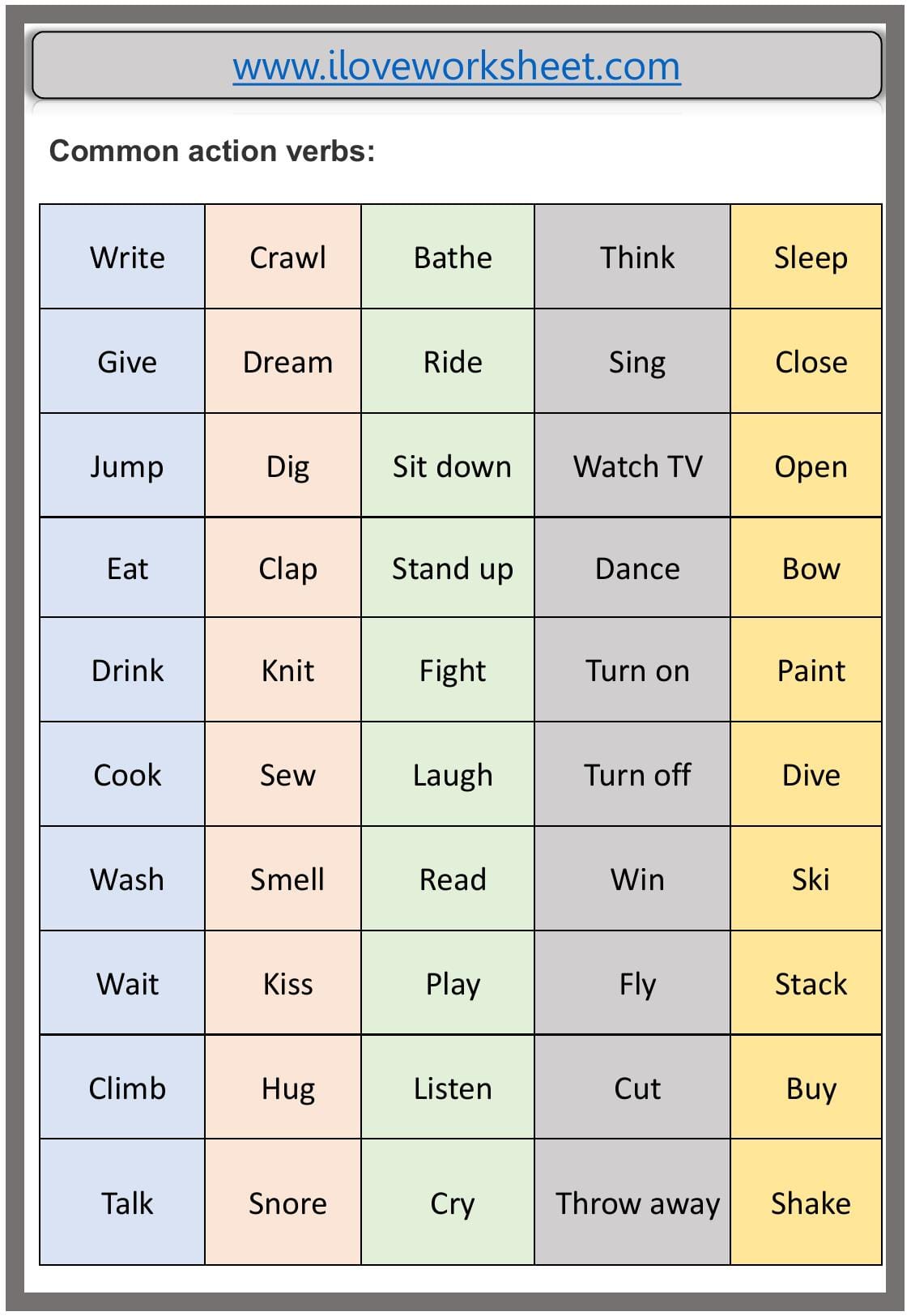
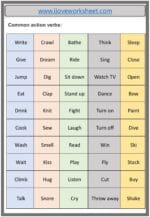
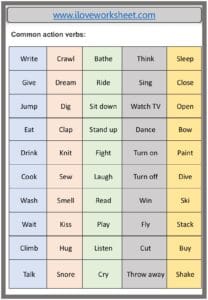
Beyond the puzzle, the worksheet includes a large collection of action verbs arranged in a table. These verbs cover a wide range of everyday activities. Some describe physical movement, such as running, jumping, climbing, or dancing. Others describe communication, such as talking, singing, answering, or shouting. There are verbs related to daily routines like washing, cooking, eating, drinking, and sleeping. There are also verbs connected to thinking and learning, such as planning, studying, solving, imagining, or inventing. This variety exposes children to the richness of action words in English and helps them understand that verbs are not limited to physical movement. They can describe emotions, thoughts, and interactions as well.
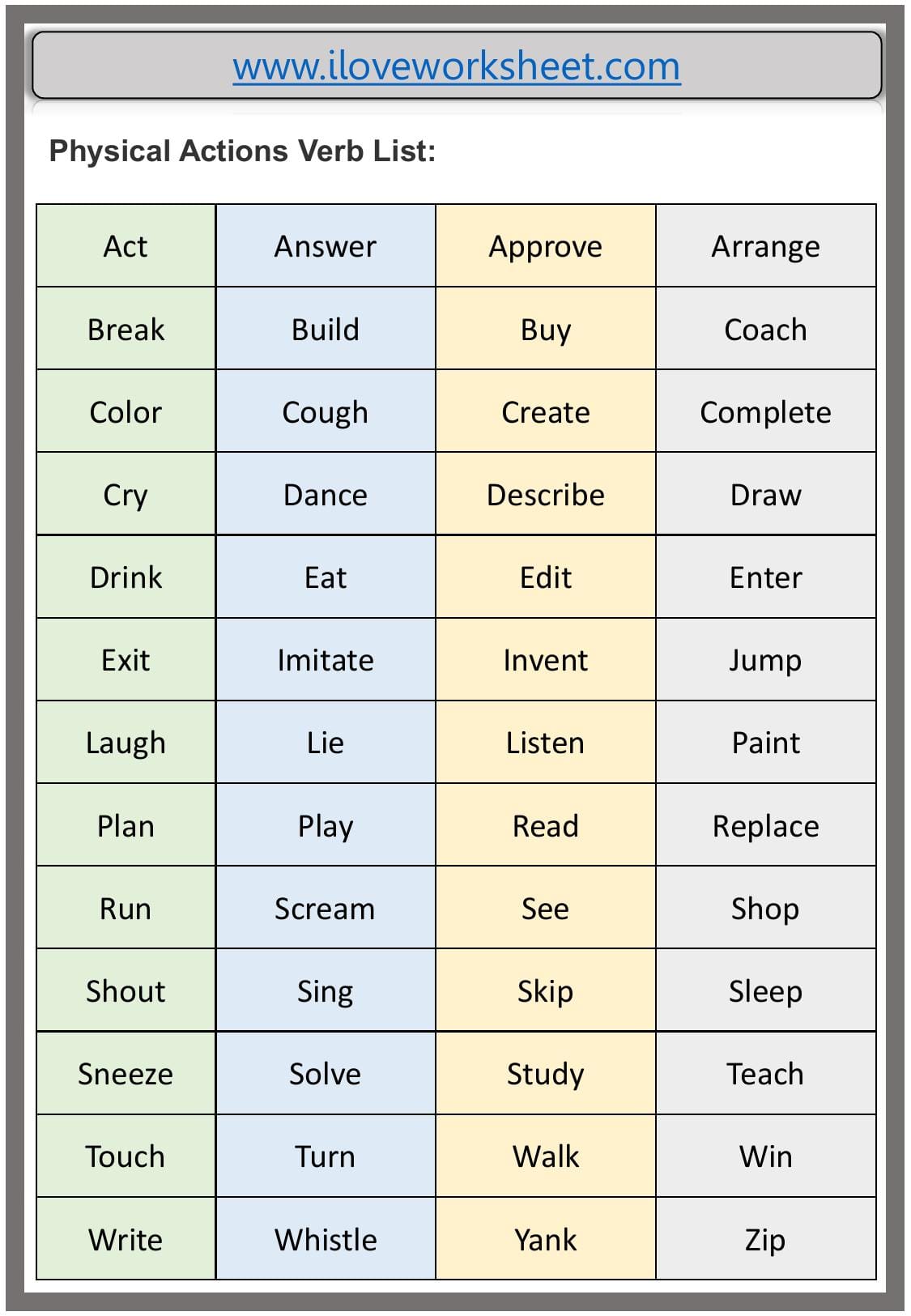
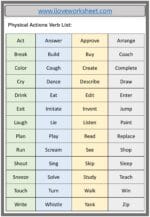
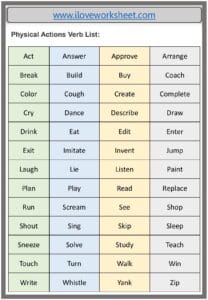
The worksheet also includes a section titled “Physical Actions Verb List,” which expands vocabulary even further. Words such as act, answer, approve, arrange, break, build, coach, color, cough, create, complete, cry, dance, draw, enter, exit, imitate, invent, jump, laugh, listen, paint, plan, read, replace, run, scream, see, shop, shout, sing, skip, sleep, sneeze, solve, study, teach, touch, turn, walk, win, write, whistle, yank, and zip appear in this section. This collection helps children explore verbs used in school, home, and social settings. It also introduces them to verbs that describe creative activities, emotional expressions, and problem‑solving actions.
Action verbs are essential for communication because they allow children to describe what they are doing, what they want, and how they feel. When a child says “I eat,” “I play,” or “I sleep,” they are using verbs to express their needs and experiences. As they grow, they begin using more complex verbs such as describe, replace, imagine, or complete. These verbs help them communicate ideas more clearly and participate in conversations with confidence.
The worksheet supports grammar development by helping children understand how verbs fit into sentences. A sentence without a verb feels incomplete. When children learn verbs like run, jump, or sing, they begin forming simple sentences such as “I run fast” or “I sing loudly.” As their vocabulary grows, their sentences become more expressive. They learn to describe actions in detail, talk about past events, and explain what they want to do next.
Action verbs also support storytelling. When children tell a story, they rely on verbs to describe what characters do. A story becomes more vivid when a child uses verbs like climb, shout, laugh, whisper, or chase. The worksheet’s wide range of verbs gives children the tools they need to create lively stories and express imagination.
In addition to language development, action verbs support social and emotional learning. Verbs such as hug, help, share, greet, or comfort describe positive interactions with others. When children learn these verbs, they gain vocabulary for expressing kindness and empathy. Verbs like cry, laugh, or shout help them describe emotions, which supports emotional awareness.
The worksheet’s combination of pictures, words, puzzles, and repeated exposure creates a strong foundation for understanding action verbs. Children learn through seeing, reading, acting, and searching. This multi‑sensory approach ensures that verbs become part of their everyday language.