
Early childhood mathematics begins with tangible physical experiences that anchor abstract numerical concepts in concrete reality. Among the most natural and accessible mathematical tools available to young children are human hands. Neurodevelopmental research in early childhood education highlights the crucial role of finger perception, mathematically referred to as finger gnosia, in forming robust neural representations of quantity. When kindergarten children use fingers to represent numbers, the brain activates somatosensory pathways that support visual-spatial reasoning and numerical computation.
Embodied numeracy theory demonstrates that bodily movements and tactile engagements are not mere compensatory habits; rather, physical gestures are foundational mechanisms through which mathematical cognition matures. Children who develop refined finger awareness in kindergarten show higher mathematical achievement in subsequent primary school grades. Utilizing structured hand diagrams in instructional worksheets transforms intuitive finger tapping into systematic mathematical thinking. The visual presentation of raised fingers enables young minds to bridge the gap between tangible collections of objects and formal Arabic numerals.
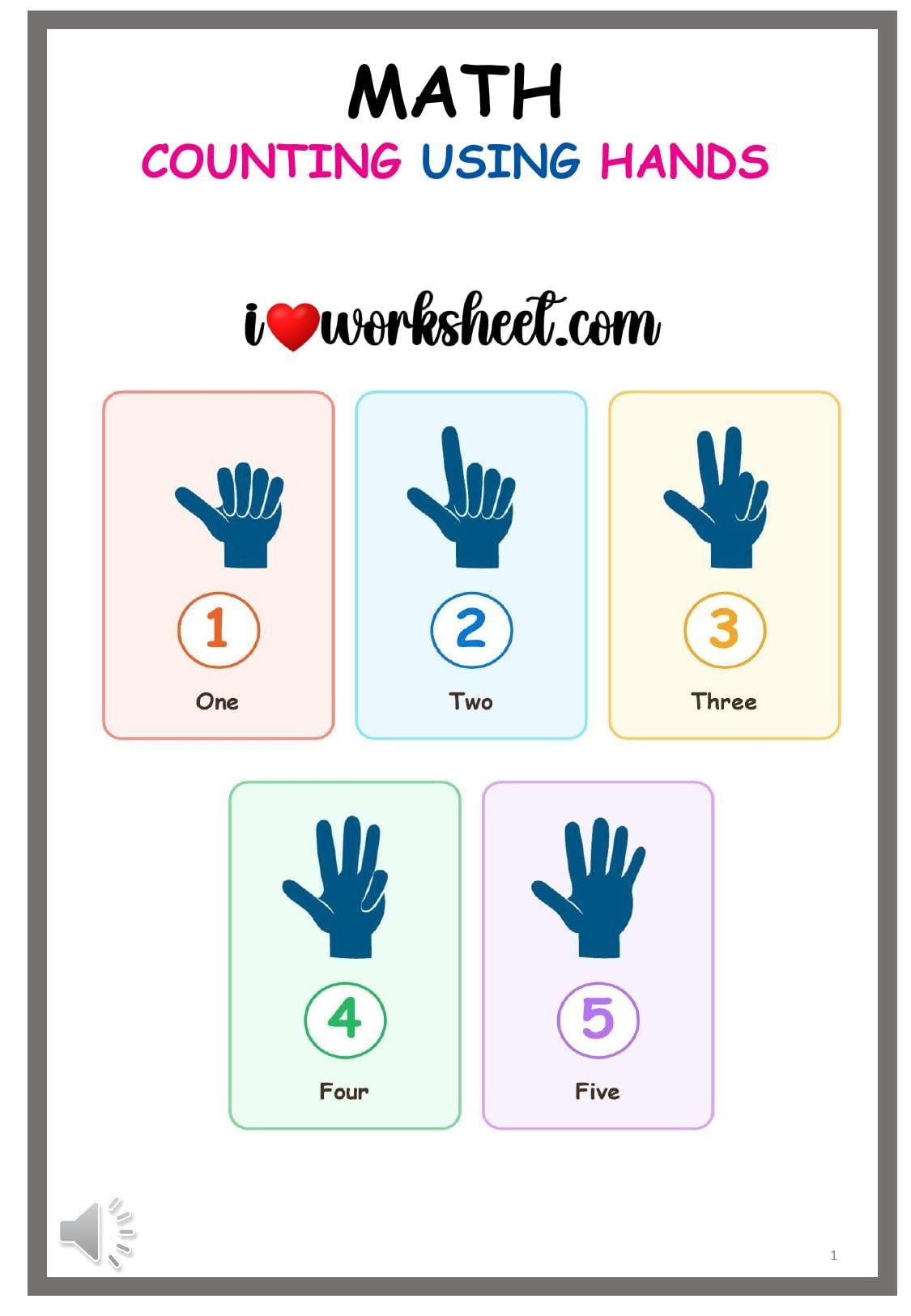
In early numeracy instruction, subitizing refers to the ability to instantaneously recognize the number of items in a small collection without counting each individual item. Hand counting worksheets provide canonical visual patterns that accelerate perceptual subitizing for quantities from one to five. A single raised finger directly communicates the concept of oneness, while two adjacent raised fingers establish the earliest foundational understanding of pairs.
As children progress through numbers three, four, and five, hand visuals cultivate conceptual subitizing. Early learners observe that three raised fingers consist of two fingers and one more, while four raised fingers naturally decompose into two sets of two fingers. An open hand showing all five fingers represents a complete five-unit benchmark. Systematic exposure to standardized hand diagrams trains the human eye to instantly decode quantities.
Repetitive visual exercises reinforce number invariance across diverse presentations. Whether counting begins on the left hand or the right hand, or whether fingers are counted left-to-right or right-to-left, the underlying cardinal value remains identical. Mastery of numbers one to five builds the necessary confidence and automaticity that kindergarten learners require before tackling multi-digit operations and advanced problem-solving.
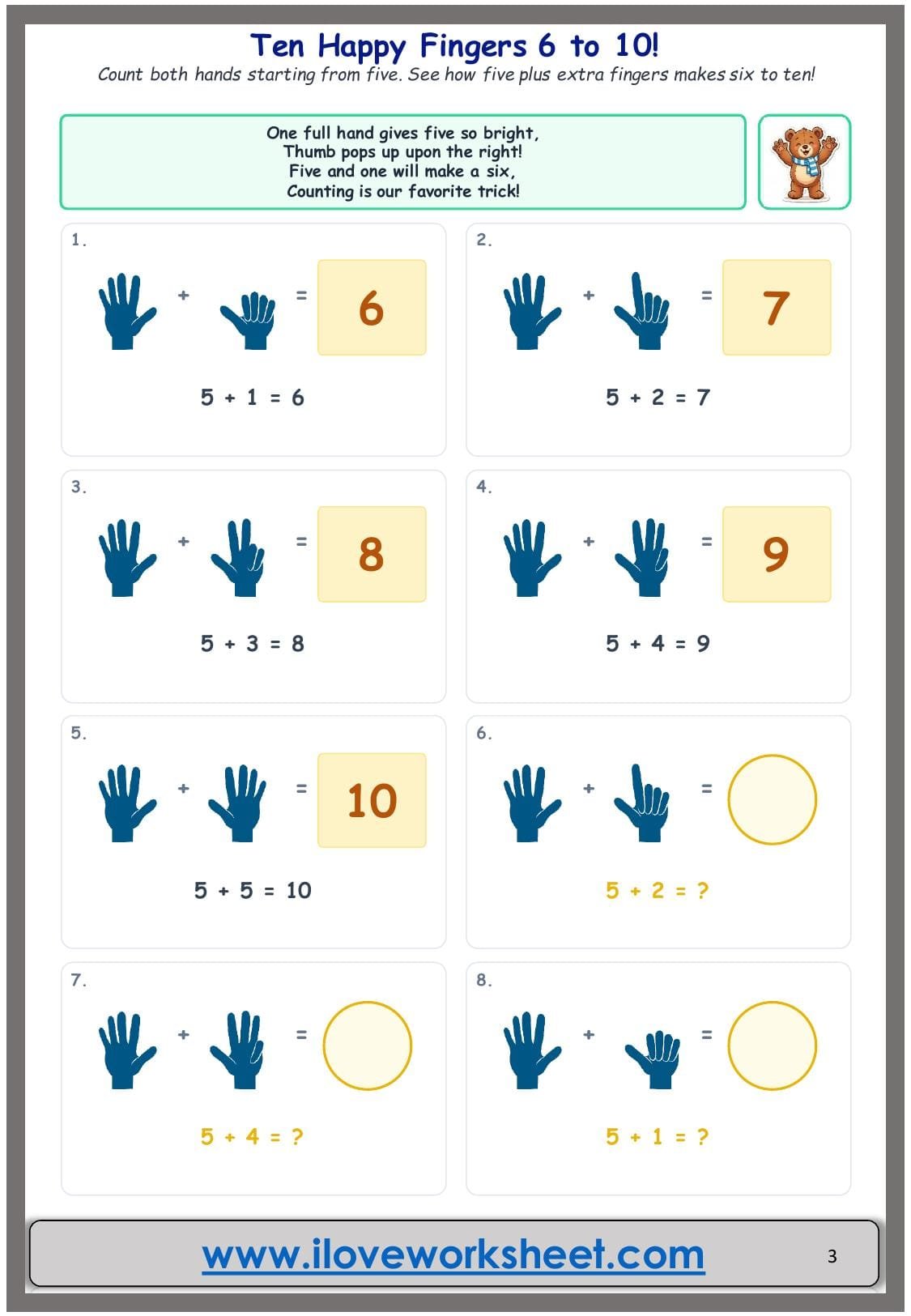
Moving beyond five represents a pivotal cognitive milestone in kindergarten mathematics. Early childhood curricula, including international benchmarks such as the Dutch Junior Einstein framework and North American Common Core standards, emphasize base-five and base-ten anchor concepts. Hand counting worksheets excel in illustrating numbers from six to ten by utilizing dual-hand configurations.
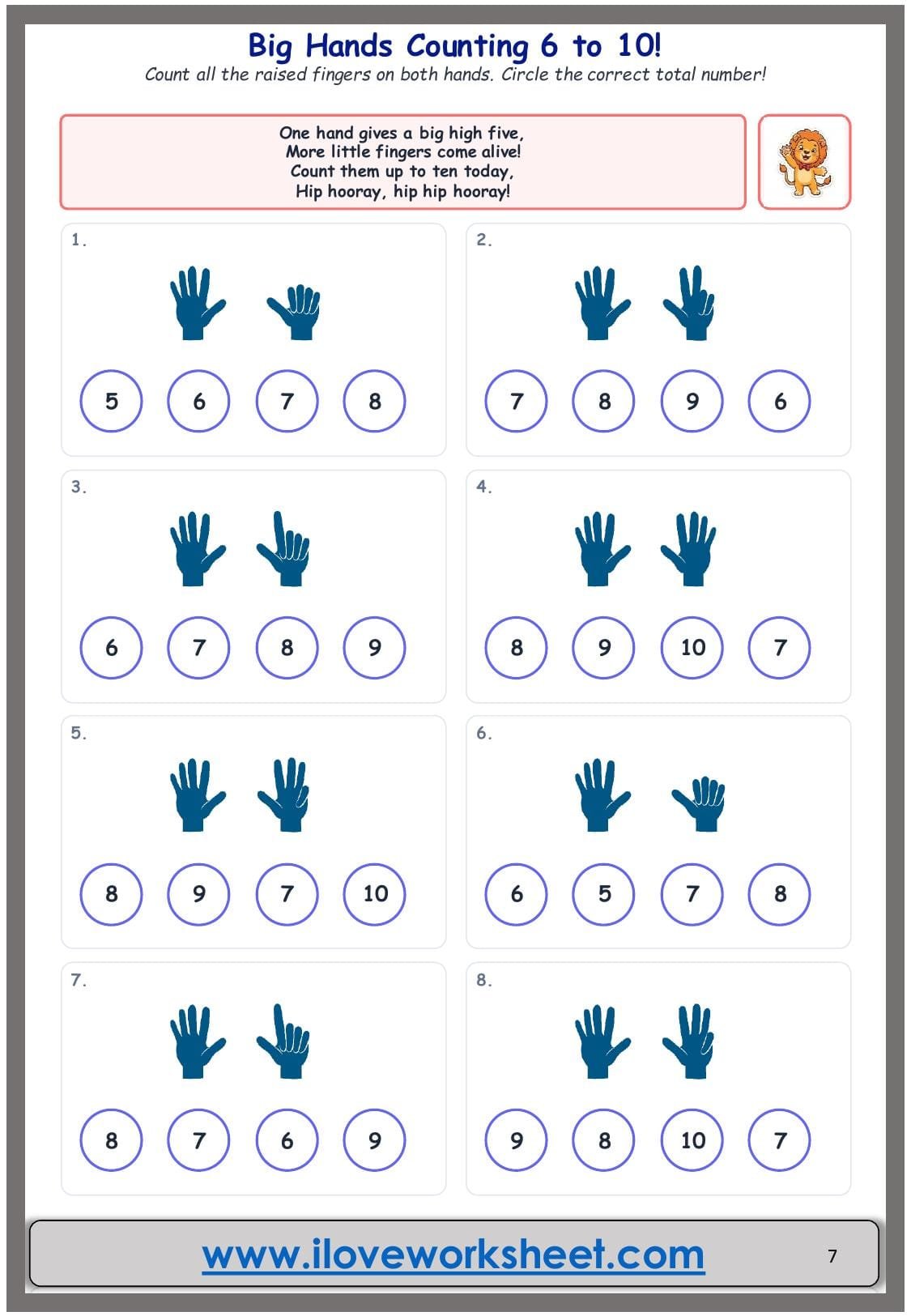
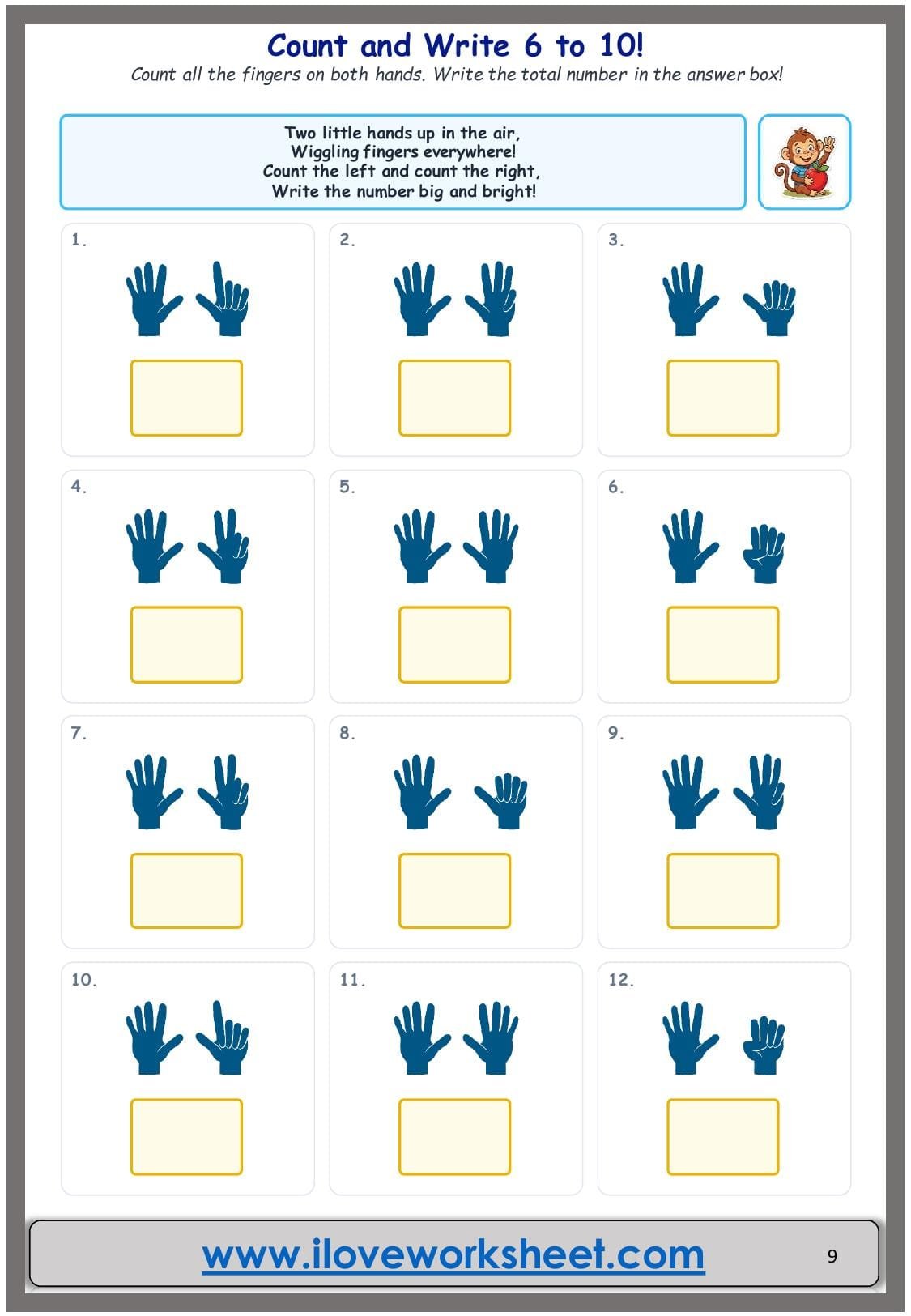
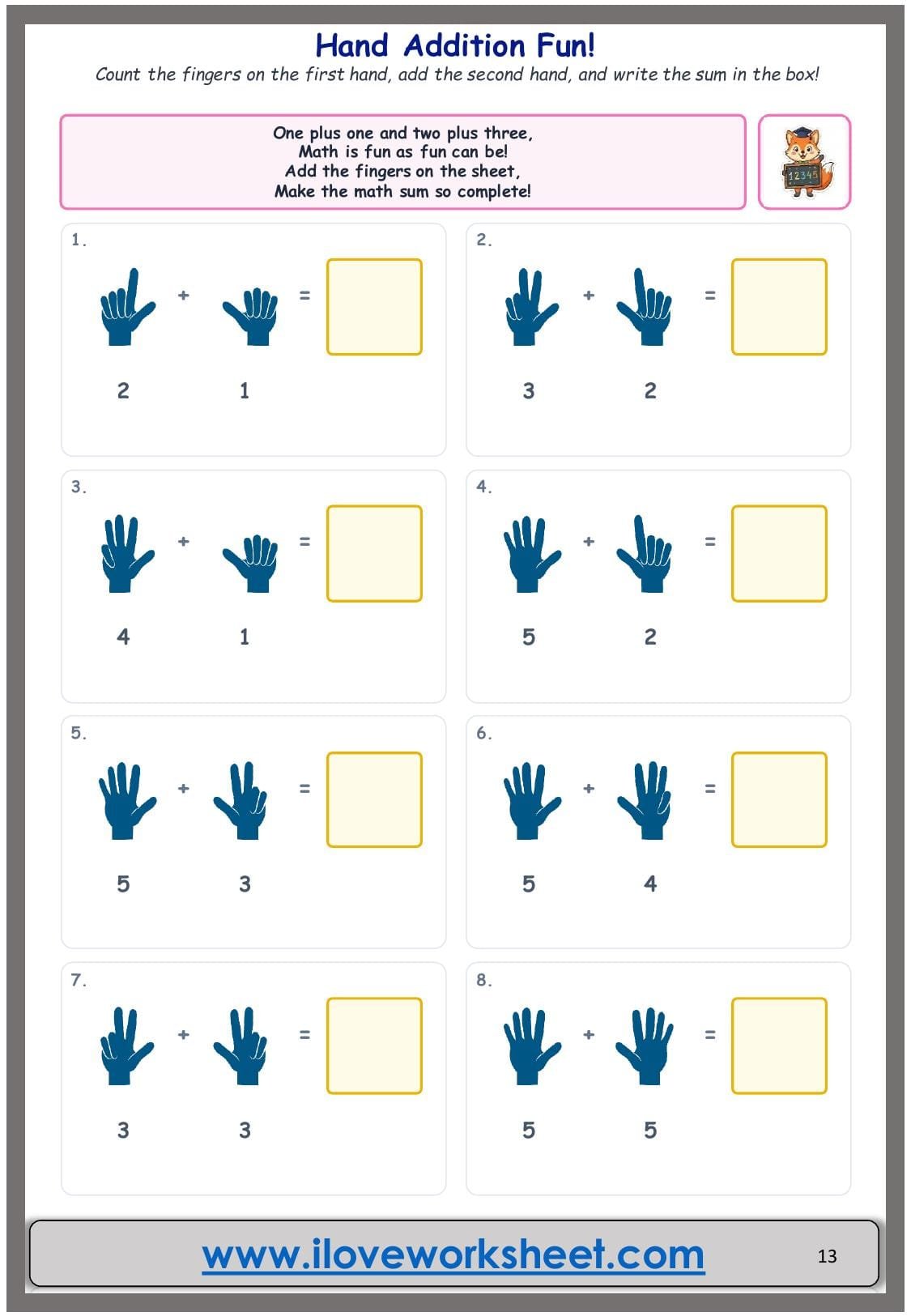
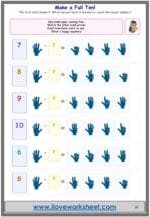
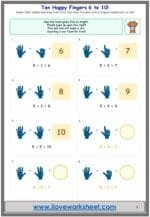
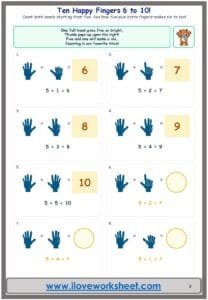
When presenting the number six, a worksheet depicts one full hand of five fingers alongside one raised finger on the second hand. This visual structure directly translates into the algebraic relation 5 + 1 = 6. Similarly, the number seven appears as 5 + 2 = 7, eight as 5 + 3 = 8, nine as 5 + 4 = 9, and ten as two complete open hands representing 5 + 5 = 10.
This structural decomposition prevents cognitive overload. Counting ten isolated, scattered dots requires tedious one-by-one enumeration that often leads to tracking errors. Conversely, dual-hand representations leverage the natural five-frame structure of human hands. Kindergarten students immediately perceive the full five-group and focus their attention solely on counting the supplementary fingers. This spatial grouping builds deep intuition for number composition, place value concepts, and mental arithmetic.
Effective kindergarten math worksheets incorporate diverse pedagogical formats to maintain focus, encourage active learning, and foster independent problem-solving. A comprehensive counting packet incorporates multiple progressive modalities:
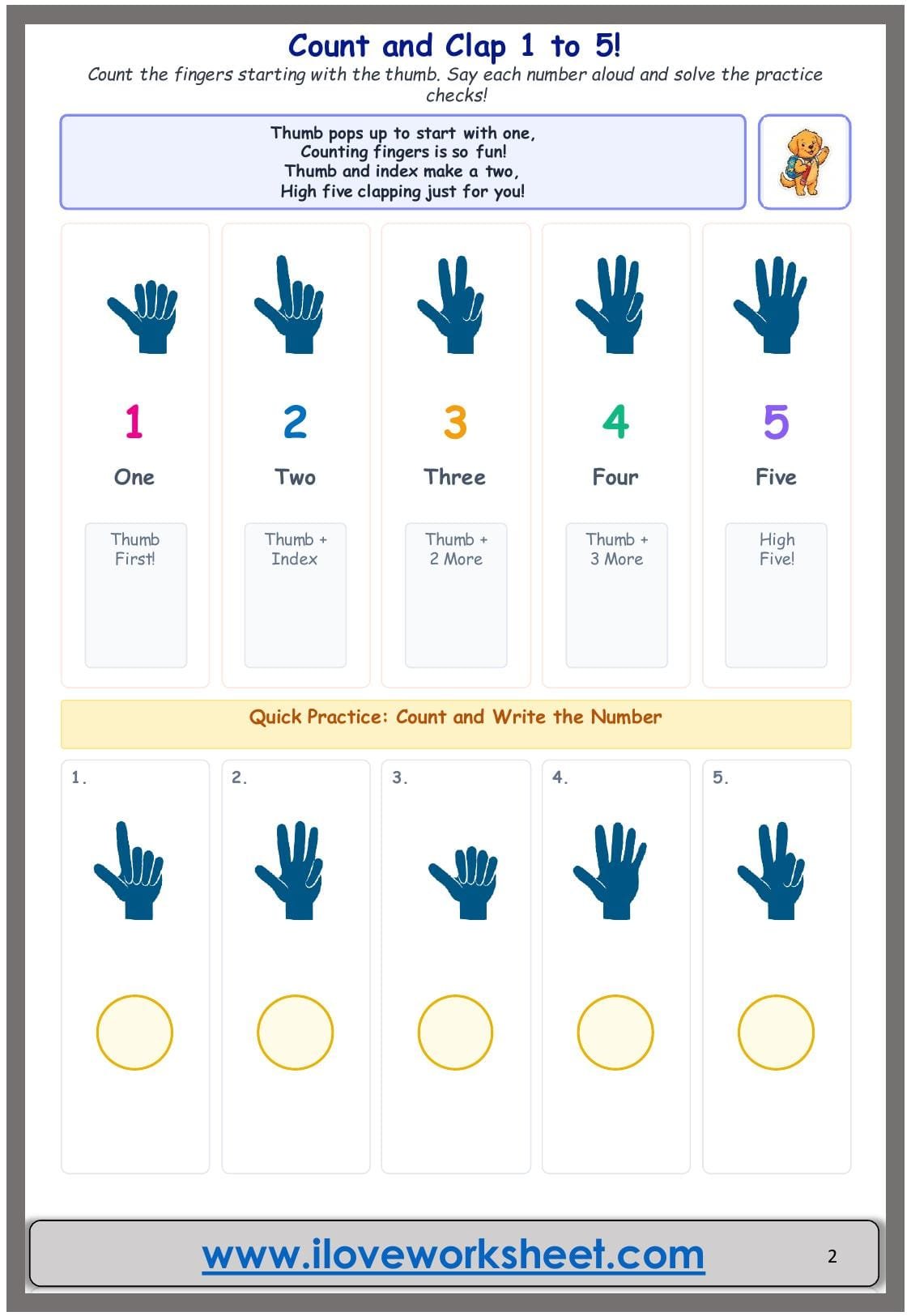
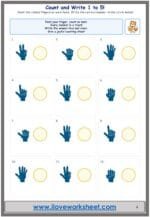
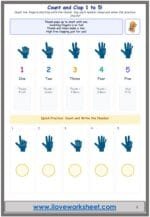
Counting and Clapping Exploration: Introductory activity pages present each numeral alongside a large, clear hand illustration and the corresponding written number word. Accompanying rhythmic counting rhymes encourage vocal participation and physical clapping, integrating auditory and kinesthetic sensory channels.
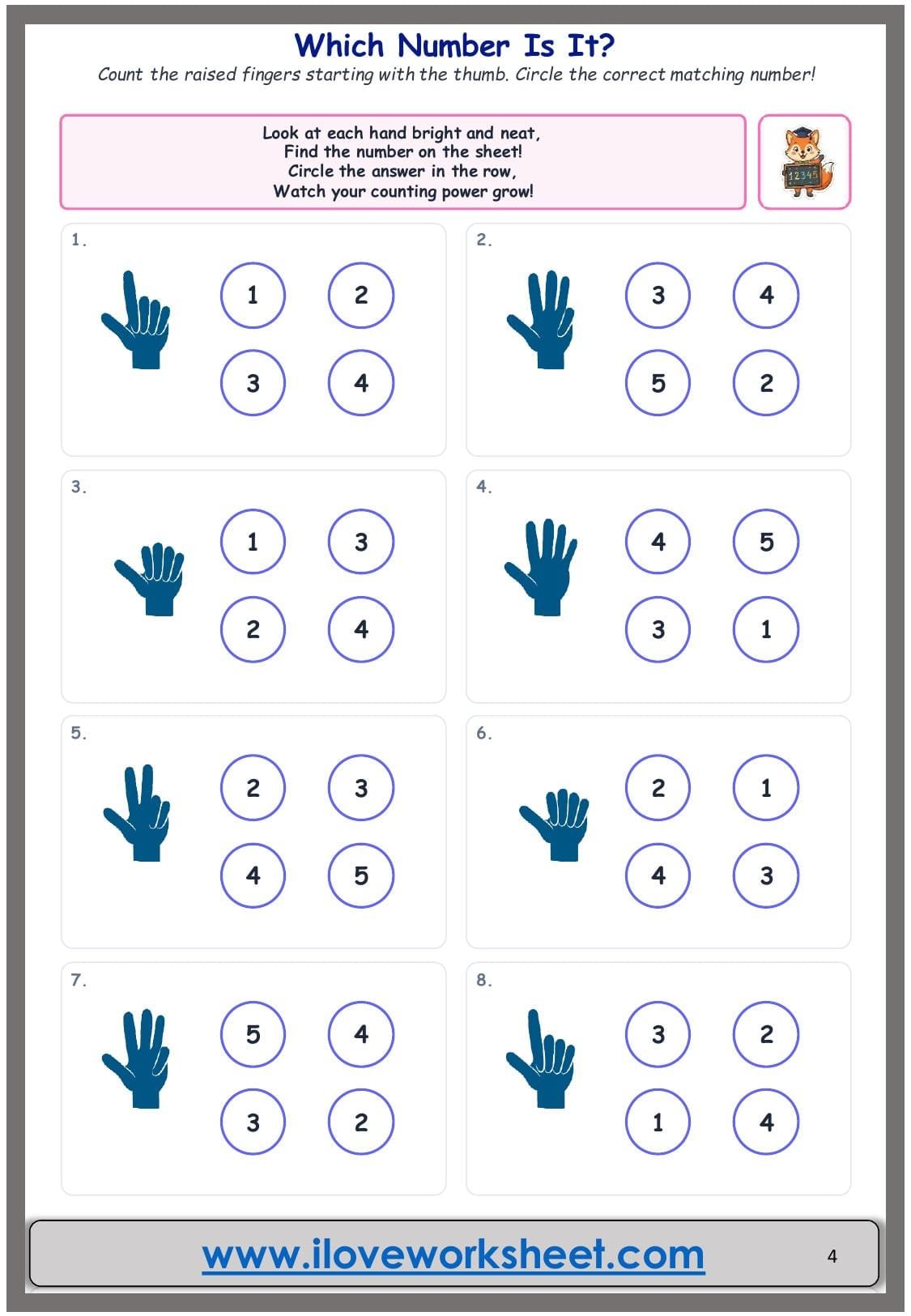
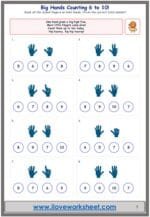
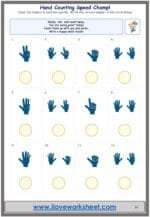
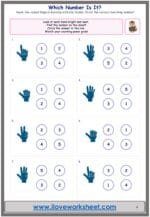
Identification and Bubble Selection: Multiple-choice formats present a single hand illustration alongside four distinct numerical options contained within rounded bubbles. Children count the raised digits and circle or color the matching number, developing fine-motor pencil control alongside cognitive discrimination.
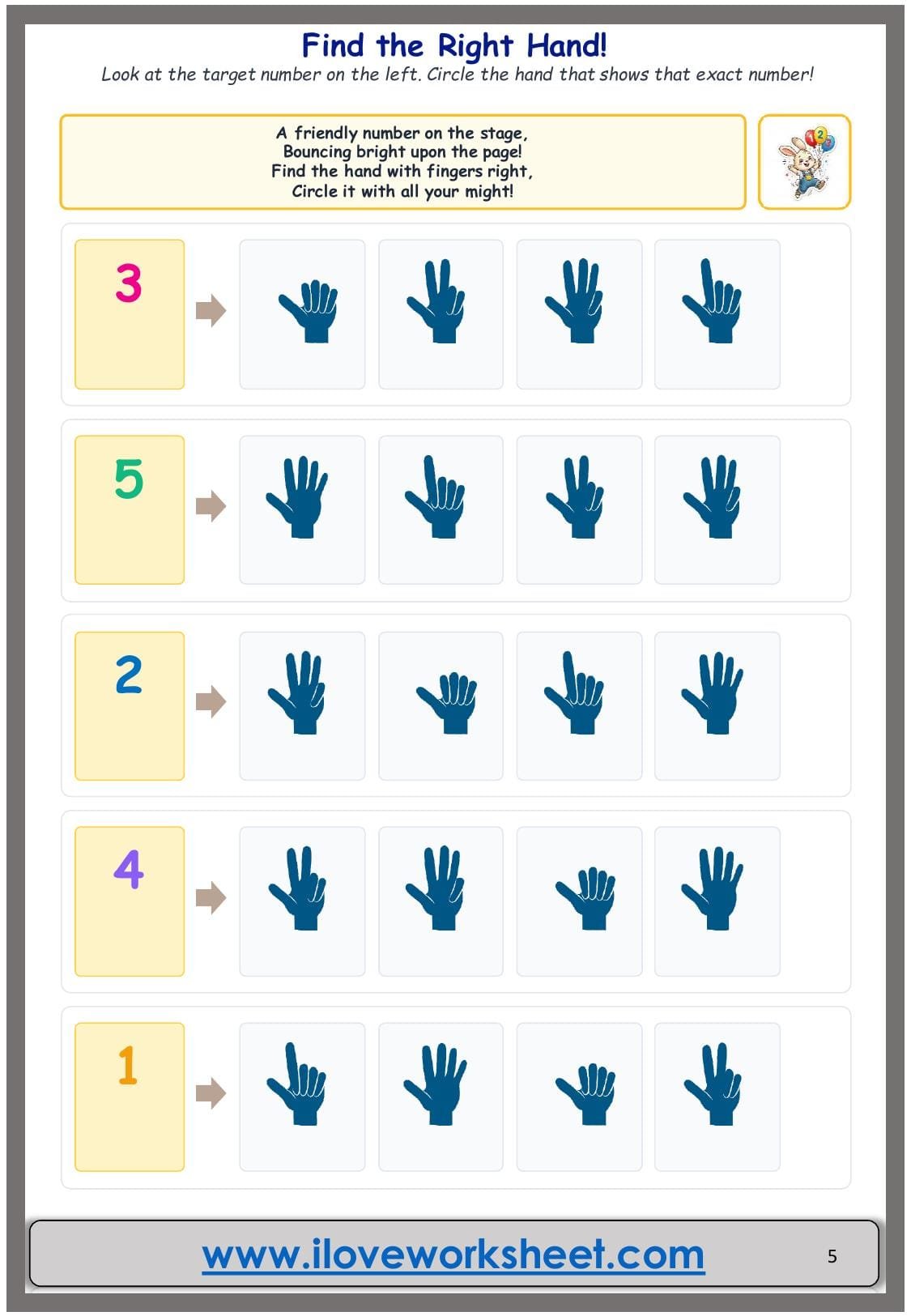
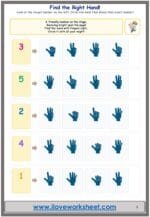
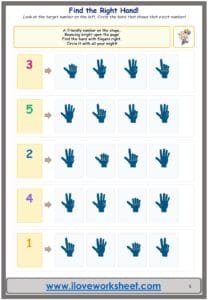
Target Number Matching and Discrimination: Exercises present a bold target numeral followed by a horizontal row of varied hand configurations. Learners scan the row, evaluate each hand illustration, and circle the exact hand that satisfies the target value, honing visual scanning and analytical comparison.
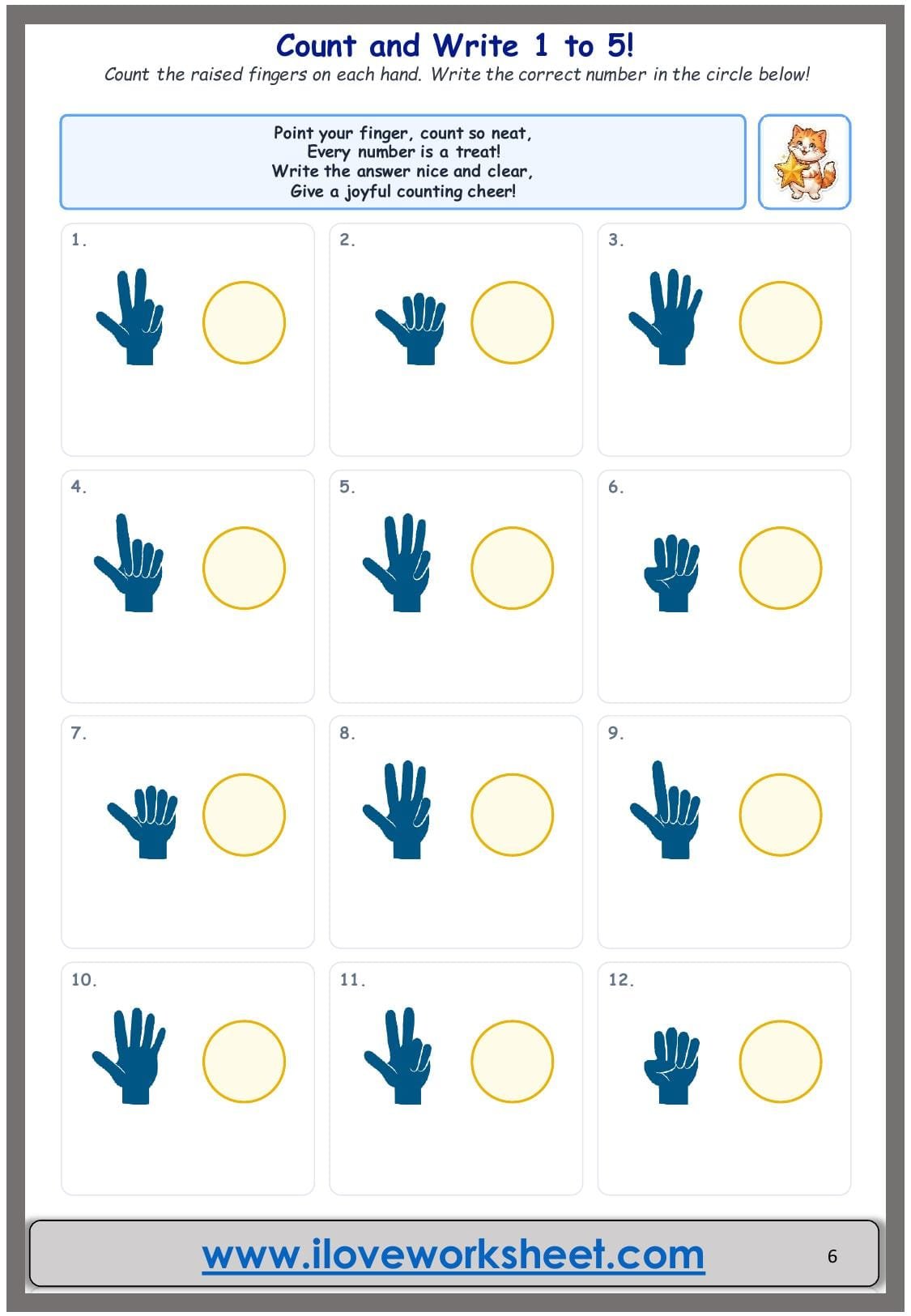
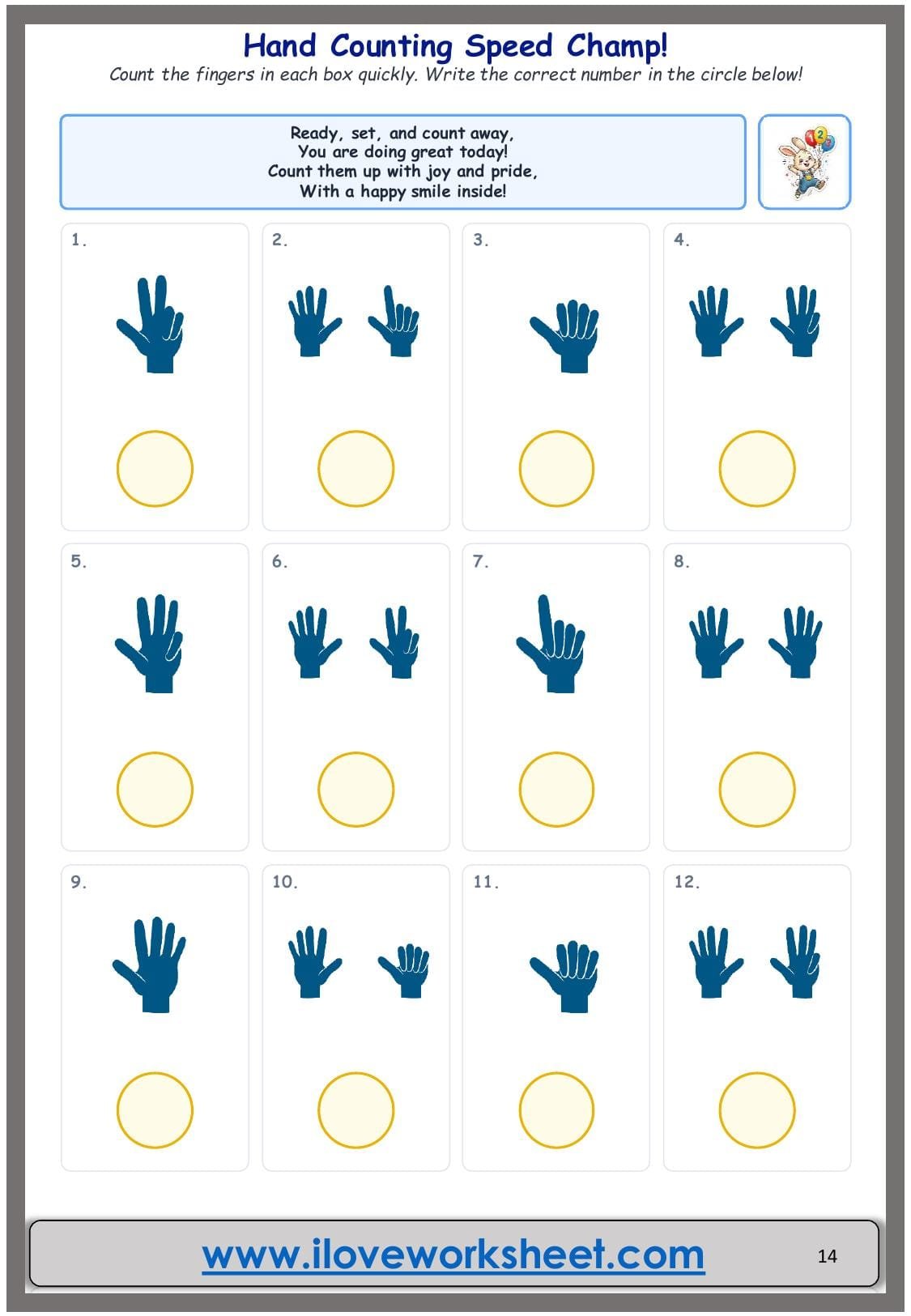
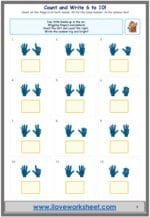
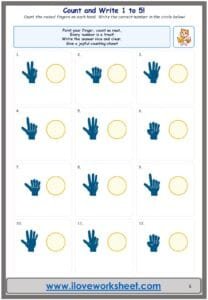
Independent Write-In Practice: Structured activity blocks feature hand diagrams positioned above large, inviting answer circles. Students count the fingers and independently write the corresponding numeral inside the box, reinforcing numeral formation and hand-eye coordination.
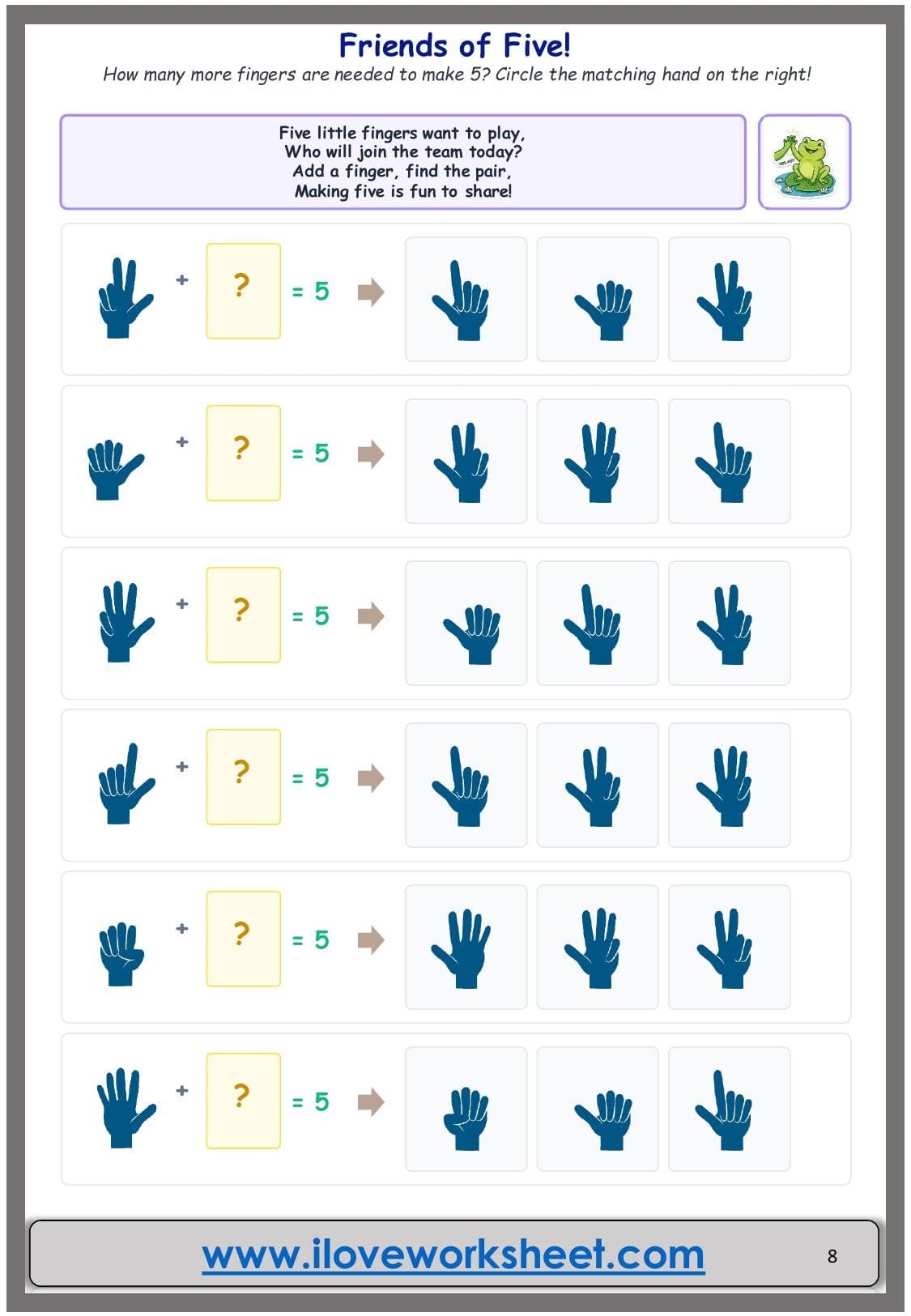
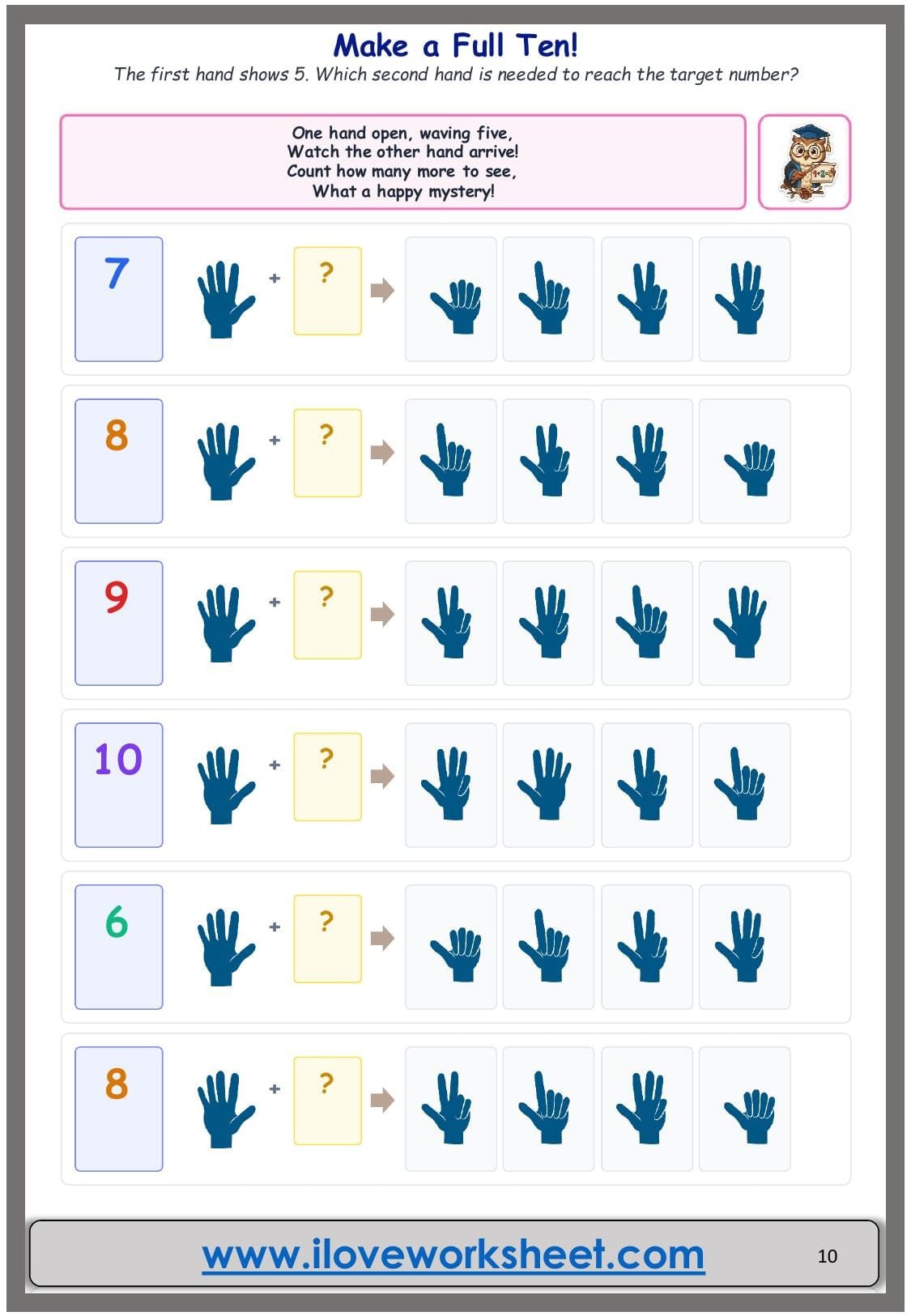
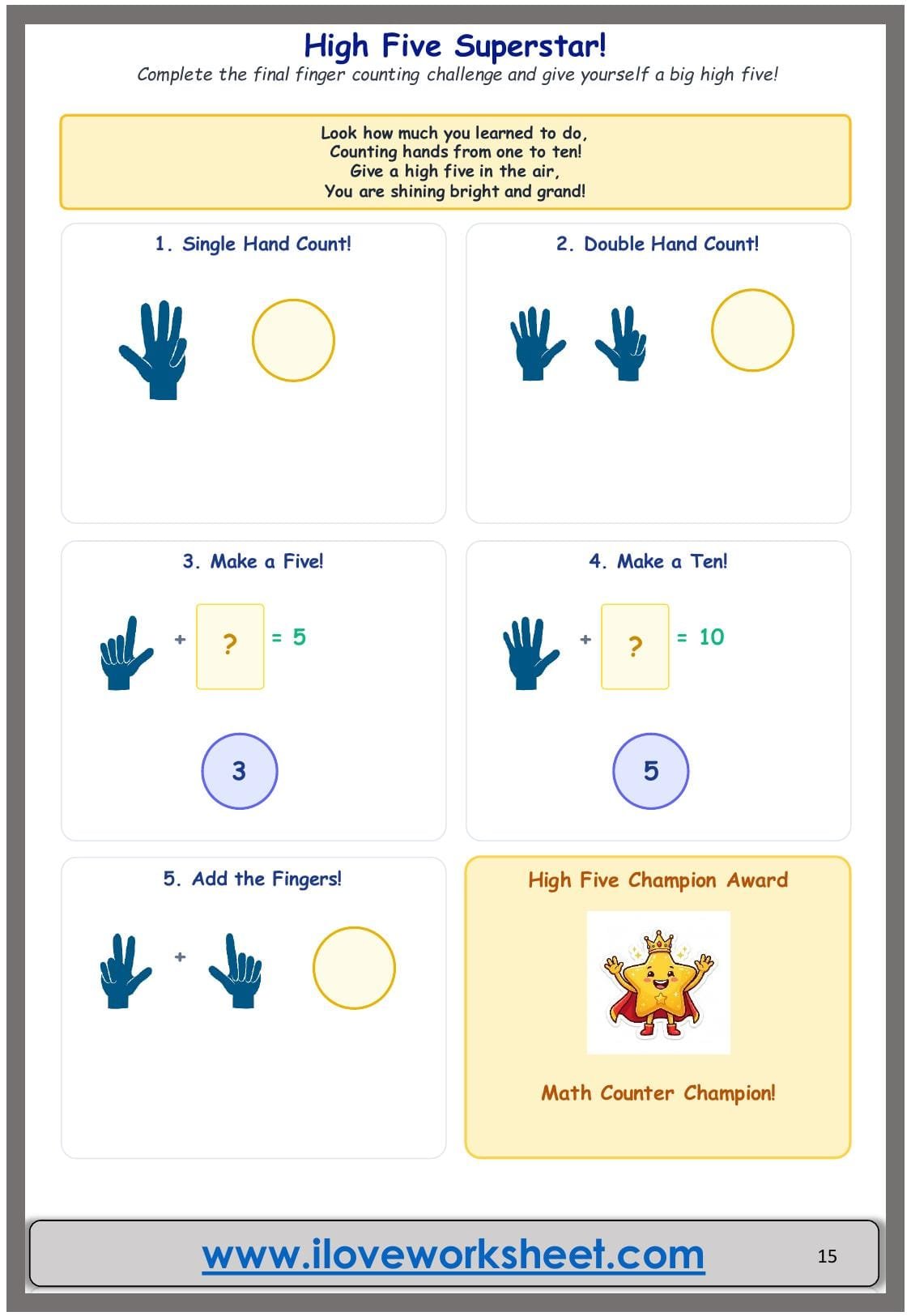
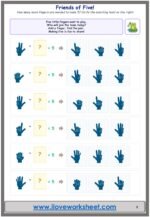
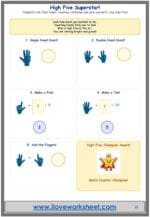
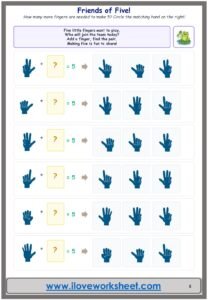
Making Five and Making Ten Missing Addend Puzzles: Foundational algebraic reasoning flourishes through missing addend puzzles. A worksheet displays an initial hand, a plus sign, an empty mystery box, and a target sum of five or ten. Children identify the missing hand necessary to complete the equation, establishing the groundwork for subtraction and part-whole relationships.
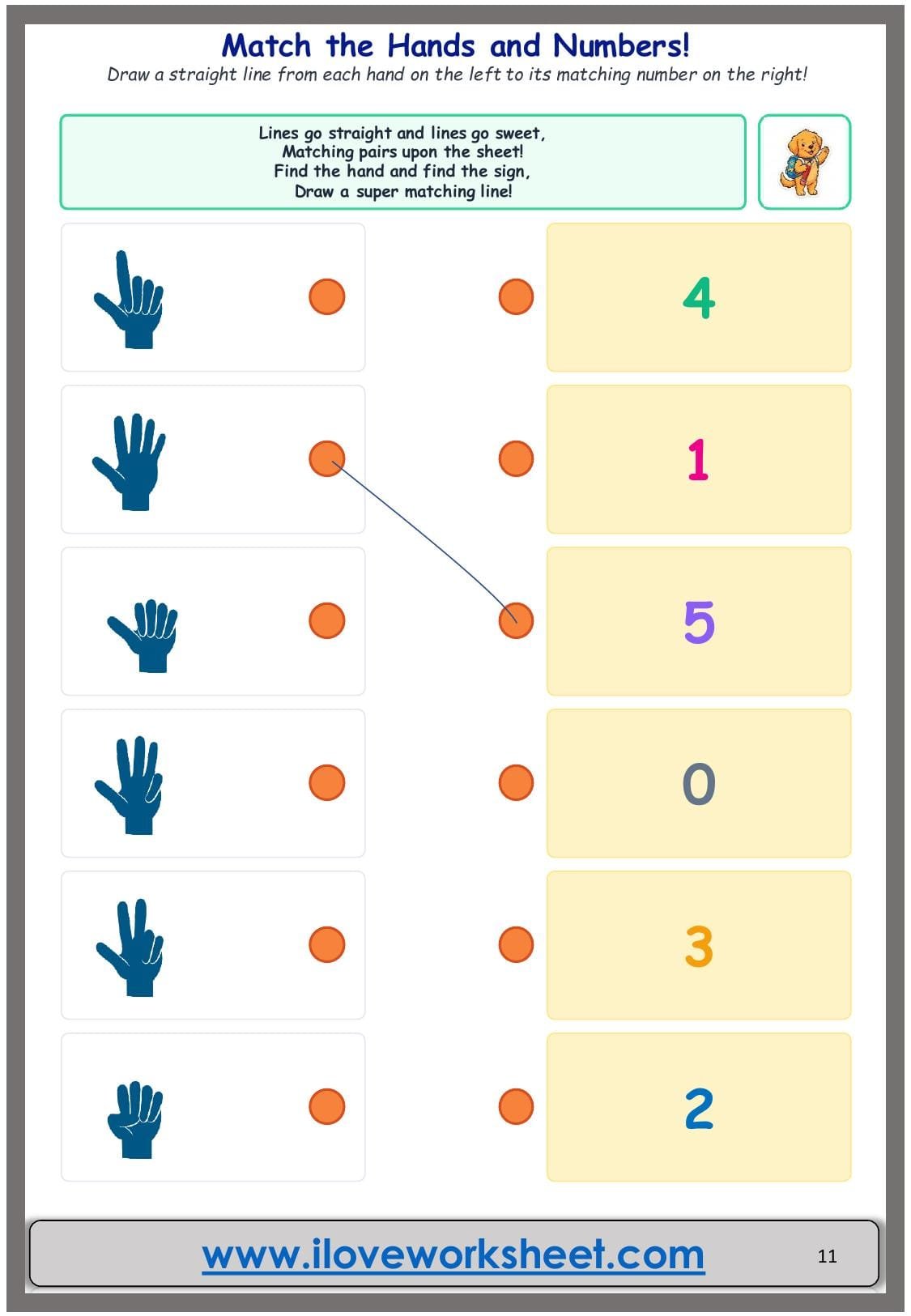
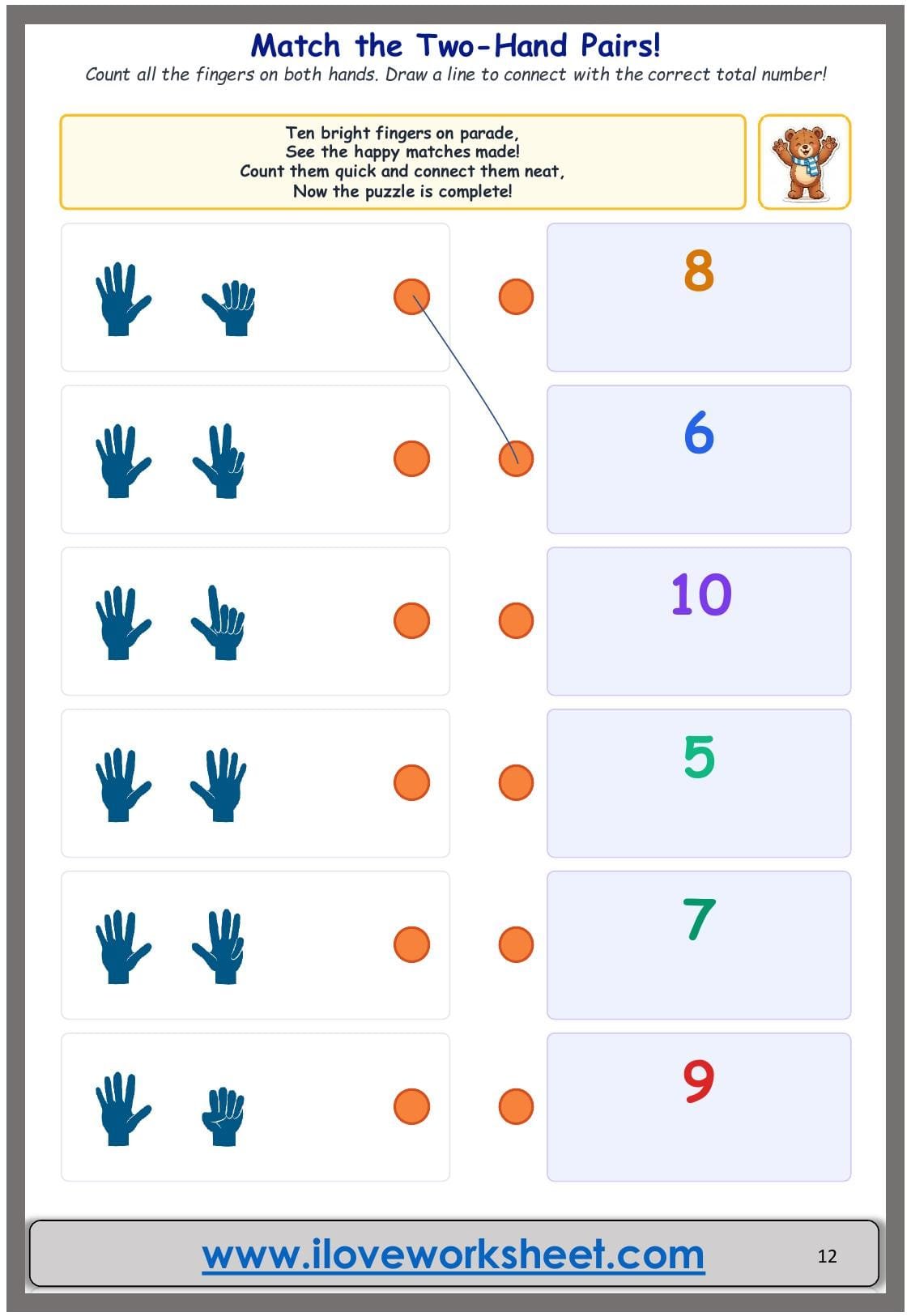
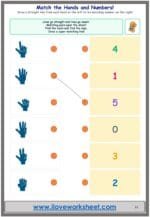
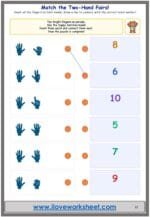
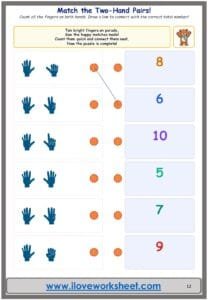
Two-Column Line Matching Challenges: Interactive matching sheets present scrambled hand illustrations in the left column and colorful numerals in the right column, flanked by prominent connection dots. Learners draw straight lines across the page to link matching pairs, synthesizing visual analysis and spatial navigation.
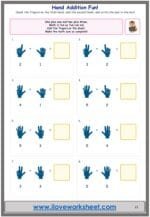
Early Addition Equations: Visual arithmetic tasks combine two distinct hand illustrations with explicit mathematical operators (+ and =) above structured write-in rectangles. Children add the two sets of fingers together, linking concrete visual sets with formal arithmetic expressions.
Comprehensive Mastery Assessments: Capstone activity pages blend speed-counting tasks, ten-frame completion challenges, and celebratory achievement badges to review cumulative skills and validate kindergarten mathematical readiness.
Language acquisition and mathematical reasoning share interconnected neural circuitry during the kindergarten developmental stage. The inclusion of short, four-line rhyming songs on instructional worksheets enhances engagement and accelerates memory retention. Poetic meter establishes an auditory cadence that aligns with numerical counting sequences.
Rhymes transform abstract drill routines into playful linguistic games. Chanting simple verses while pointing to illustrated hands helps children internalize mathematical vocabulary, ordinal concepts, and arithmetic operations. The pleasant acoustic structure of poetry lowers situational stress, making kindergarten math lessons cheerful, memorable, and intellectually stimulating.
Print-Friendly Graphic Design and Optimal Classroom Readability
Instructional materials designed for early childhood classrooms must adhere to stringent visual and ergonomic design principles. Kindergarten pupils possess developing visual tracking systems that can be easily overwhelmed by visual clutter, excessive decorative elements, or crowded text blocks.
Print-friendly hand illustrations utilize clean outlines, soft organic skin tones, and distinct separation between individual fingers. Clear contrast ensures that worksheets remain crisp and legible when printed on standard classroom black-and-white or color printers. Rounded content cards, generous margins, and spacious write-in circles provide ample room for developing motor skills and oversized pencil marks.
The use of child-friendly typography, such as Comic Sans MS, ensures clear character discrimination. Distinct glyphs prevent common early childhood confusion between similar letterforms and numerals. Eliminating extraneous administrative headers and maintaining large visual elements keeps children focused on mathematical discovery.
Hand counting worksheets serve as versatile instructional assets across diverse educational settings, including public school kindergarten classrooms, private Montessori environments, early intervention centers, and homeschool programs. Visual hand representations offer immediate accessibility to English Language Learners (ELL) and multilingual classrooms, enabling students to grasp mathematical concepts independently of complex linguistic instructions.
Educators can seamlessly integrate hand counting worksheets into whole-class direct instruction, small-group math centers, individual practice sessions, morning bell-ringer tasks, or remedial support interventions. By providing a multi-sensory bridge connecting physical gestures, pictorial representations, spoken rhymes, and abstract numerals, hand counting worksheets cultivate confident, enthusiastic, and mathematically proficient young learners.