
Early literacy instruction in kindergarten classrooms centers on helping young learners understand how speech sounds connect to printed letters. Once children master single consonant sounds and short vowel patterns, the next essential milestone in phonics is blending consonants. Consonant blends appear in hundreds of high-frequency words that children encounter in early readers, storybooks, and classroom writing activities. Developing fluency with beginning blends provides young students with the phonetic foundation needed to decode complex words smoothly and spell with greater independence.
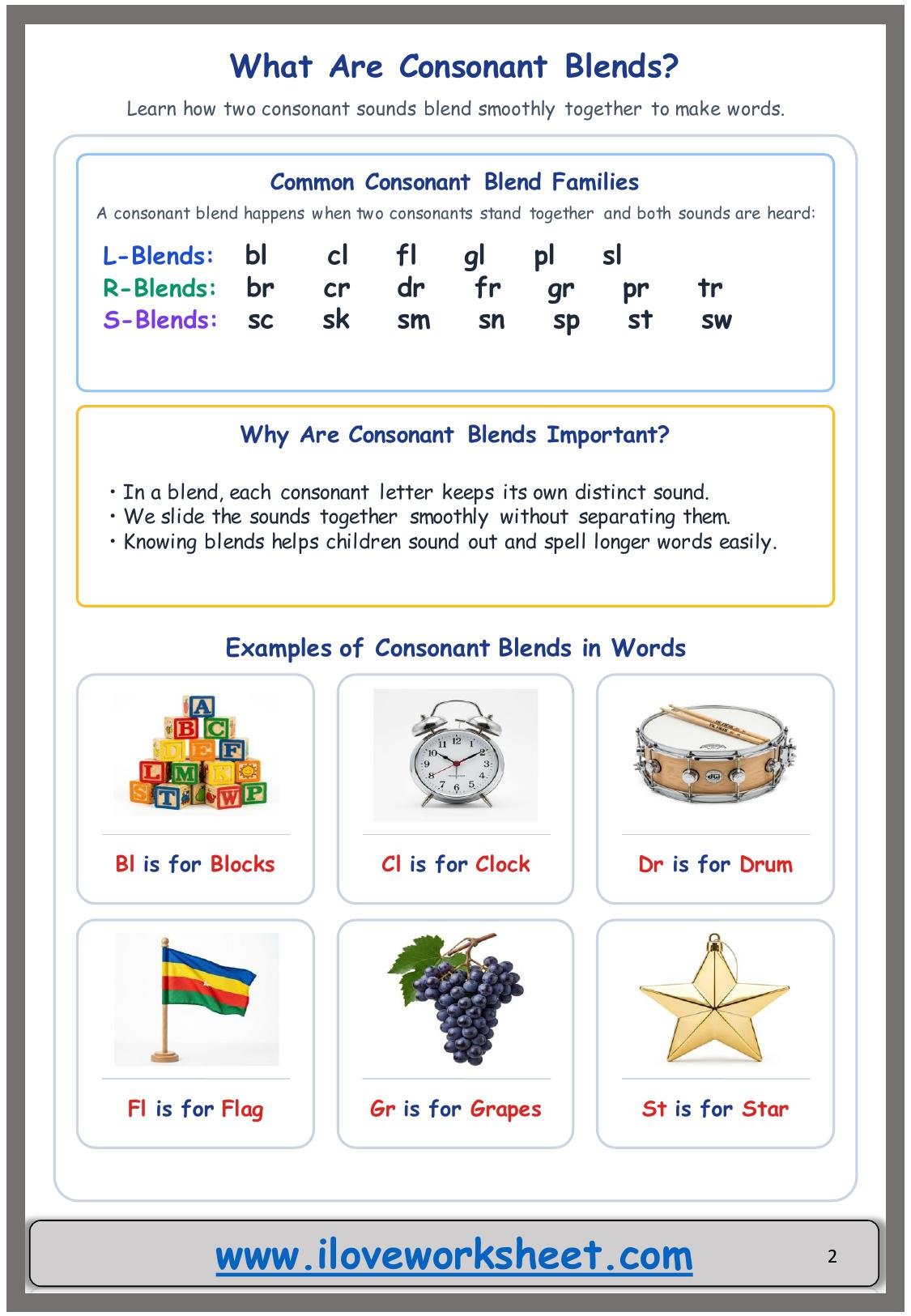
A beginning consonant blend occurs when two consonants appear together at the start of a word, and each individual letter retains its distinct sound while flowing smoothly into the adjacent phoneme. Unlike consonant digraphs such as SH, CH, or TH, where two letters combine to form a completely new sound, consonant blends preserve both original sounds. In the word flag, a child pronounces both the /f/ and the /l/ sounds before blending them into the vowel. Helping kindergarteners hear, isolate, and pronounce both distinct sounds represents one of the most rewarding instructional steps in early childhood phonics.
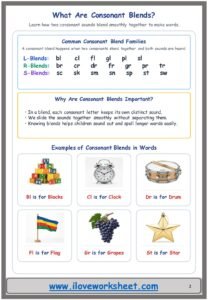
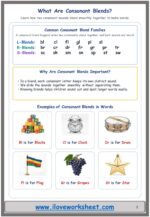
Classroom phonics instruction becomes much more manageable for young children when consonant blends are organized into clear, systematic families. English beginning blends primarily fall into three distinct phonetic categories: L-blends, R-blends, and S-blends. Grouping blends by their shared second or first consonant allows kindergarteners to recognize familiar auditory patterns and make predictable connections across multiple words.
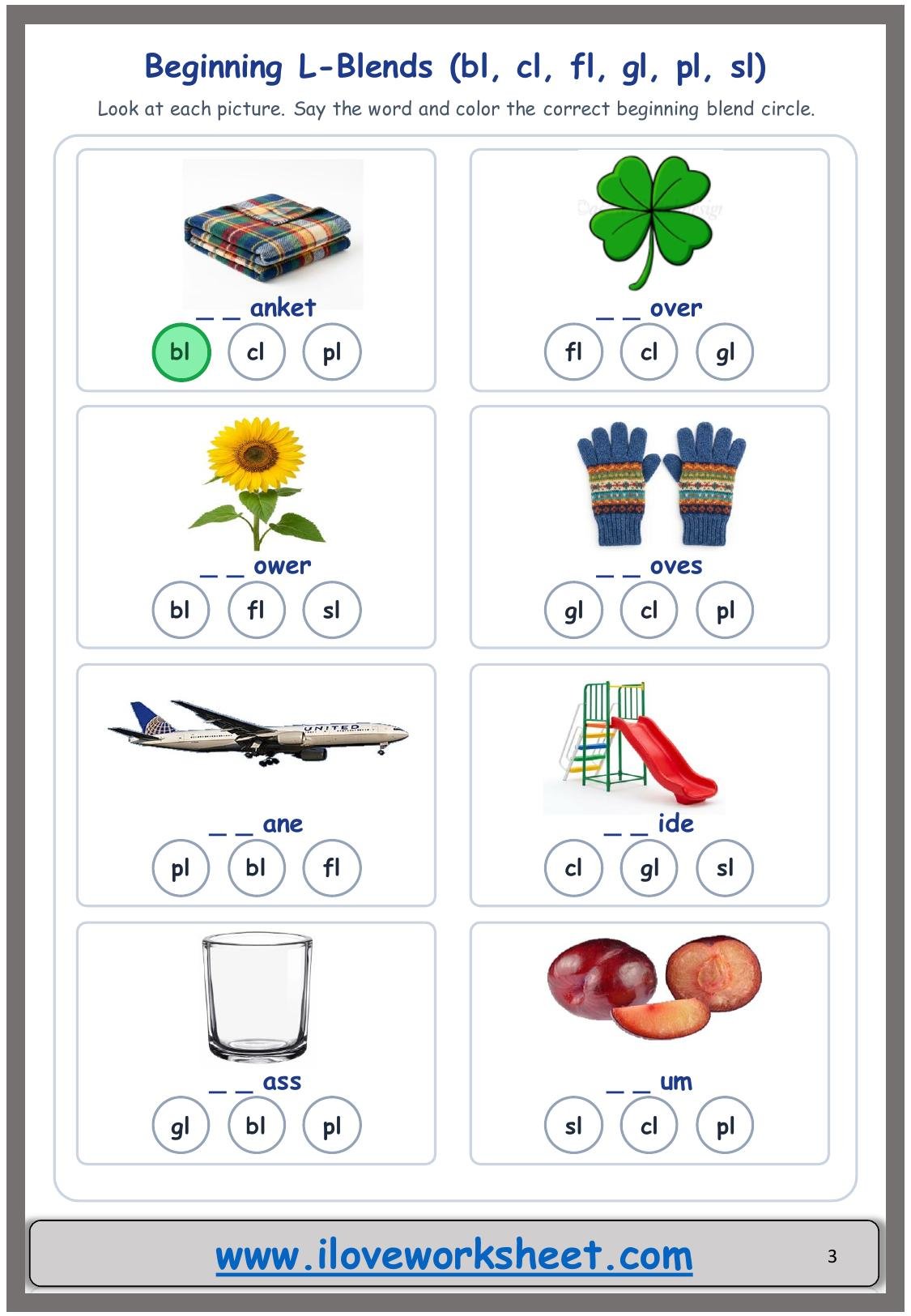
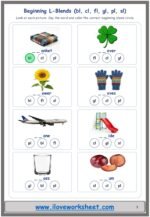
The L-blend family features words beginning with BL, CL, FL, GL, PL, and SL. Because the liquid /l/ sound glides easily off the tongue, L-blends are often the first blends introduced in kindergarten classrooms. Children explore familiar everyday objects such as blocks, blankets, clocks, clover, flowers, flags, gloves, glass, planes, and slides. Hearing the smooth transition between the initial stop consonant and the flowing /l/ sound allows children to experience early success in sound stretching and phoneme blending.
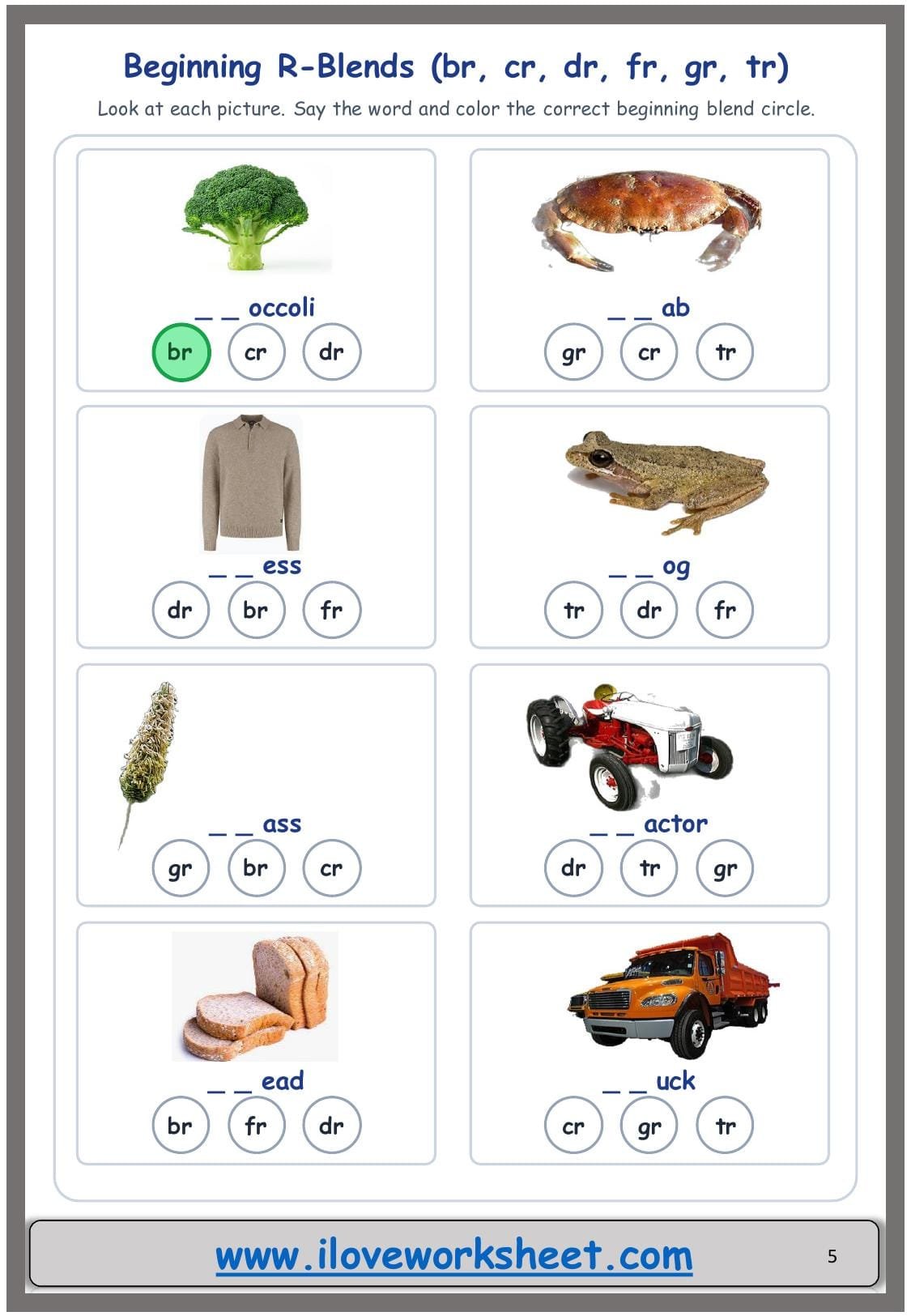
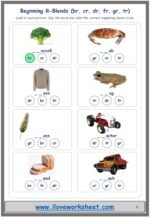
The R-blend family introduces combinations where the letter R follows an initial consonant, including BR, CR, DR, FR, GR, and TR. These blends present an exciting auditory adventure for young learners. Children practice blending sounds in common concrete words such as broccoli, bread, brush, bricks, crabs, crowns, crayons, dresses, drums, frogs, fries, frames, grass, grapes, tractors, trains, and trucks. Because the American English /r/ sound requires careful tongue positioning, practicing R-blends provides excellent speech articulation reinforcement alongside phonemic awareness.
The S-blend family brings together the sibilant /s/ sound followed by another consonant, creating blends such as SC, SK, SM, SN, SP, ST, and SW. In these combinations, children produce an initial hissing airflow before transitioning into the second consonant sound. Classroom examples include words like scarf, skirt, skates, scooter, smile, snail, snake, snowman, spoon, sponge, spider, star, stamp, stool, swings, and swans. S-blends frequently appear in childhood speech and outdoor play, making them natural favorites for kindergarten learners.
Explicit, systematic phonics instruction produces the strongest reading outcomes in primary classrooms. Rather than expecting children to discover blend patterns on their own, kindergarten teachers introduce each blend directly through multisensory routines that engage the ears, eyes, and vocal cords simultaneously.
Continuous sound stretching represents one of the most effective auditory methods for early blending. In this approach, the teacher models how to stretch the initial consonant sound directly into the second consonant without inserting an extra schwa sound between them. For instance, instead of saying ‘buh-luh-ack,’ the educator models a seamless ‘blllaaack.’ Stretching sounds smoothly prevents children from adding extra vowel sounds that cause decoding confusion during later reading stages.
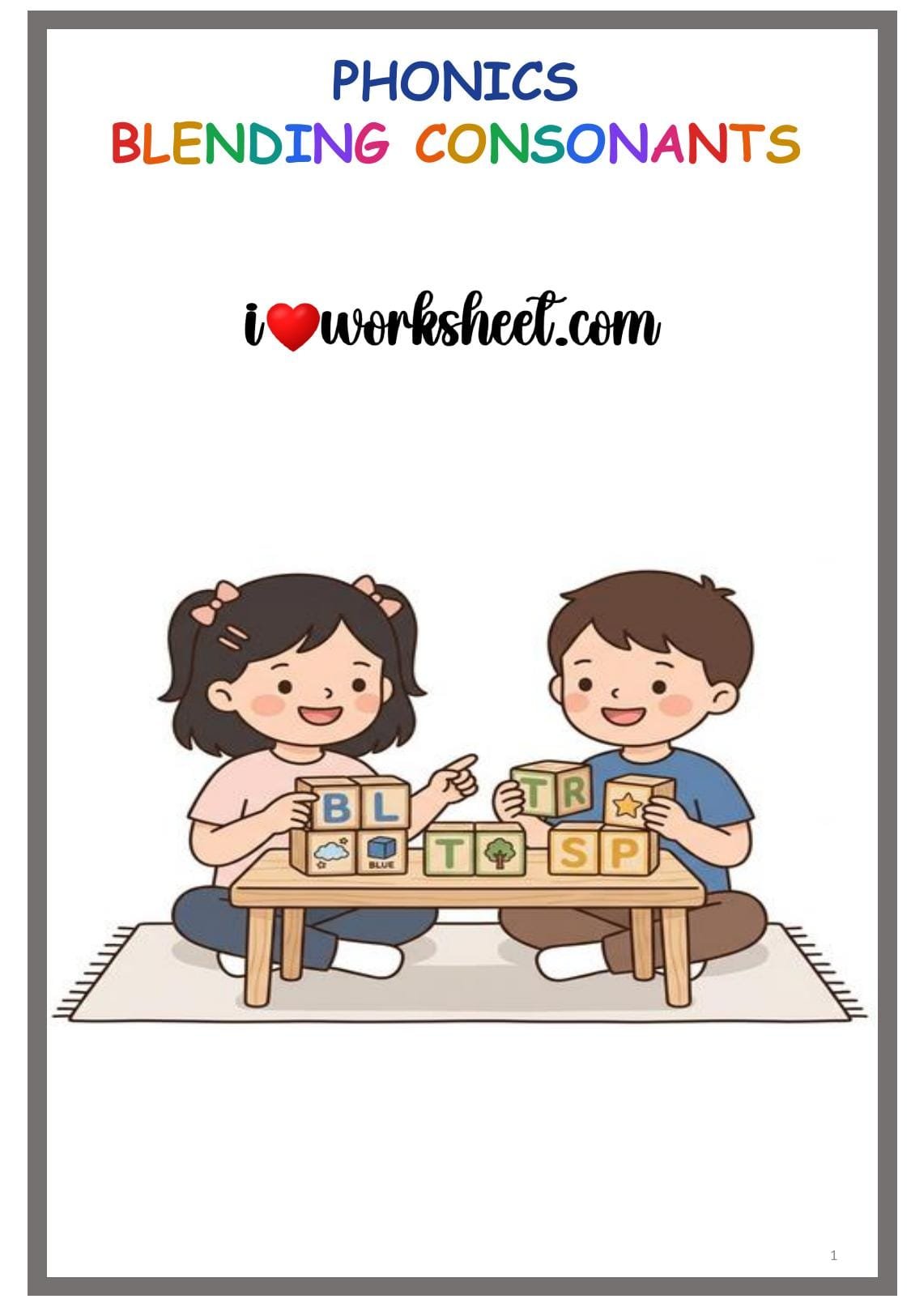
Tactile and kinesthetic modeling enhances auditory lessons by giving abstract sounds a physical presence. Teachers frequently utilize phonics manipulatives such as color-coded connecting cubes, magnetic letter tiles, or textured letter cards. When two colored blocks representing B and L slide together on a table while the class pronounces the blend aloud, children physically see and feel the process of two individual sounds coming together into a blended unit.
Real-world visual association forms another cornerstone of effective phonics instruction. Pairing beginning blends with crystal-clear, realistic photographs of everyday objects accelerates comprehension far more than abstract symbols or cartoon drawings. When five-year-olds see an authentic photograph of a real airplane, a real red tractor, or a real garden snail, their minds instantly connect the spoken vocabulary word with the target phonics pattern. Real-world imagery bridges the gap between classroom exercises and the surrounding environment.
Interactive classroom exercises maintain high student engagement while reinforcing phonemic awareness and visual letter identification. Implementing varied practice activities ensures that every child receives multiple opportunities to master L-blends, R-blends, and S-blends across different learning modalities.
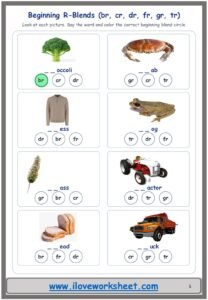
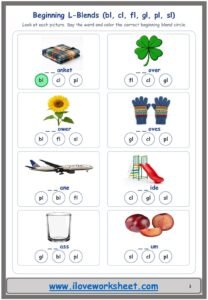
Picture Card Blend Selection stands out as a classic small-group and independent workstation activity. In this exercise, students view picture cards featuring familiar items such as a drum, a flower, a crab, or a slide. Below each picture, children see three circular option choices displaying different blends, such as BL, CL, and FL for a flower. Children say the word out loud, listen carefully to the first two sounds, and fill in or color the correct circular blend bubble. This exercise sharpens both auditory discrimination and fine-motor pencil control.
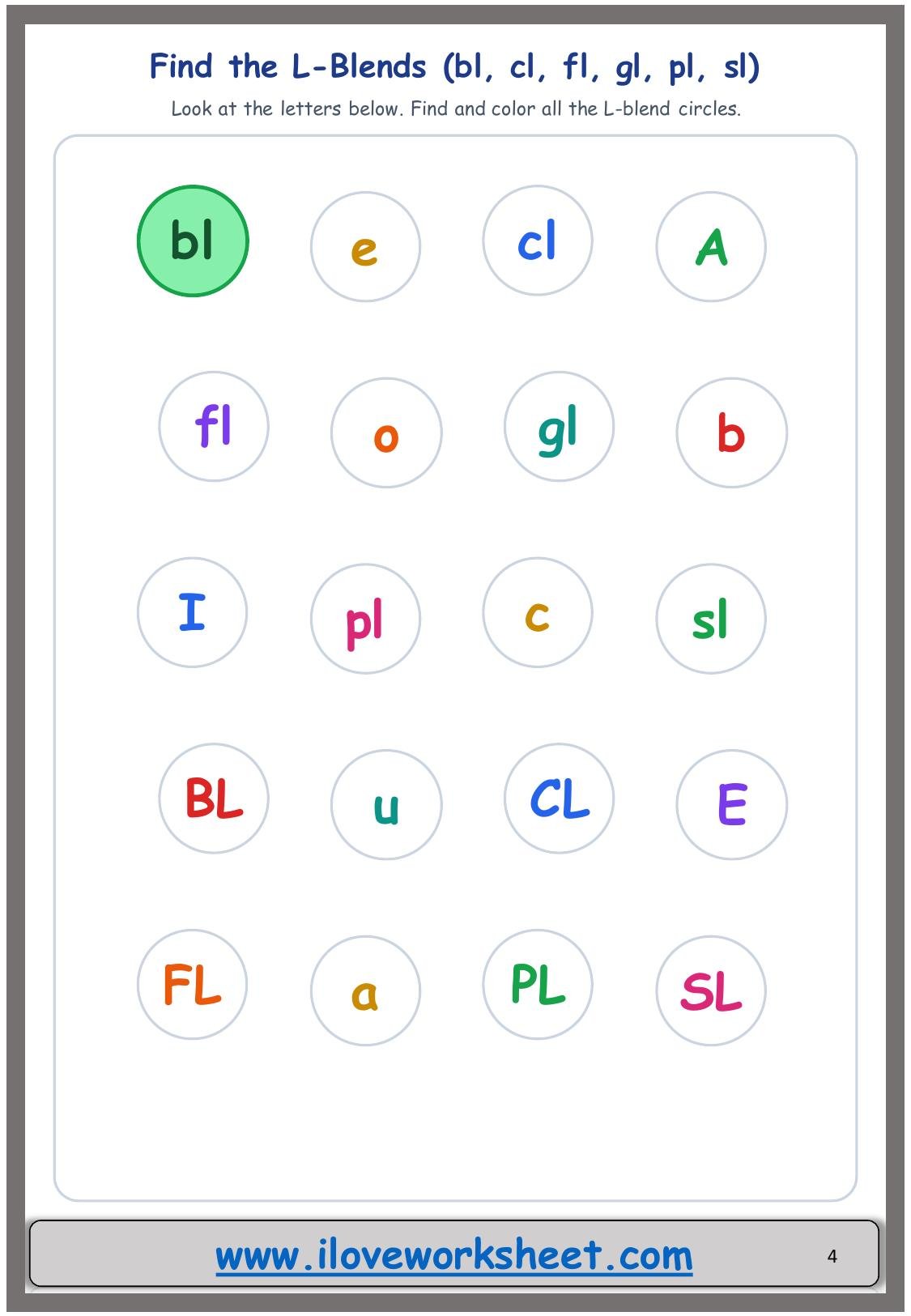
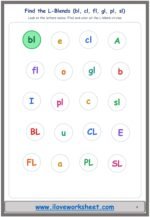
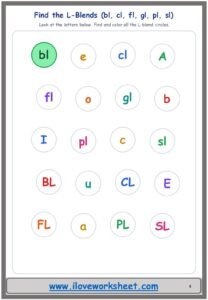
The Blend Letter Hunt transforms phonics review into an engaging visual scanning challenge. Teachers distribute worksheets containing grids of letter bubbles featuring both single consonants and two-letter consonant blends. Students receive instructions to locate and color only the circles containing target beginning blends, such as coloring all the TR, BR, and CR circles while leaving single letters uncolored. This activity builds rapid visual recognition and trains young eyes to distinguish letter pairs from isolated consonants.
Word Bank Sound Encoding provides meaningful writing practice for kindergarteners transitioning into spelling. Children examine pictures with missing initial blend spaces, such as an image of a scooter labeled with ‘_ _ ooter’ or a plate labeled with ‘_ _ ate.’ A clear word bank box at the top of the page displays the available blend options. Students read the word bank, match each blend to the corresponding picture, and print the two letters neatly on the line. Writing the letters reinforces muscle memory and connects phonemic blending directly to written composition.
Kinesthetic Blend Hopscotch gets active learners moving while building phonics automaticity. Educators place durable circular letter mats on the classroom rug, each displaying a different blend like SP, ST, SW, GL, or PL. The teacher calls out a word like ‘star’ or ‘swing,’ and student volunteers hop onto the correct blend circle while pronouncing the blend sound aloud. Combining physical motion with phonics practice creates joyful, memorable learning experiences that benefit kinesthetic learners.
Classroom Mystery Bag Sorting offers an exciting sensory center exercise. Teachers place small real-world objects or picture cards inside mystery bags. Children take turns pulling an item from the bag, identifying the object, and sorting it into designated blend baskets labeled with BL, GR, or SN. Handling tangible items like a toy train, a plastic spoon, a small block, or a toy frog deepens conceptual understanding and encourages rich peer discussions about starting sounds.
Kindergarten classrooms bring together students with wide variations in phonological readiness. Providing targeted differentiation ensures that every child progresses steadily toward mastery of consonant blends without frustration.
For students who struggle to hear both consonant sounds in a blend, educators provide focused phonemic segmenting support. Using small handheld mirrors allows children to observe their own lips and tongue movements as they articulate tricky blends. Teachers encourage children to tap their fingers on the table for each individual sound heard: tapping once for /s/, once for /n/, and then sliding the hand forward across the table to blend into ‘snail.’ This physical tapping helps prevent children from dropping the second consonant, which is a common developmental error in early reading.
For advanced kindergarteners who demonstrate rapid blend recognition, teachers introduce extended word-building challenges. These learners can blend consonant clusters with short vowels and ending consonants to construct full consonant-vowel-consonant-plus-blend words like frog, crab, sled, and stop. Advanced students also enjoy reading simple decodable sentences that incorporate multiple blends, such as ‘The frog hops on the green grass’ or ‘The black drum has a red stick.’
Consistent daily practice with high-quality phonics worksheets, engaging hands-on materials, and supportive verbal modeling empowers kindergarten learners to tackle beginning consonant blends with enthusiasm. As young children master L-blends, R-blends, and S-blends, they gain the reading fluency and decoding independence essential for lifelong academic success.