

Early mathematical fluency serves as the essential bedrock for all subsequent quantitative reasoning, scientific inquiry, and problem-solving capabilities in elementary education. When young learners first encounter addition, arithmetic represents far more than mechanical memorization of abstract facts. Addition is the foundational language through which children begin to quantify relationships, recognize patterns, decompose quantities, and make structured sense of the physical world. Establishing robust conceptual frameworks during these formative years ensures that arithmetic operations are understood intuitively rather than performed as rote algorithmic rituals.
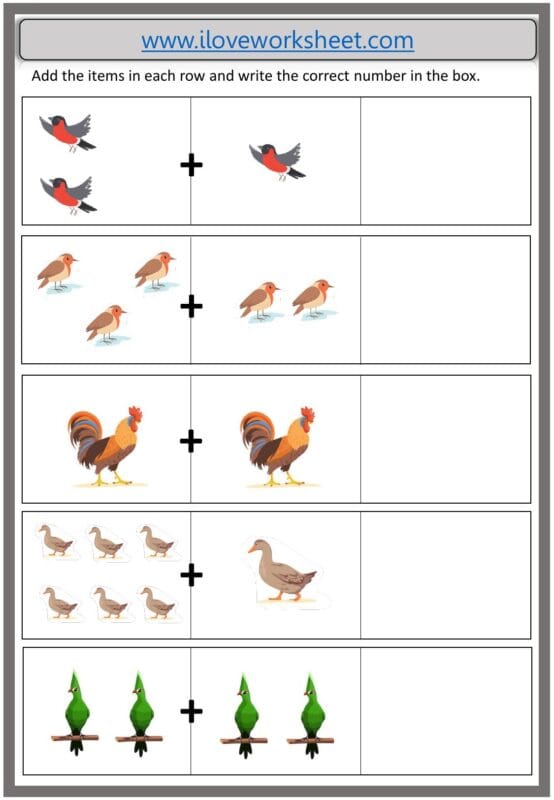
Educational research consistently demonstrates that children develop mathematical understanding through a distinct progression from concrete tactile experiences to representational visual models, and finally to abstract symbolic computation. When instructional materials present addition through diverse, interconnected modalities, children construct flexible mental representations of number bonds. Active visual engagement, thematic contextualization, and varied mathematical representations stimulate multi-sensory cognitive pathways, resulting in deeper long-term retention and higher conceptual confidence.
In early stages of numeracy development, novice learners rely heavily on one-to-one correspondence and perceptual counting methods, often utilizing physical fingers, counters, or discrete tally marks. While counting all items represents a natural developmental milestone, continued reliance on unitary counting quickly becomes a cognitive bottleneck when handling larger multi-digit numbers. Effective mathematical instruction intentionally scaffolds the transition toward mental decomposition strategies, wherein numbers are treated as flexible composite units that can be partitioned and recombined with ease.
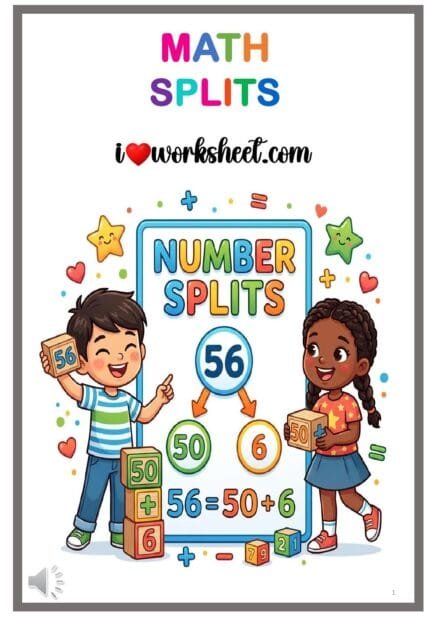
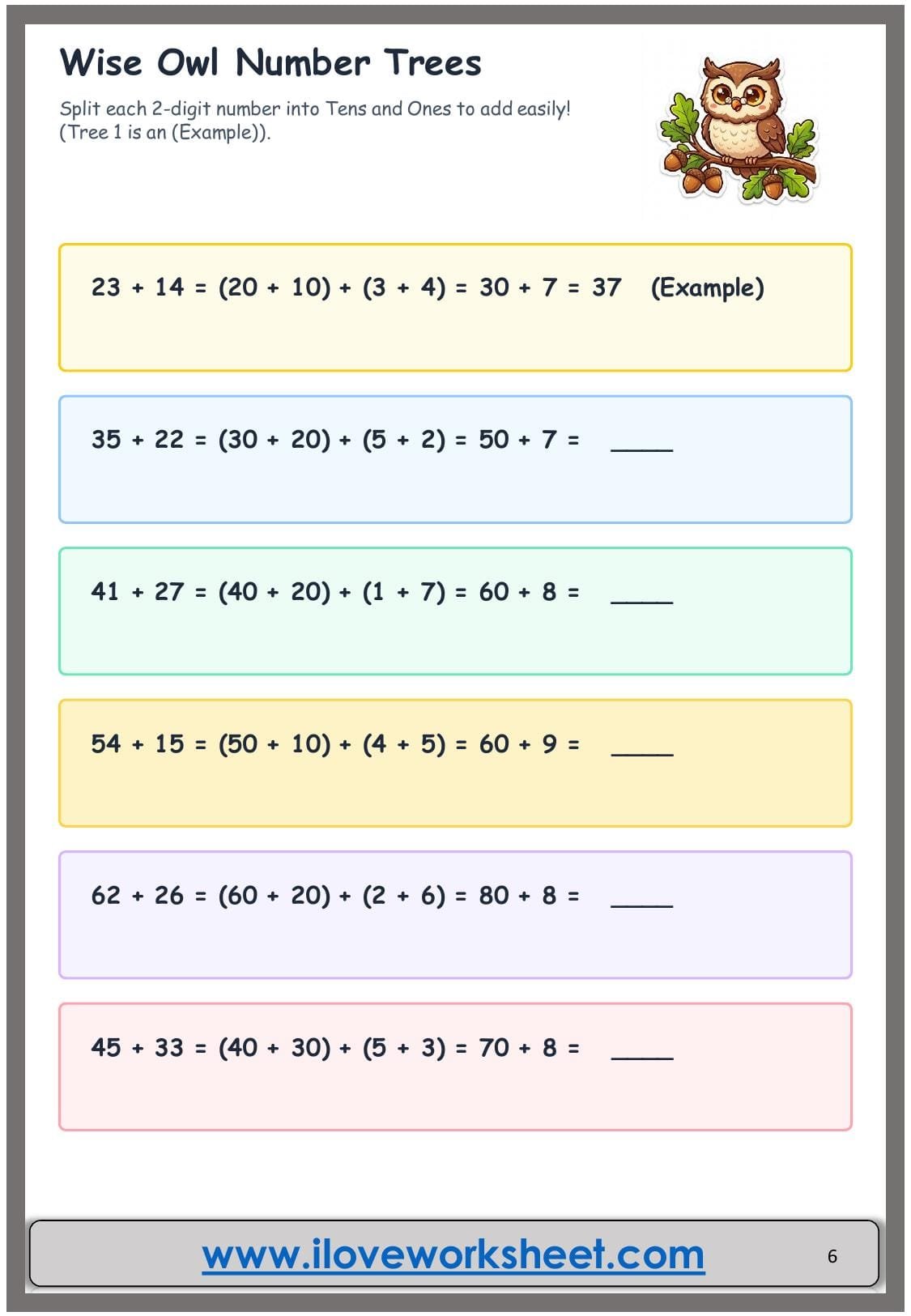
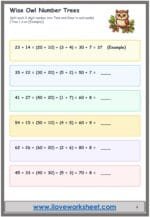
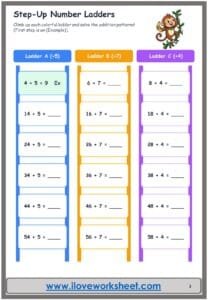
The decomposition of numbers into tens and ones constitutes one of the most transformative conceptual leaps in elementary arithmetic. By decomposing addends into place-value components, multi-digit addition transforms from an intimidating calculation into a streamlined series of intuitive mental operations. When a student approaches a problem such as thirty-five plus twenty-two, the capacity to instantly perceive thirty-five as thirty plus five, and twenty-two as twenty plus two, enables immediate mental regrouping: fifty plus seven equals fifty-seven. This structural fluency eliminates computational anxiety and builds robust numerical intuition.
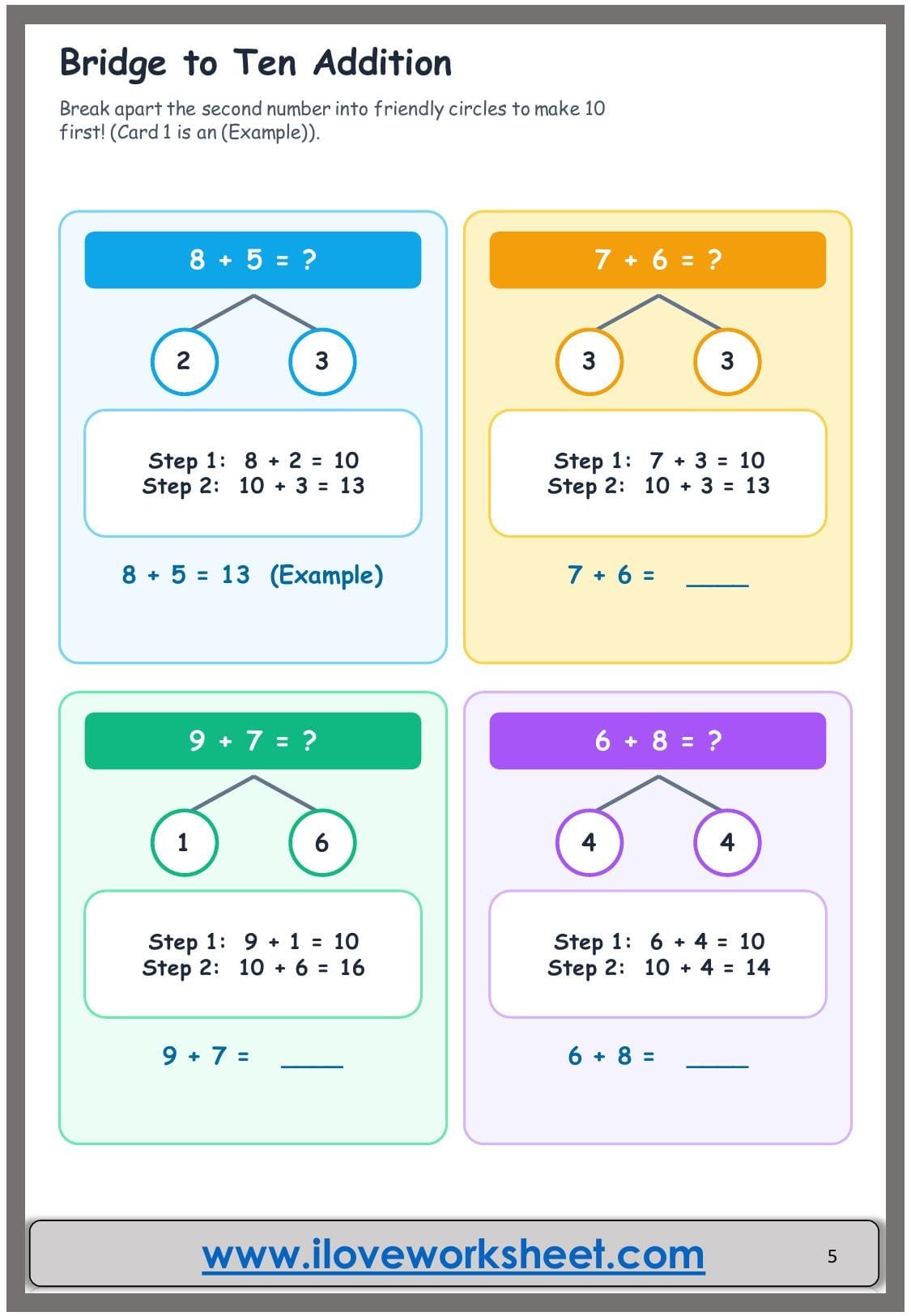
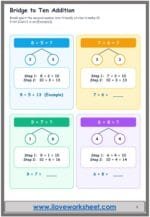
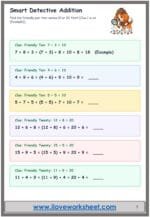
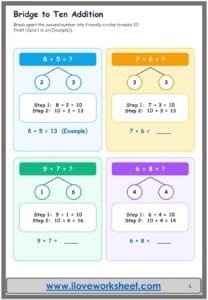
Among the most potent computational techniques in primary mathematics is the bridge-through-ten strategy, frequently referred to as making friendly tens. Because the base-ten decimal system is inherently centered on groupings of ten, rounding or bridging to the nearest multiple of ten significantly reduces working memory load during real-time mental calculation.
When encountering single-digit or double-digit additions that cross a ten-boundary, such as eight plus seven, decomposing the second addend into two plus five allows immediate pairing of eight and two to establish a solid ten, followed by adding the remaining five to yield fifteen. Mastering this bridging strategy provides children with a versatile mental tool that scales effortlessly into multi-digit and decimal arithmetic.
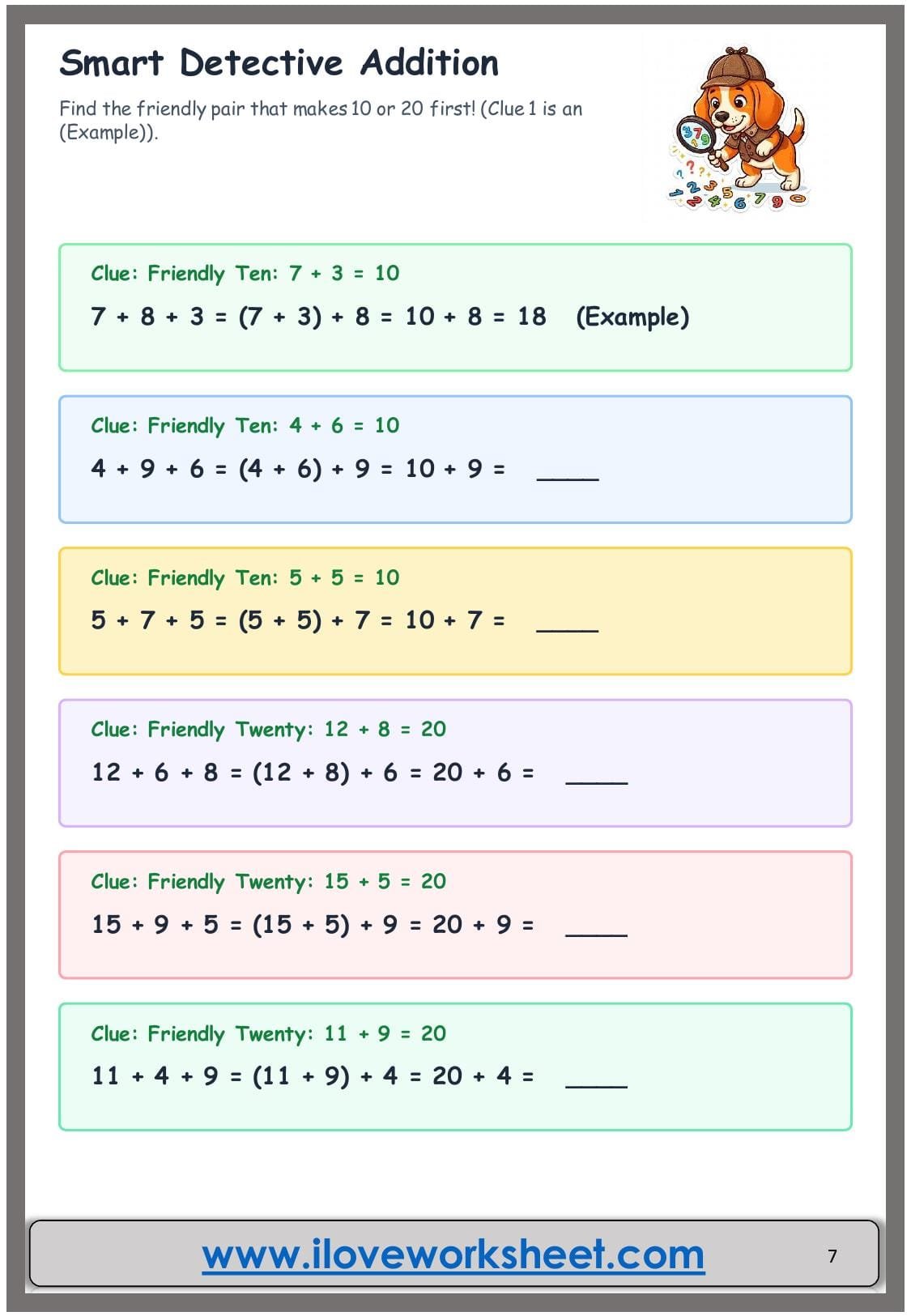
Similarly, identifying friendly number combinations within multi-addend expressions cultivates algebraic flexibility long before formal algebra instruction begins. When tasked with adding several numbers simultaneously, such as seven plus eight plus three, mathematically agile learners do not simply compute from left to right in a linear sequence. Instead, skilled problem solvers scan the full expression, apply the associative and commutative properties of addition, and pair seven and three first to produce an anchor value of ten, effortlessly arriving at eighteen. Emphasizing friendly number pairs instills an appreciation for mathematical elegance and computational efficiency.
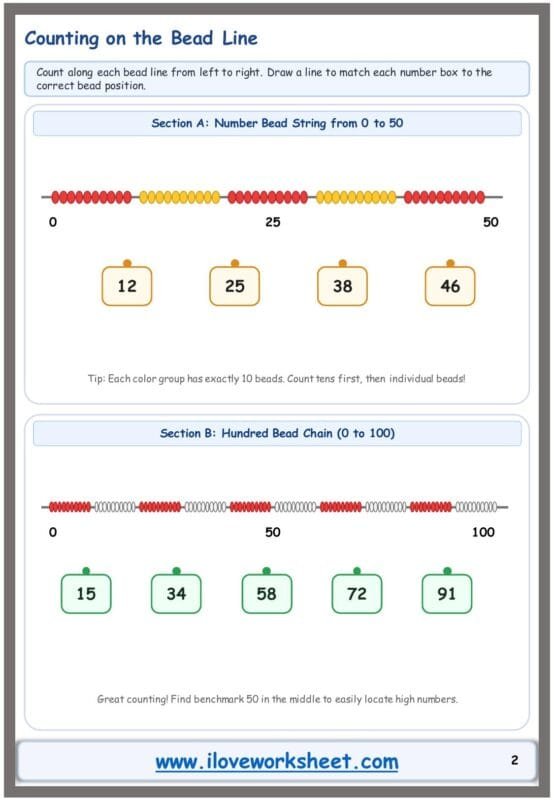
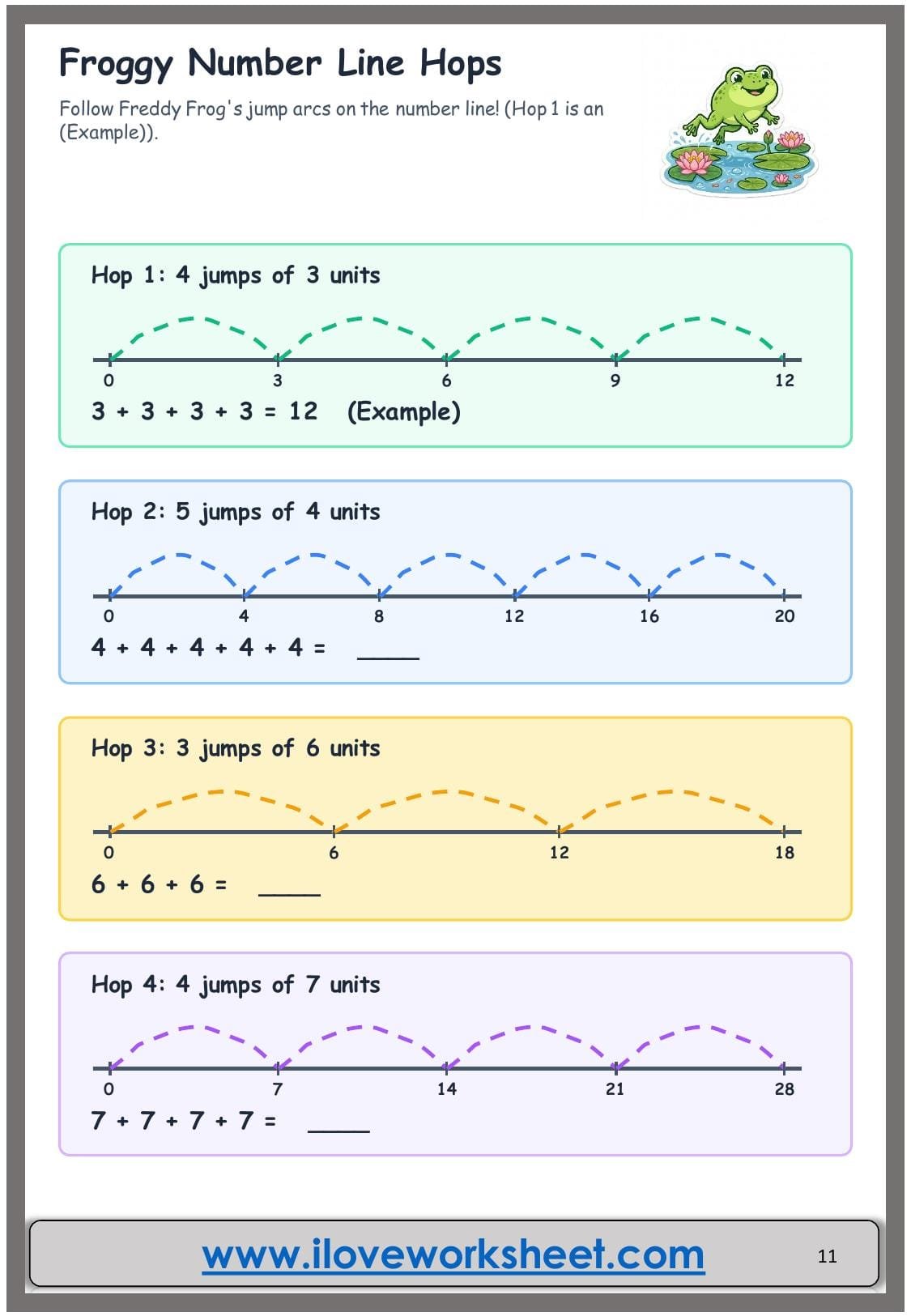
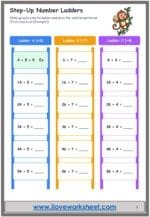
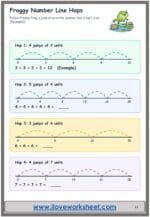
Spatial reasoning is deeply linked to numerical proficiency. The linear number line serves as an indispensable visual and conceptual model that translates numerical increments into physical distances and forward trajectories. While discrete counting groups emphasize cardinality, the number line highlights ordinality, magnitude, and relative interval spacing.
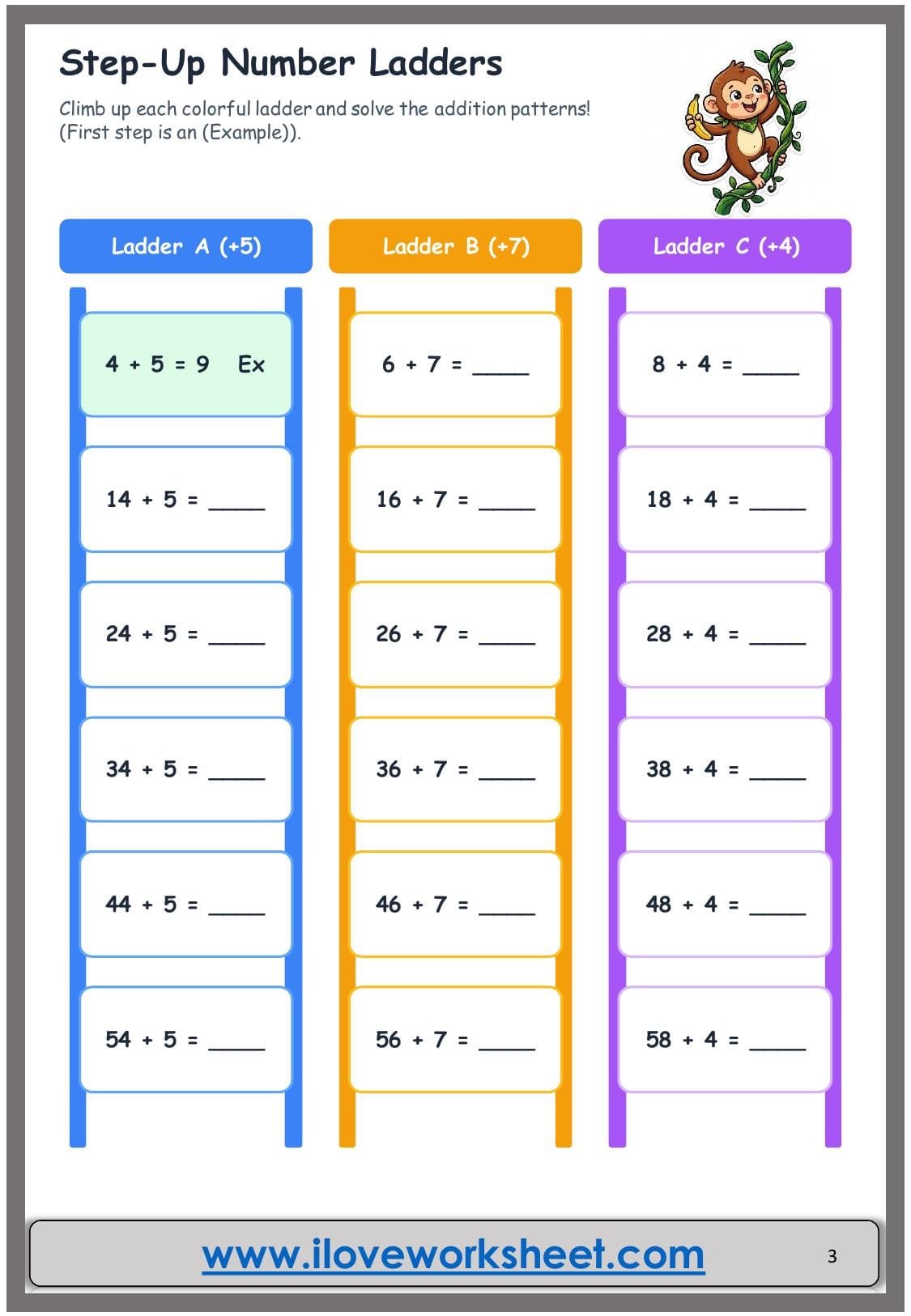
When learners visualize addition as sequential hops along a continuous number path, abstract numbers transform into dynamic spatial movements. A problem such as four jumps of five units visually reinforces the cumulative nature of addition while simultaneously laying the groundwork for skip counting. This continuous spatial model provides crucial scaffolding for students who struggle with static symbolic equations, bridging tactile intuition with formal arithmetic representation.
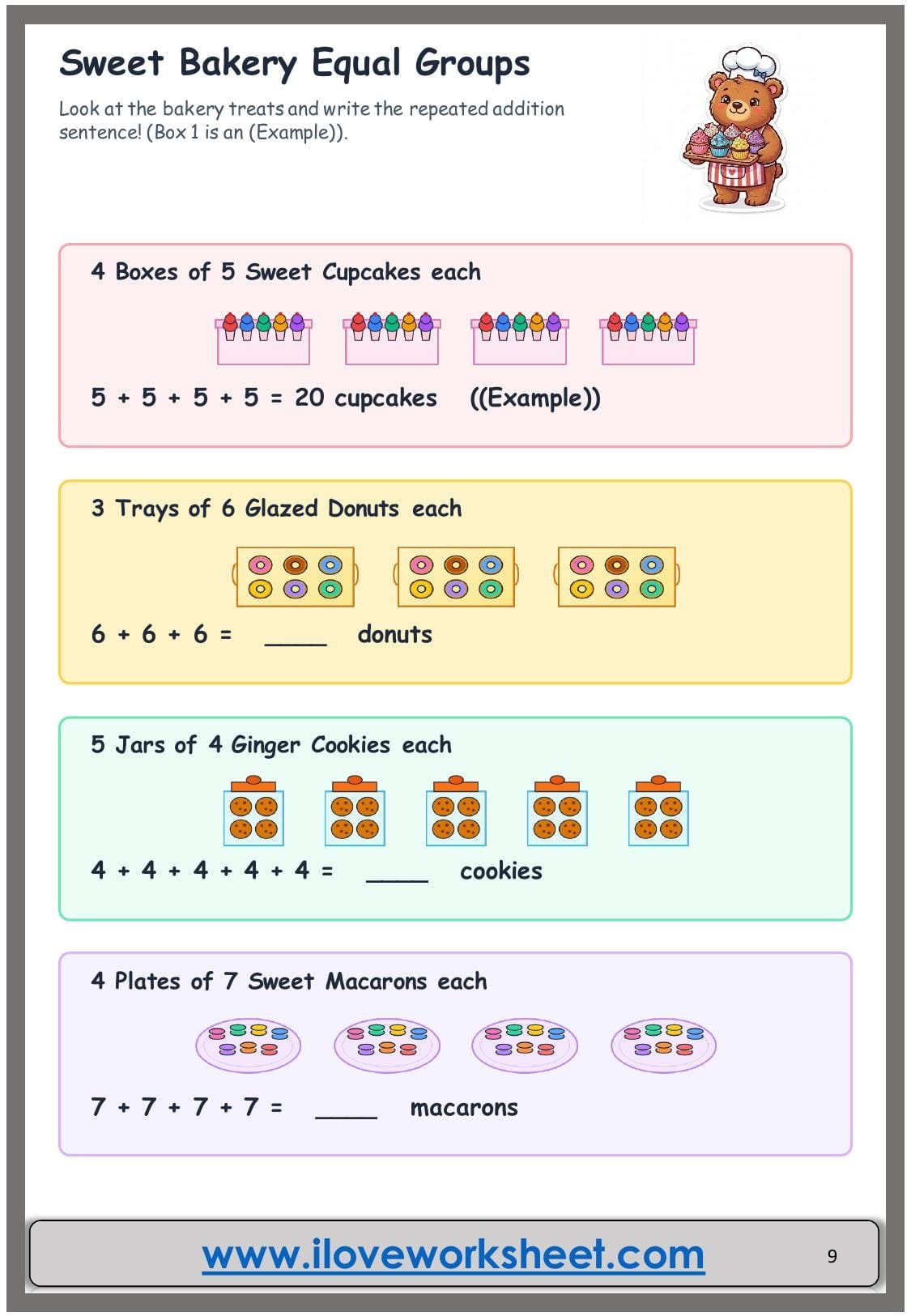
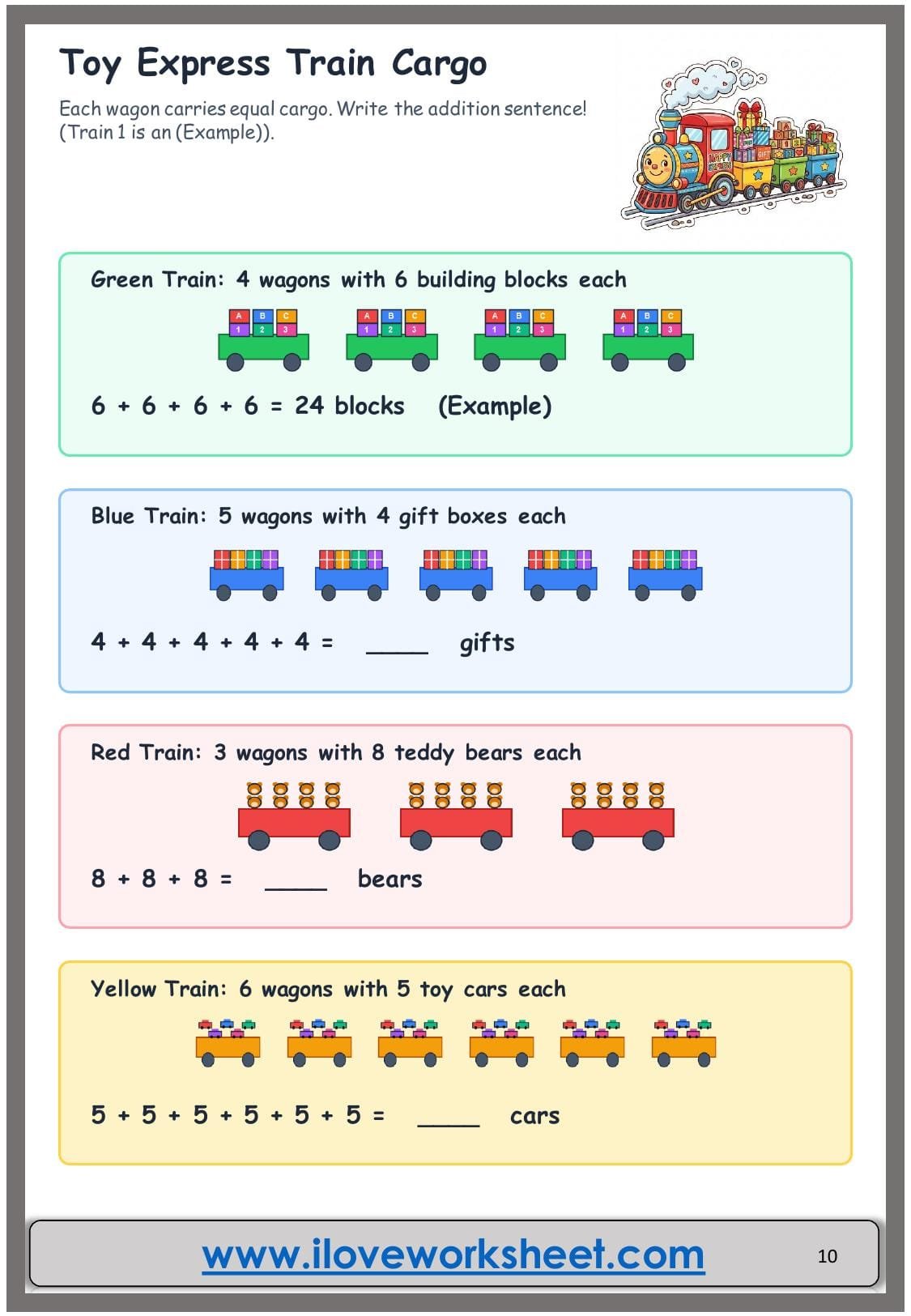
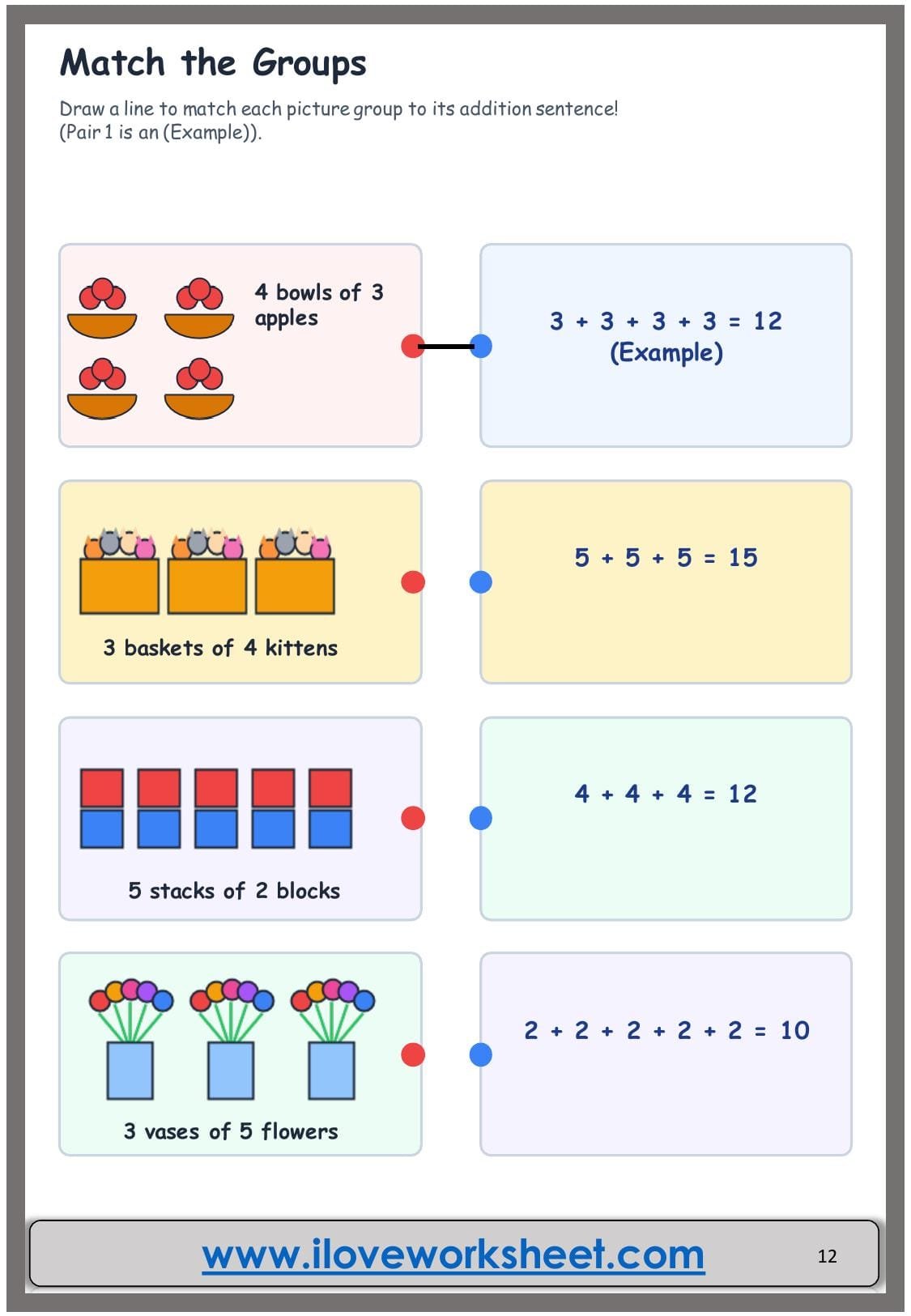
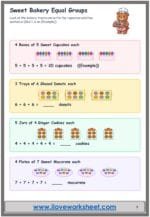
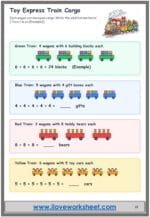
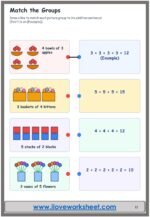
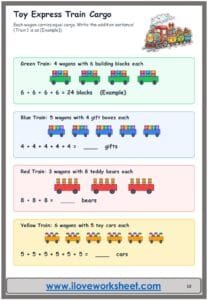
Repeated addition of equal groups represents the critical conceptual bridge connecting elementary addition to early multiplication. Long before formal multiplication tables are introduced, children encounter scenarios involving multiple sets of identical quantities, such as four baskets containing five apples each or three train cars carrying six cargo crates each.
Expressing these equal groupings through repeated addition sentences reinforces the deep mathematical relationship between repeated summation and grouping structures. When children write and solve five plus five plus five plus five equals twenty, they develop simultaneous comprehension of group quantity, unit size, and total product. This dual perspective demystifies subsequent multiplicative concepts and prevents the common misconception that multiplication exists in isolation from basic addition.
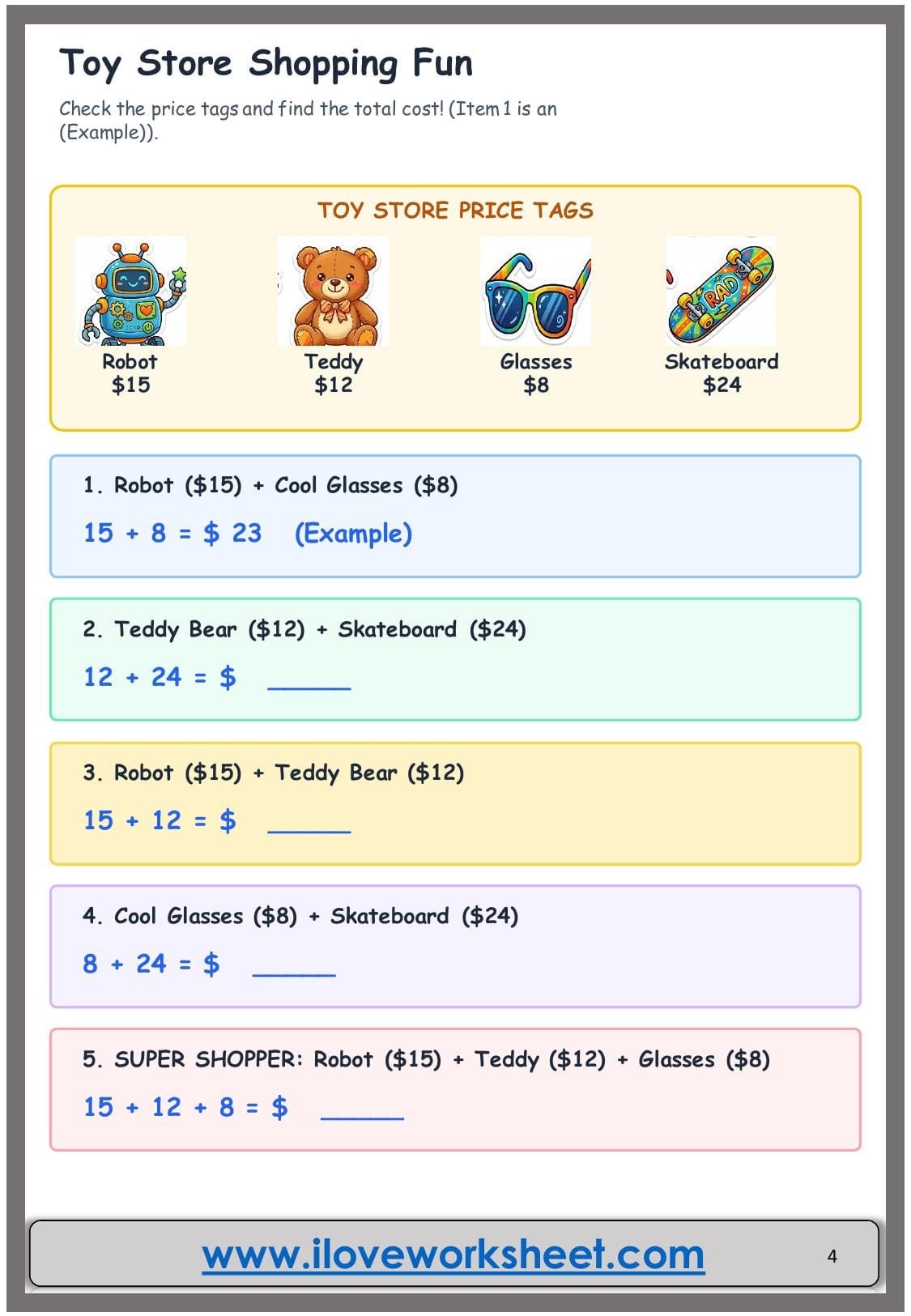
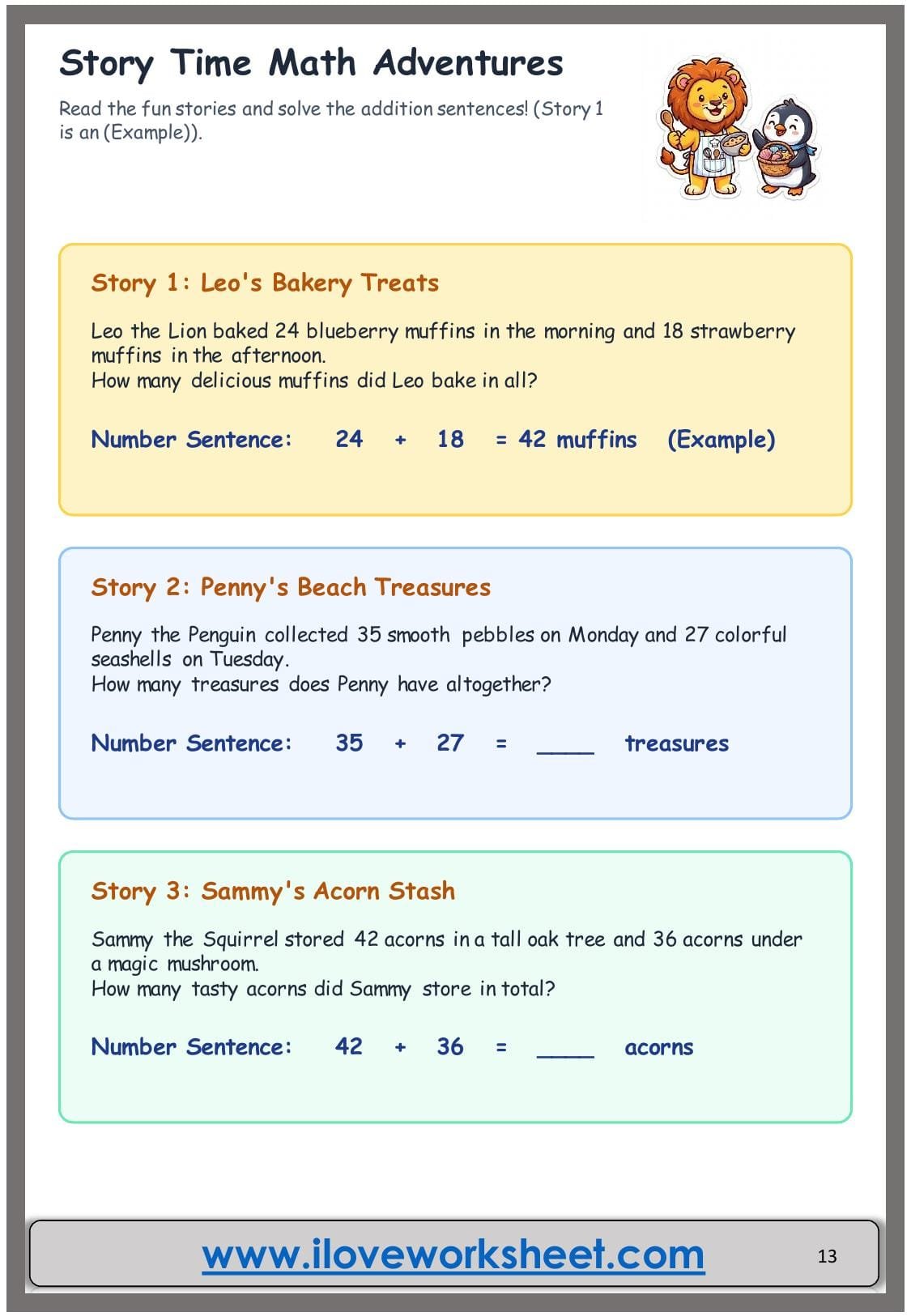
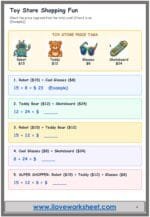
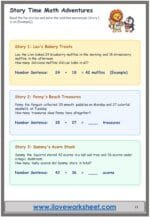
Mathematical concepts achieve their highest developmental impact when embedded within relatable, narrative-rich contexts. Isolated numerical expressions often feel detached and artificial to young children, whereas story problems situate arithmetic within authentic, imaginative scenarios that spark curiosity and emotional resonance.
Narrative problem solving requires learners to actively decode contextual descriptions, isolate relevant numerical parameters, determine the appropriate mathematical operation, and formulate symbolic number sentences. Whether calculating total bakery treats produced across morning and afternoon shifts or tallying nature items collected on outdoor explorations, contextual narratives transform abstract calculations into meaningful investigations. This process sharpens reading comprehension, analytical parsing, and mathematical communication skills in tandem. 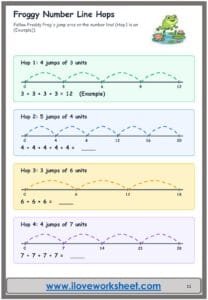
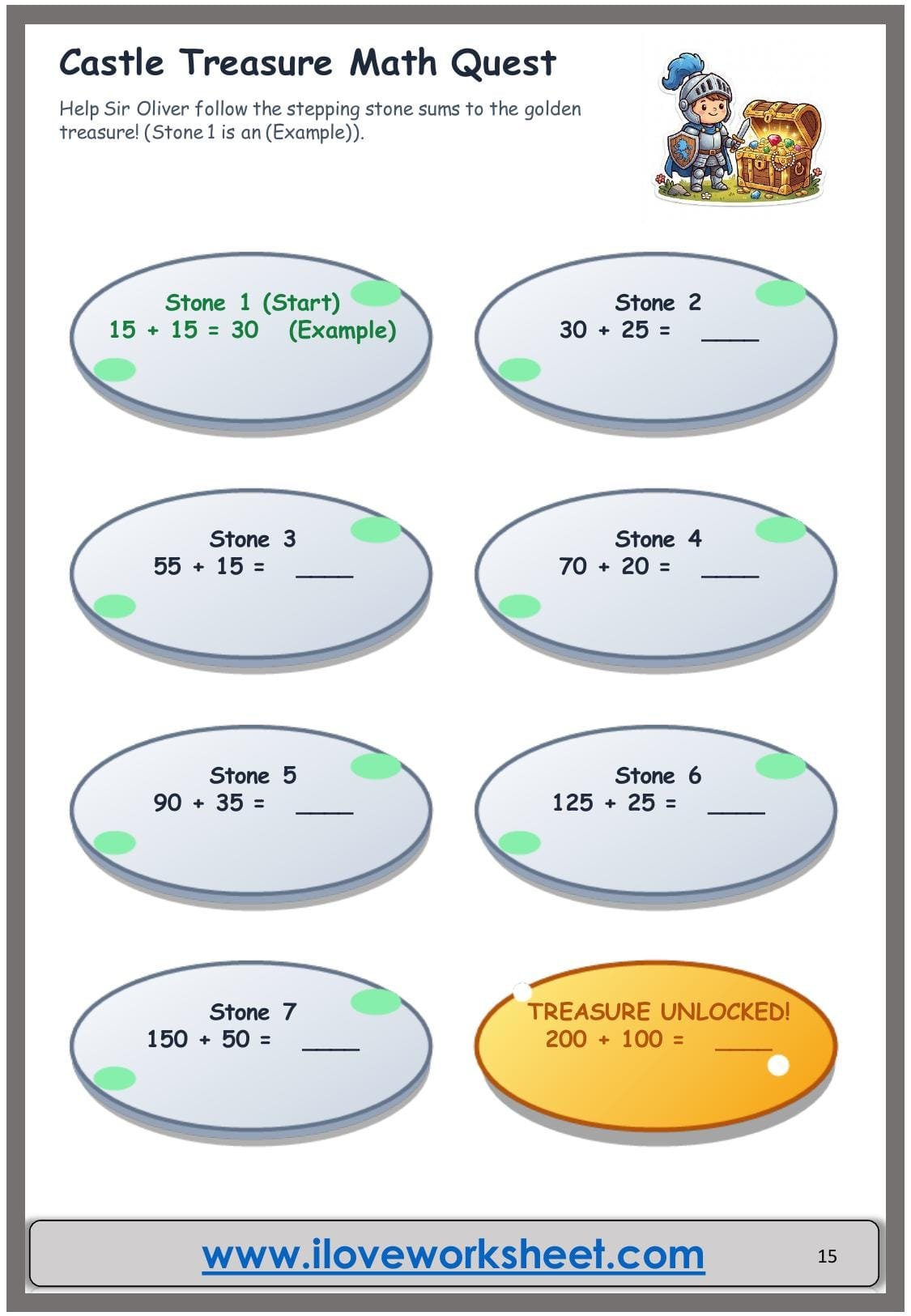
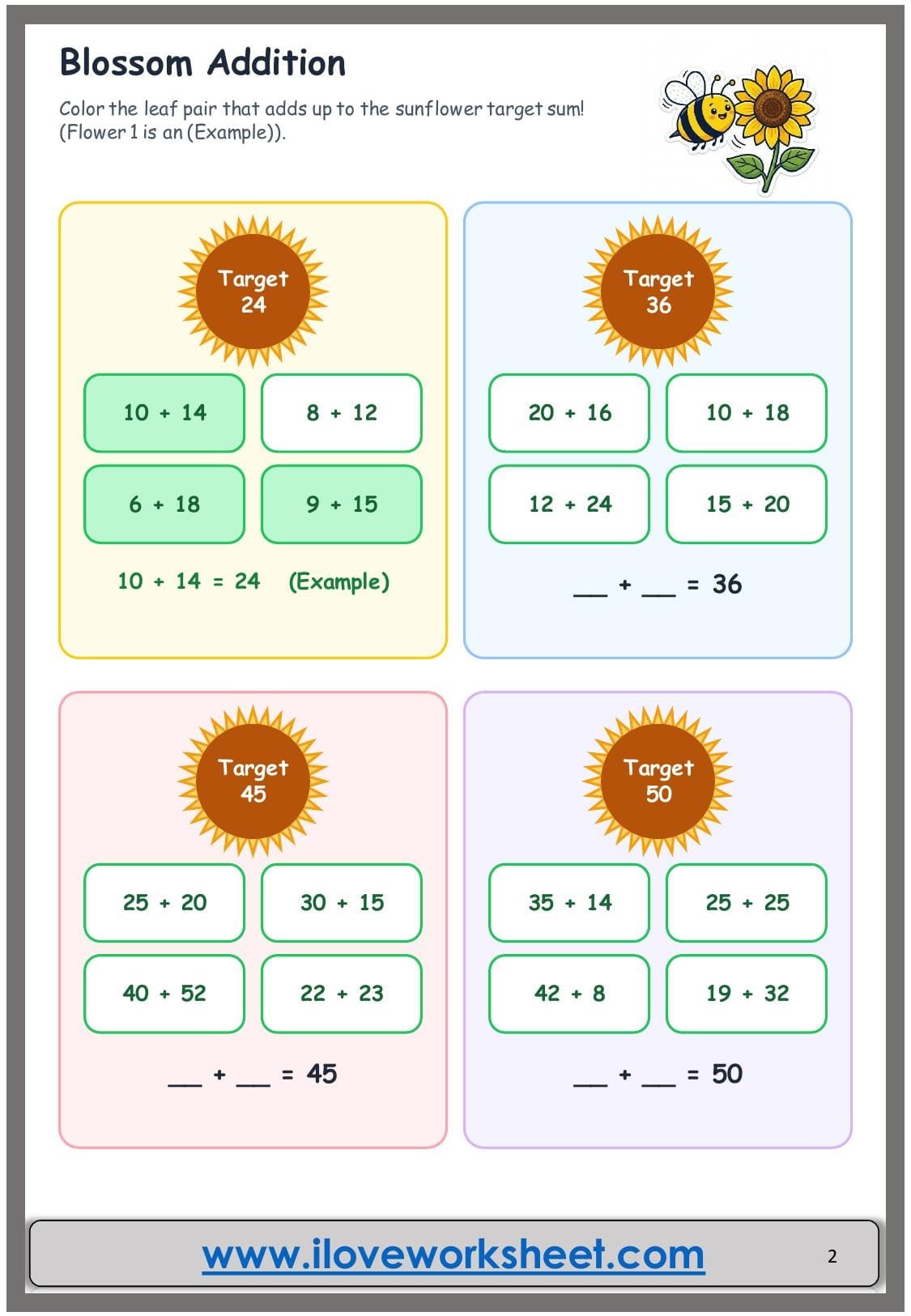
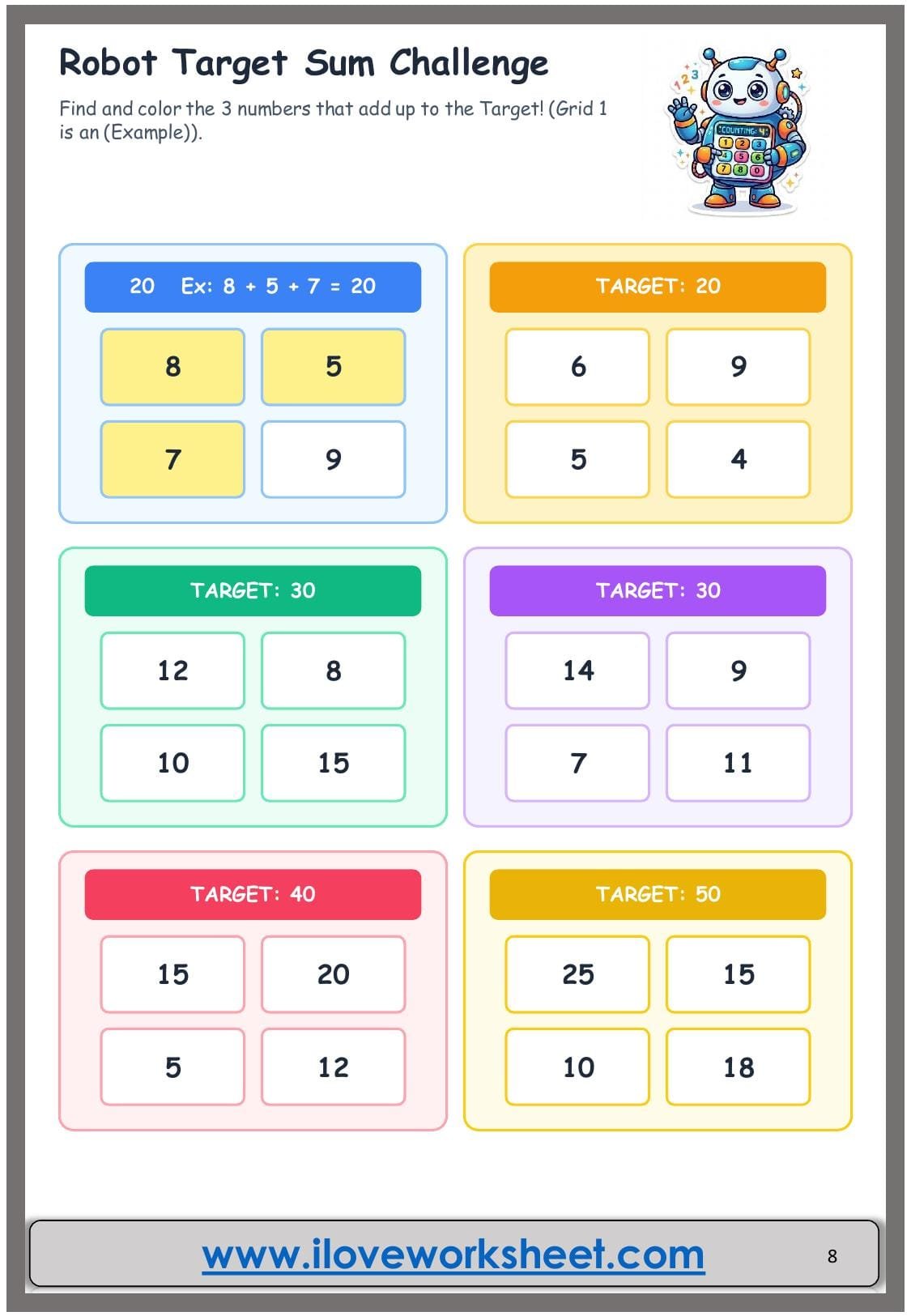
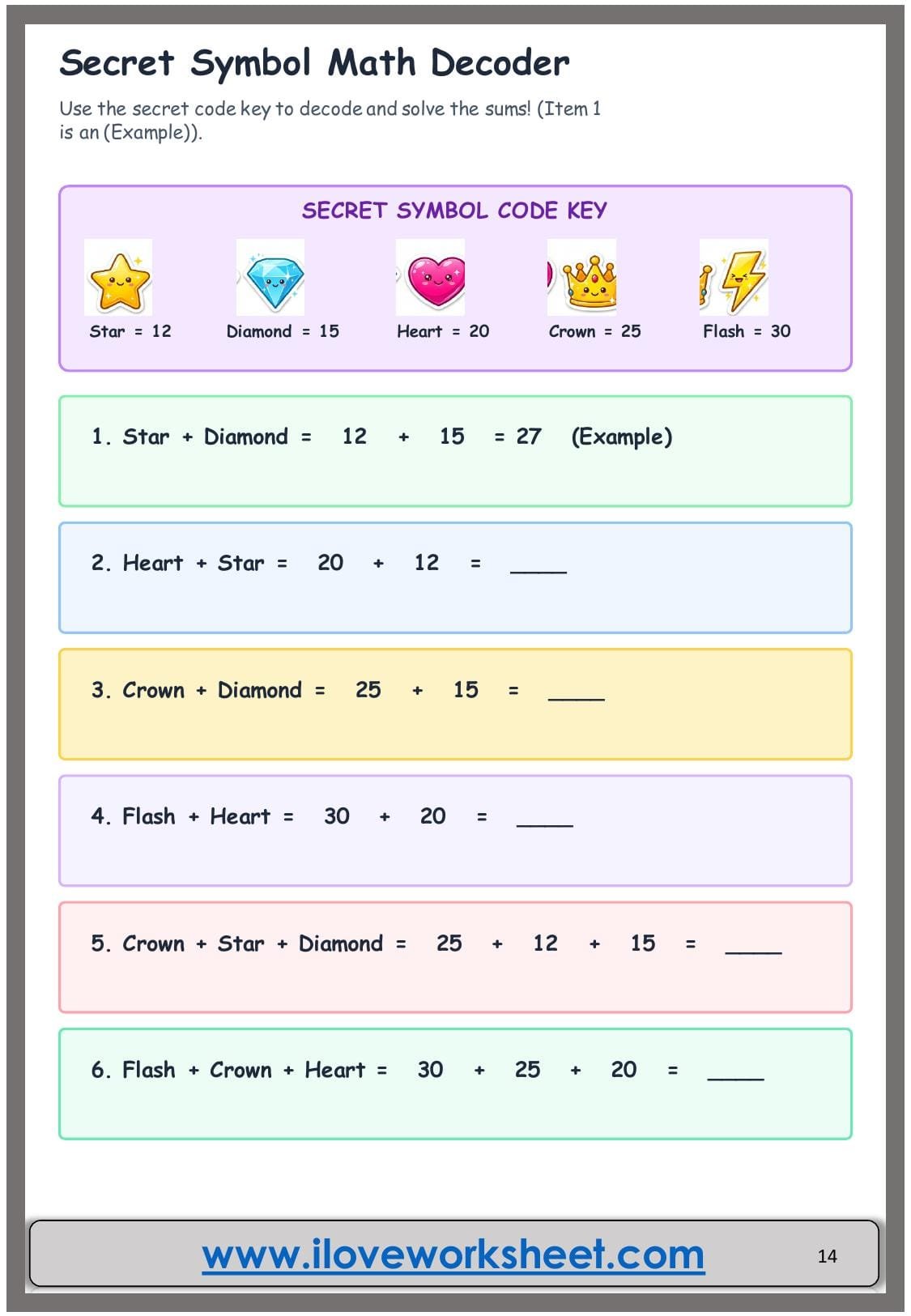
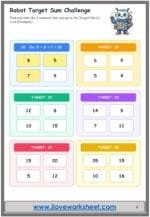
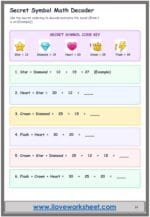
Play and gamification represent powerful drivers of intrinsic motivation in elementary education. When arithmetic practice is structured around detective challenges, stepping-stone quests, target-sum grids, and secret symbol decoding, cognitive engagement increases dramatically while affective math anxiety diminishes.
Symbolic substitution puzzles—where playful icons represent hidden numerical values—introduce early algebraic reasoning in an approachable, puzzle-like format. To decode an equation where a smiling star plus a sparkling diamond equals a hidden sum, children must maintain focus, track multiple variables, and execute systematic substitution. These gamified activities transform routine drill into an exhilarating quest for discovery, fostering persistence, logical deduction, and genuine enthusiasm for numerical exploration.
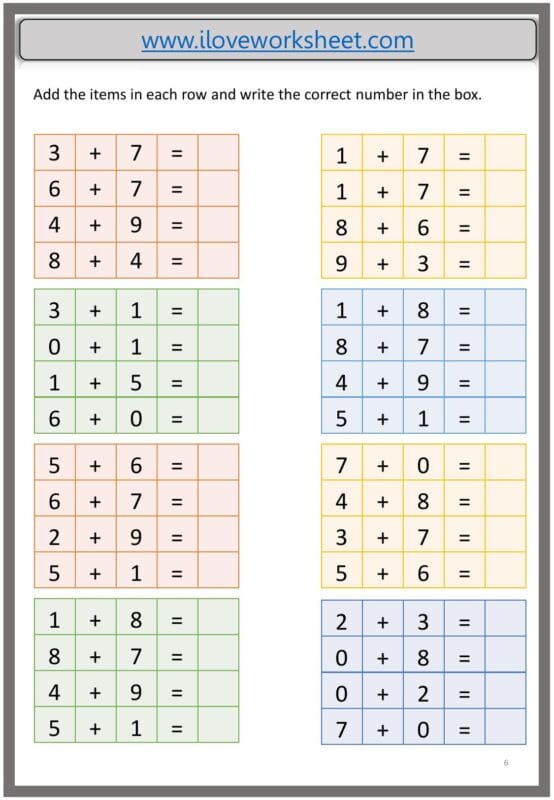
The visual architecture of educational worksheets directly influences student comprehension, focus, and task completion rates. Cognitive Load Theory highlights that working memory in young learners is easily overwhelmed by cluttered page layouts, dense text blocks, ambiguous visual cues, or chaotic typography. High-quality educational design prioritizes visual clarity, generous whitespace, structured grouping cards, and harmonious color palettes.
Utilizing rounded containment cards, distinct colored target badges, and clear font hierarchies allows children to isolate individual problem sets effortlessly without experiencing visual fatigue. Furthermore, integrating purposeful, child-friendly illustrations provides welcoming aesthetic warmth without distracting from the primary mathematical content. A thoughtfully organized worksheet invites focused exploration, fosters autonomous learning, and empowers every student to experience consistent mathematical triumph.