
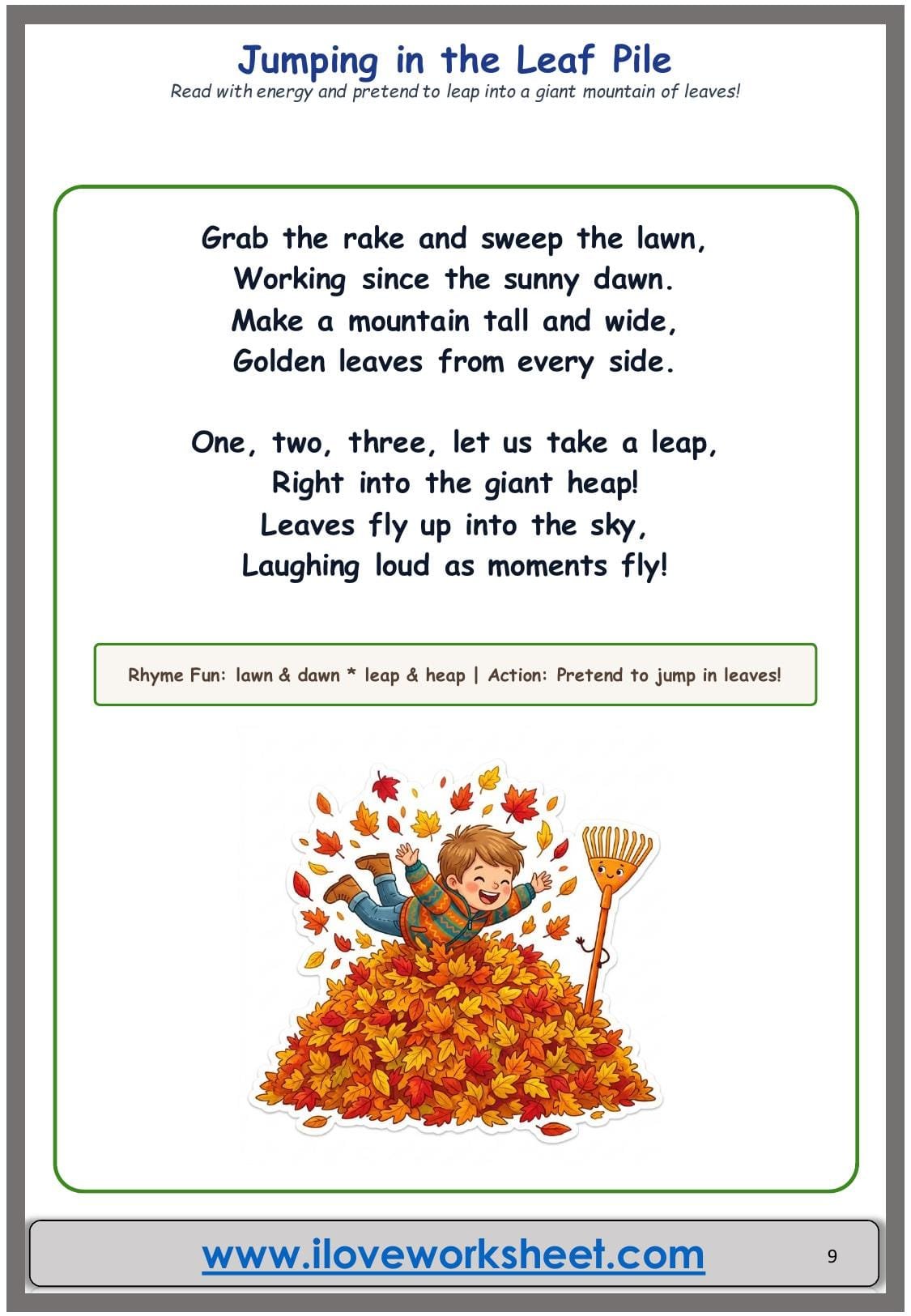
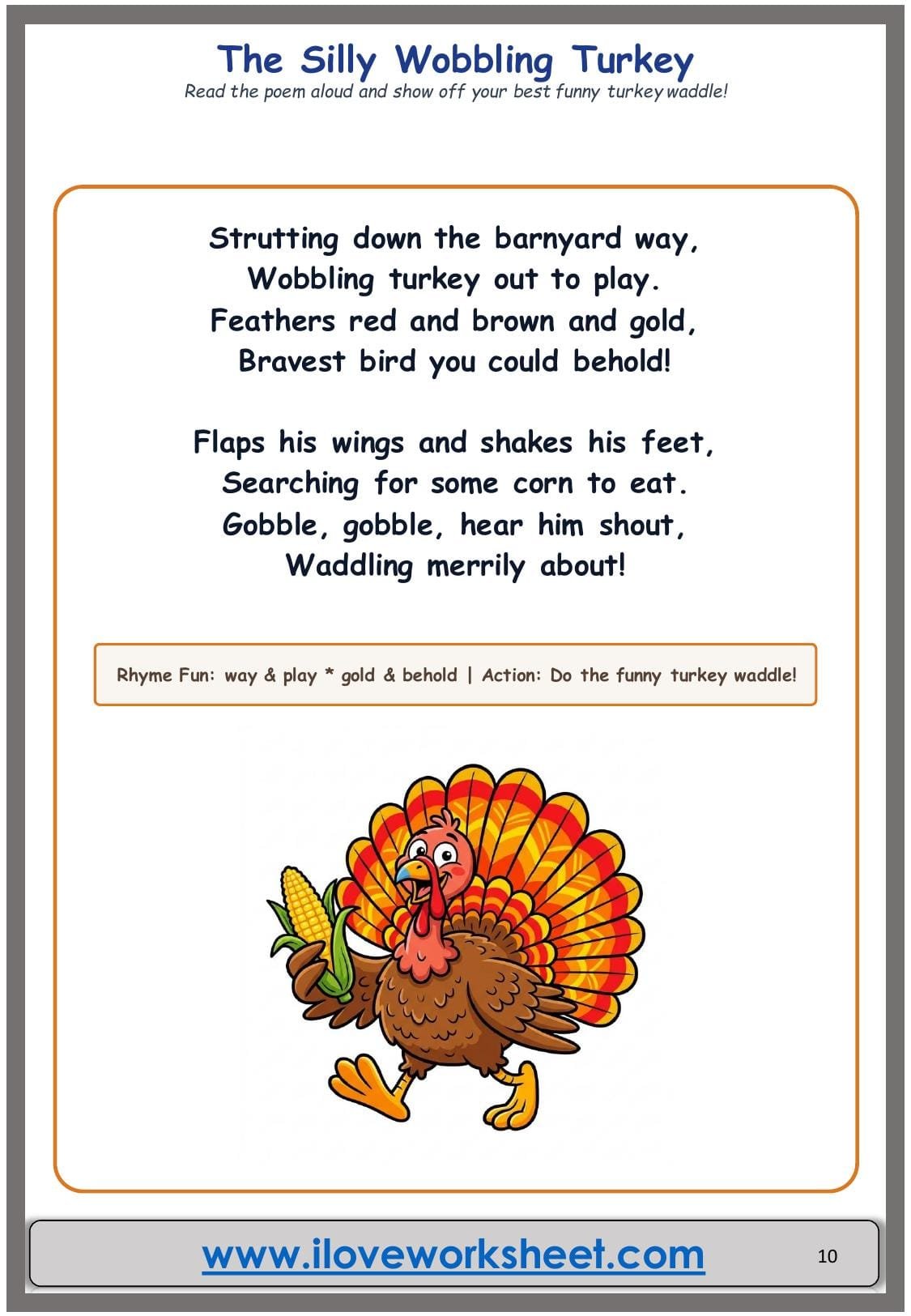
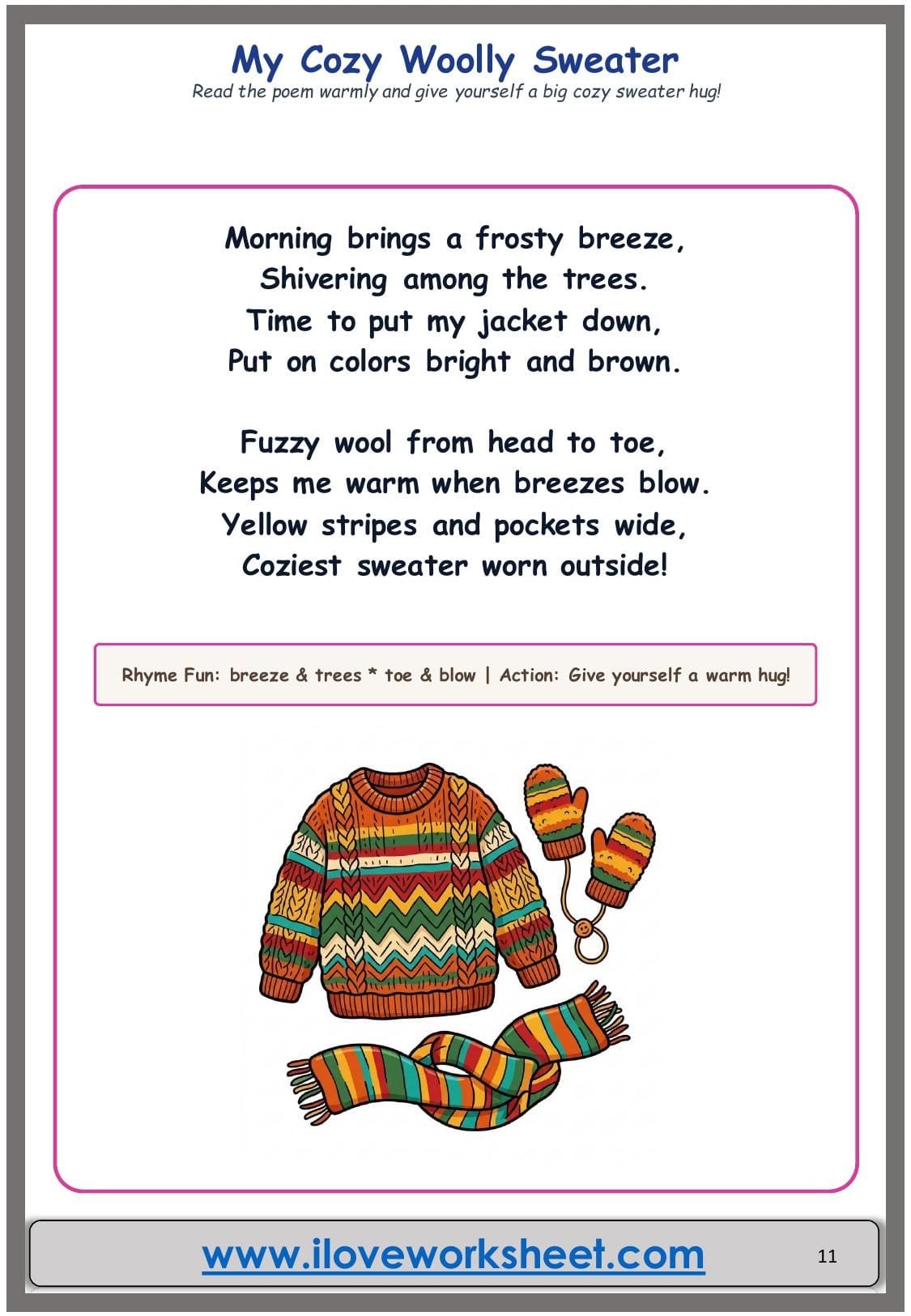
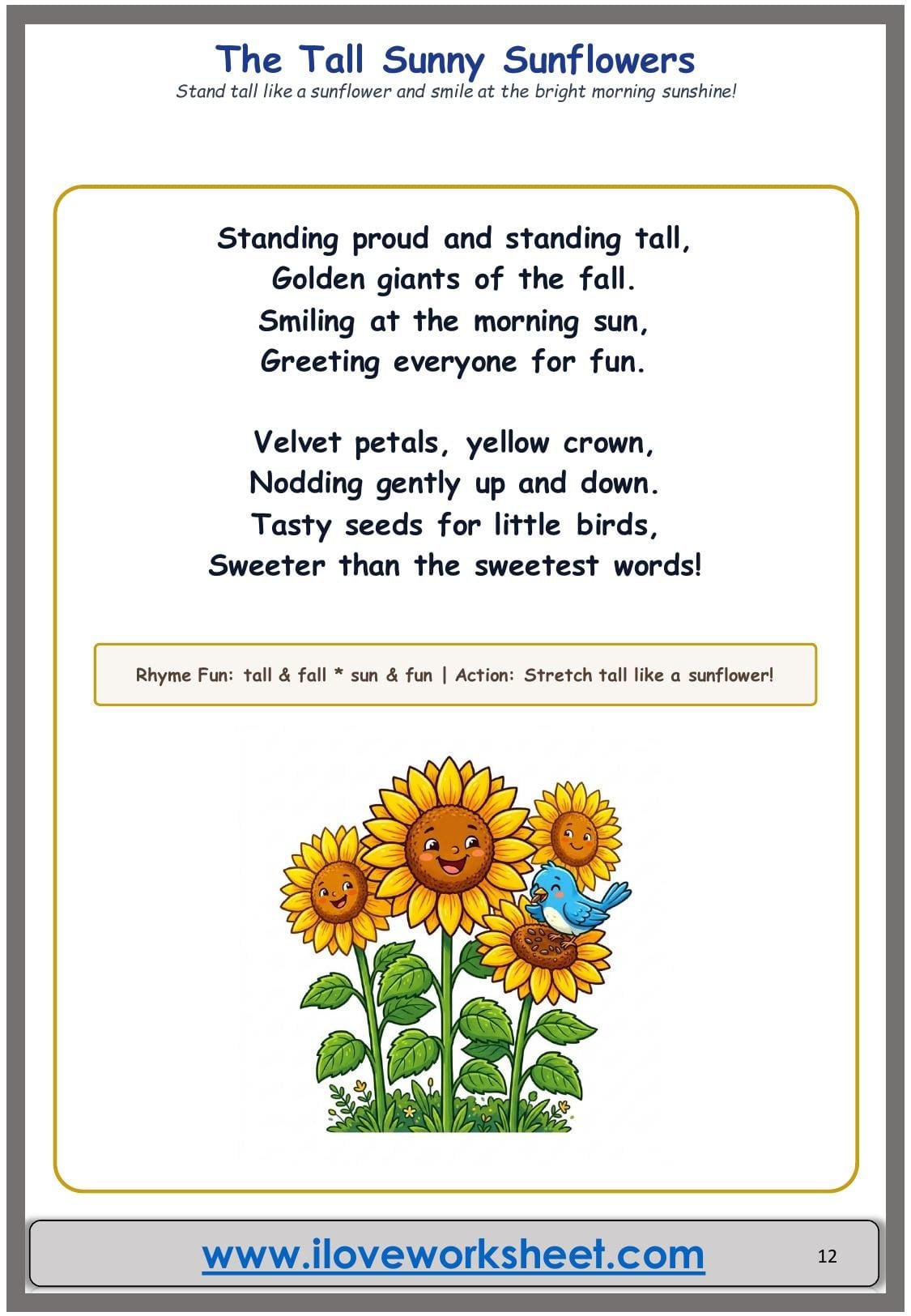














Early childhood literacy instruction relies heavily upon the cultivation of phonological awareness the foundational recognition that spoken language consists of distinct sounds, syllables, and rhythmic structures. In primary school classrooms throughout the United States and the Netherlands, educators recognize that children develop linguistic competence most effectively when instruction connects auditory patterns with joyful, imaginative contexts. Seasonal poetry serves as a powerful pedagogical vehicle within early elementary settings, combining metered cadence, memorable rhyme schemes, and evocative imagery to foster emergent reading confidence.
The arrival of autumn presents exceptional thematic resonance for young learners. As the physical environment transforms with vibrant foliage, cooler breezes, and harvest gatherings, children naturally observe and verbalize these environmental transitions. Integrating these observations into metered verse bridges everyday sensory observations and formal literacy concepts. Through repeated encounters with structured poetry, kindergarten and early elementary students internalize syntactic rhythms, strengthen auditory memory, and build an expansive vocabulary that supports future reading comprehension across primary education.

Phonemic sensitivity develops along an observable developmental continuum, beginning with the broad perception of whole-word rhymes and progressing toward precise phoneme segmentation and manipulation. In early childhood pedagogy, the perception of rhyme serves as a dependable diagnostic indicator of future reading success. When young learners encounter paired rhyming words such as red and head, or breeze and trees, the auditory apparatus identifies identical rime units across distinct initial onsets. This phonological pattern-matching enables children to perceive the modular structure of spoken English, establishing essential groundwork for decoding written text.
Educational frameworks in both North America and Europe emphasize these phonological competencies during early schooling. Within the United States, state curricula and Common Core State Standards mandate foundational skills encompassing phonological awareness, print concepts, and oral reading fluency in kindergarten through grade two. Similarly, the primary curriculum in the Netherlands overseen by the SLO (National Institute for Curriculum Development) prioritizes language play, vocabulary acquisition, and phonetic discernment within early childhood education (het jonge kind). For Dutch primary schools incorporating early foreign language instruction in English (vvto – vroeg vreemdetalentalenonderwijs), rhythmic autumn verses provide accessible, non-threatening entry points into English pronunciation, intonation, and stress patterns.

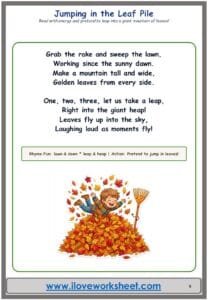
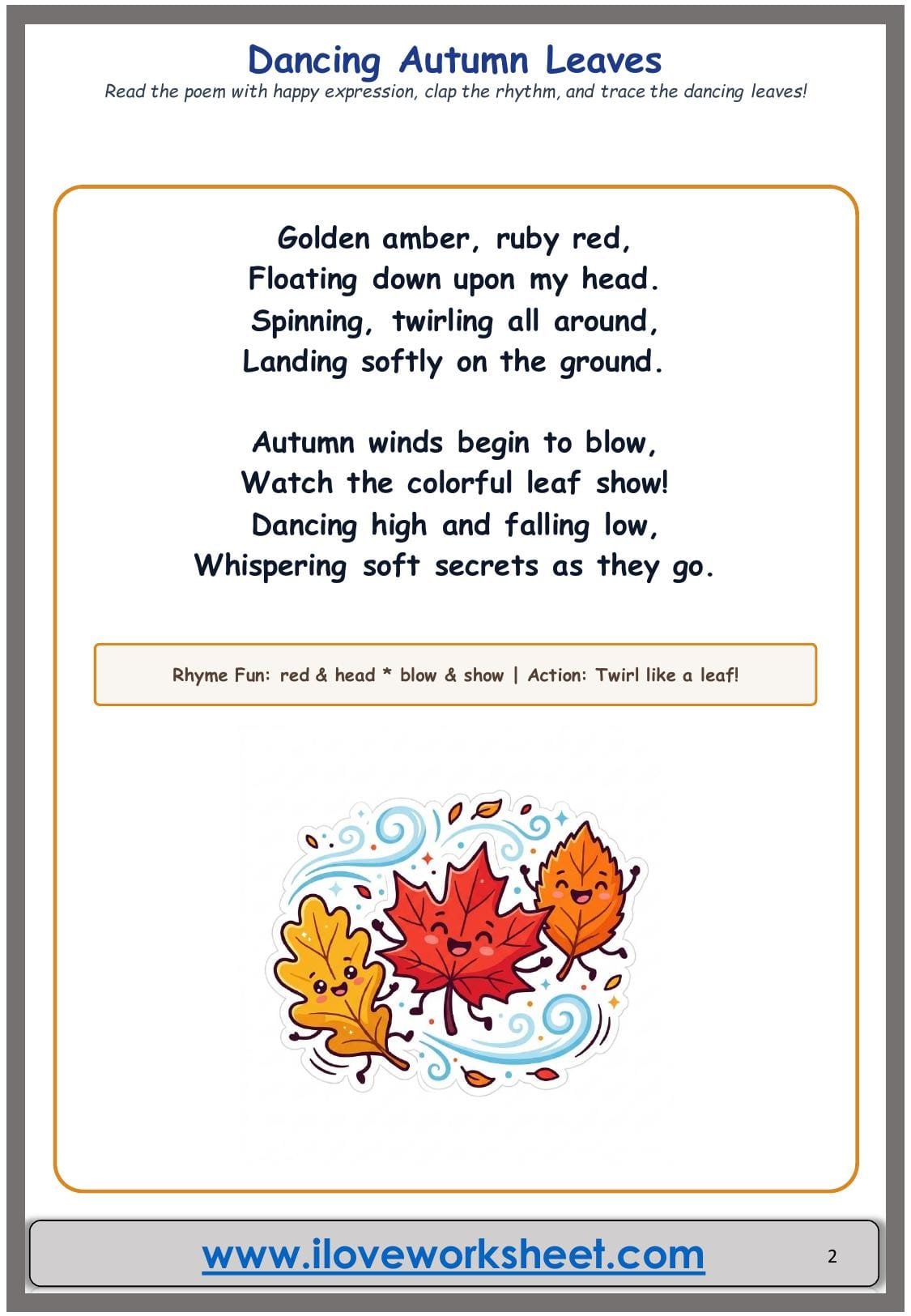
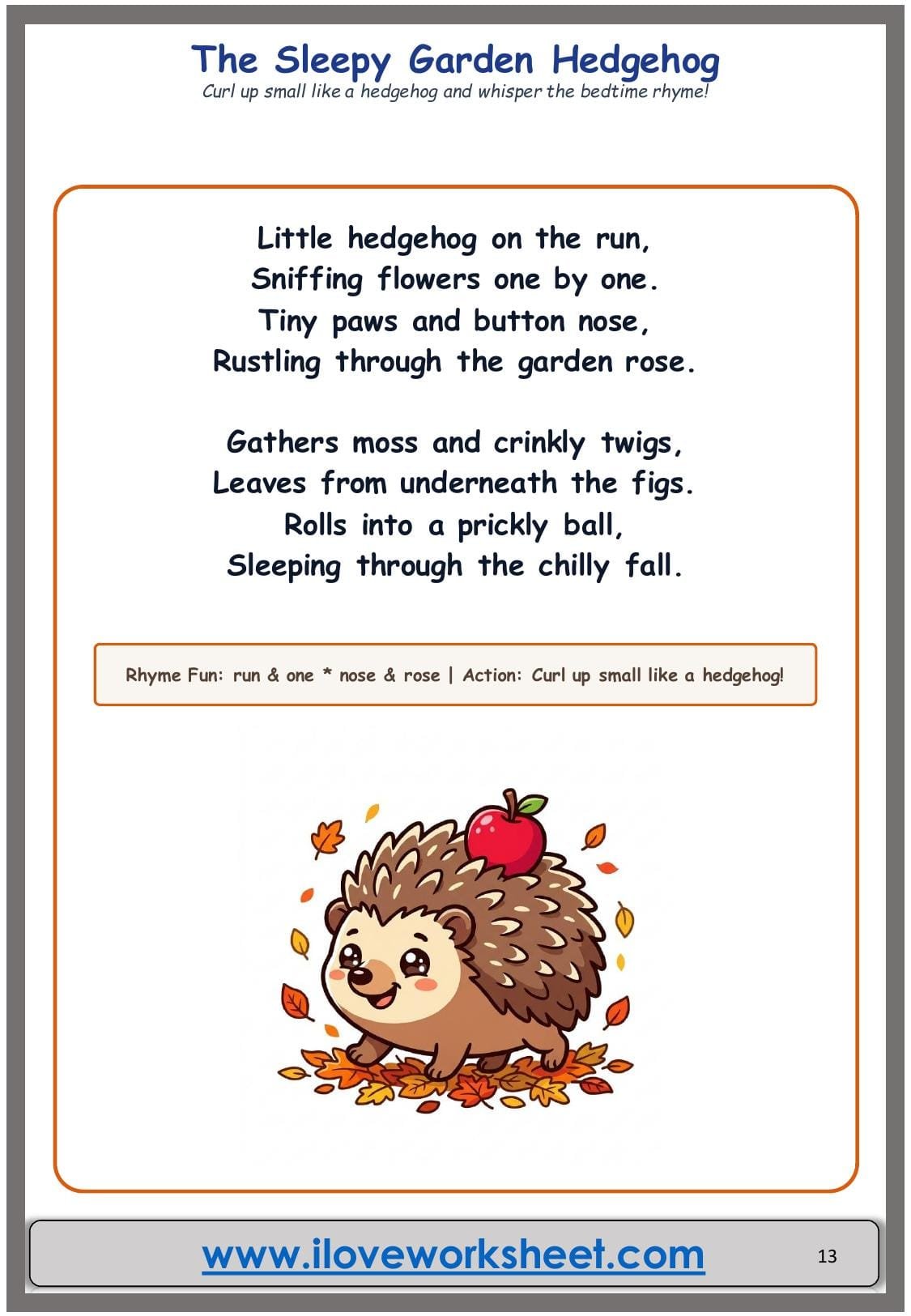
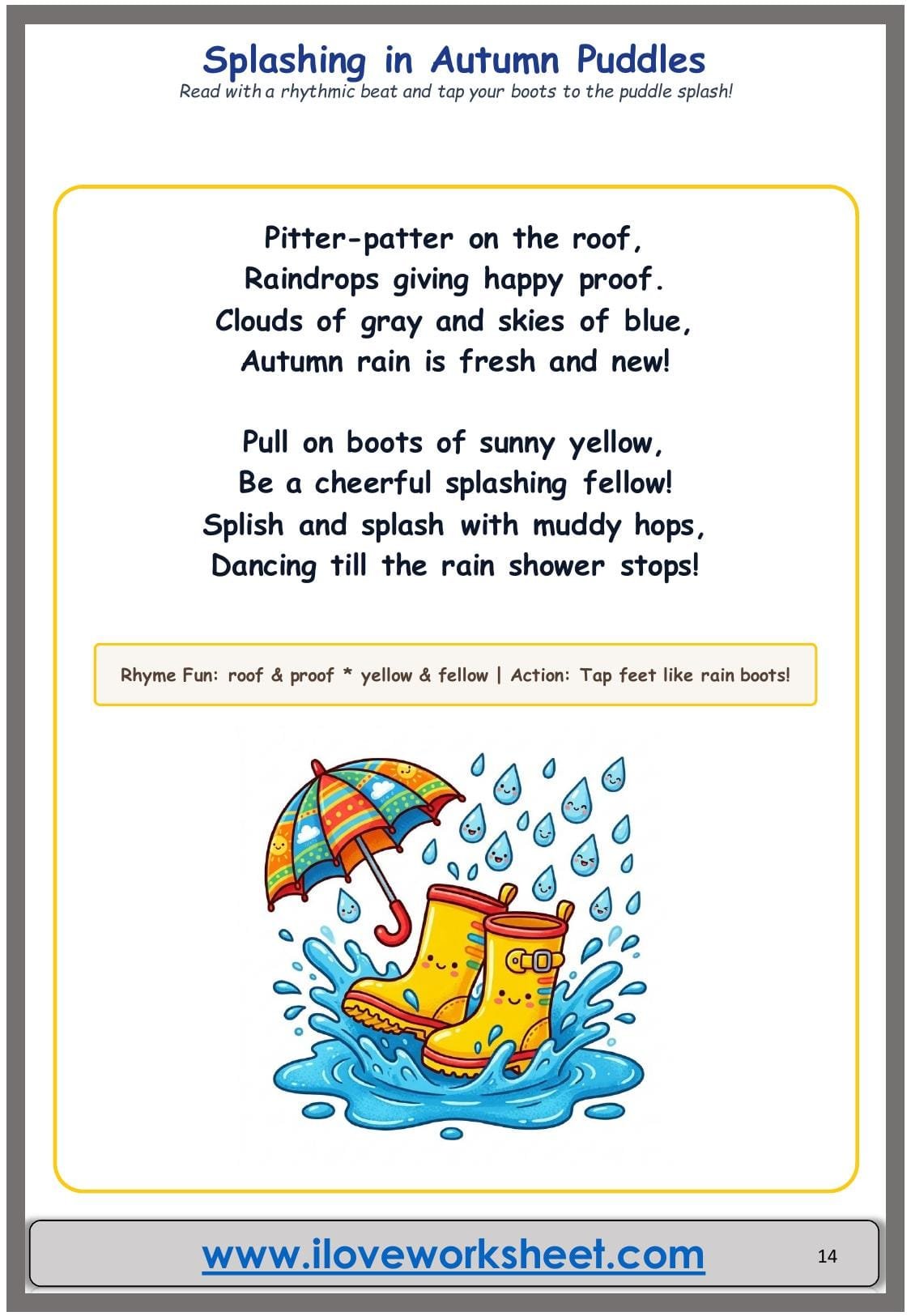
Instructional effectiveness in early childhood education increases significantly when lessons activate multiple sensory and physical modalities. Jerome Bruner’s developmental framework emphasizes that conceptual understanding advances from enactive (action-based) experiences to iconic (pictorial) and symbolic (text-based) representations. Seasonal poetry printables that combine lyrical text with expressive kinetic cues embody this multi-tiered instructional philosophy. When children recite lines about swirling leaves while executing physical twirls, or tap their knees to mimic the scampering paws of a foraging squirrel, abstract language bonds with bodily-kinesthetic memory.
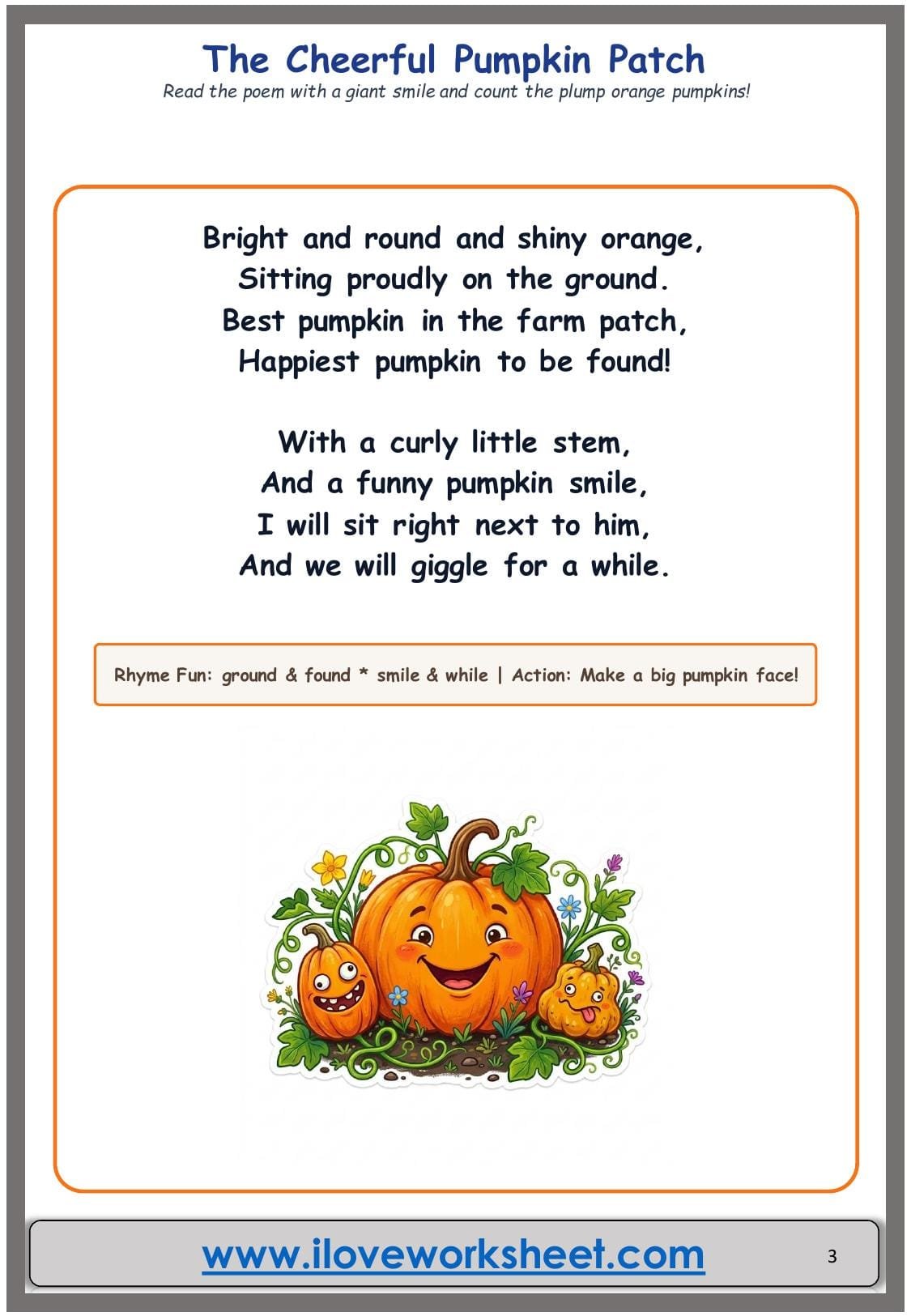
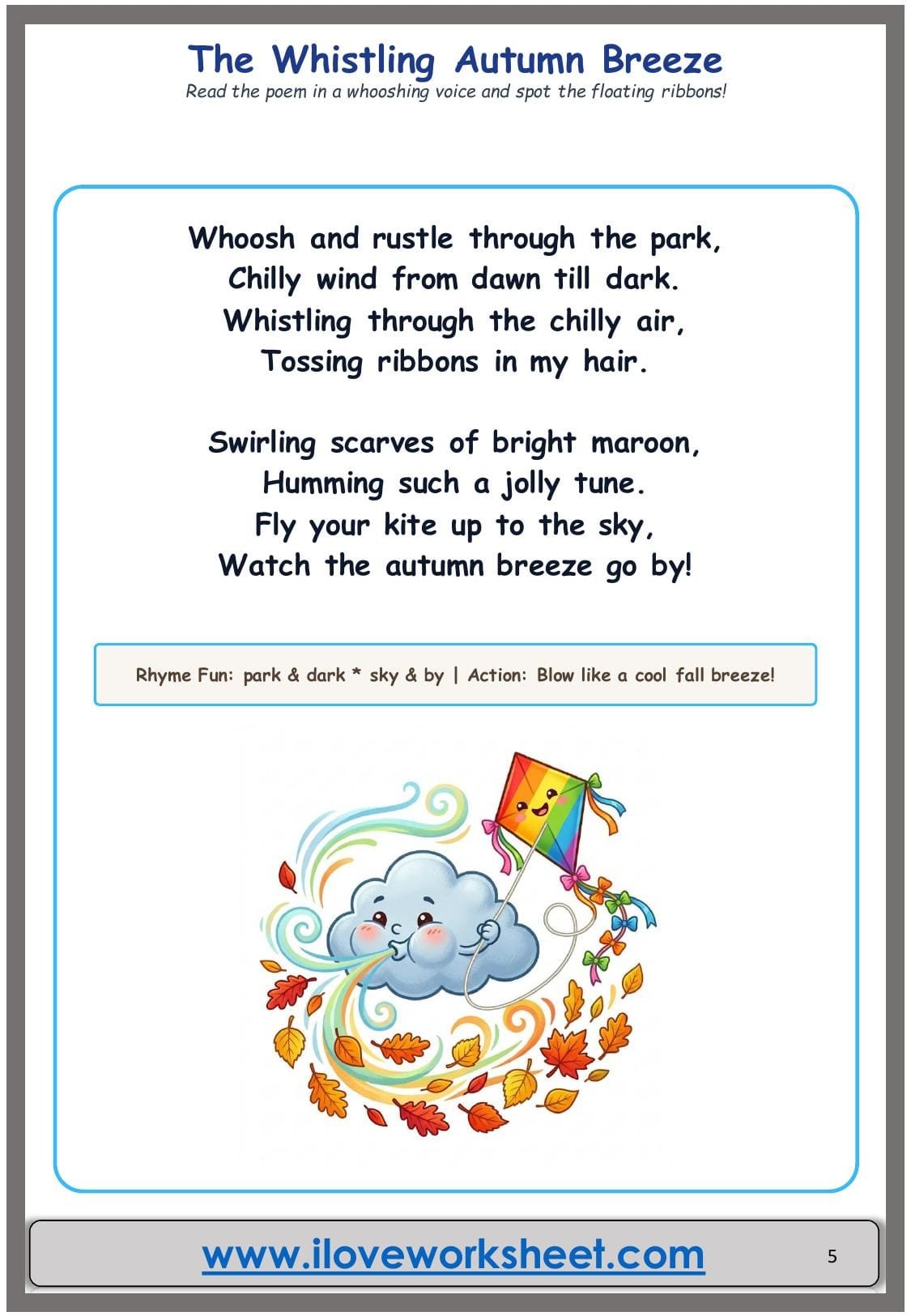
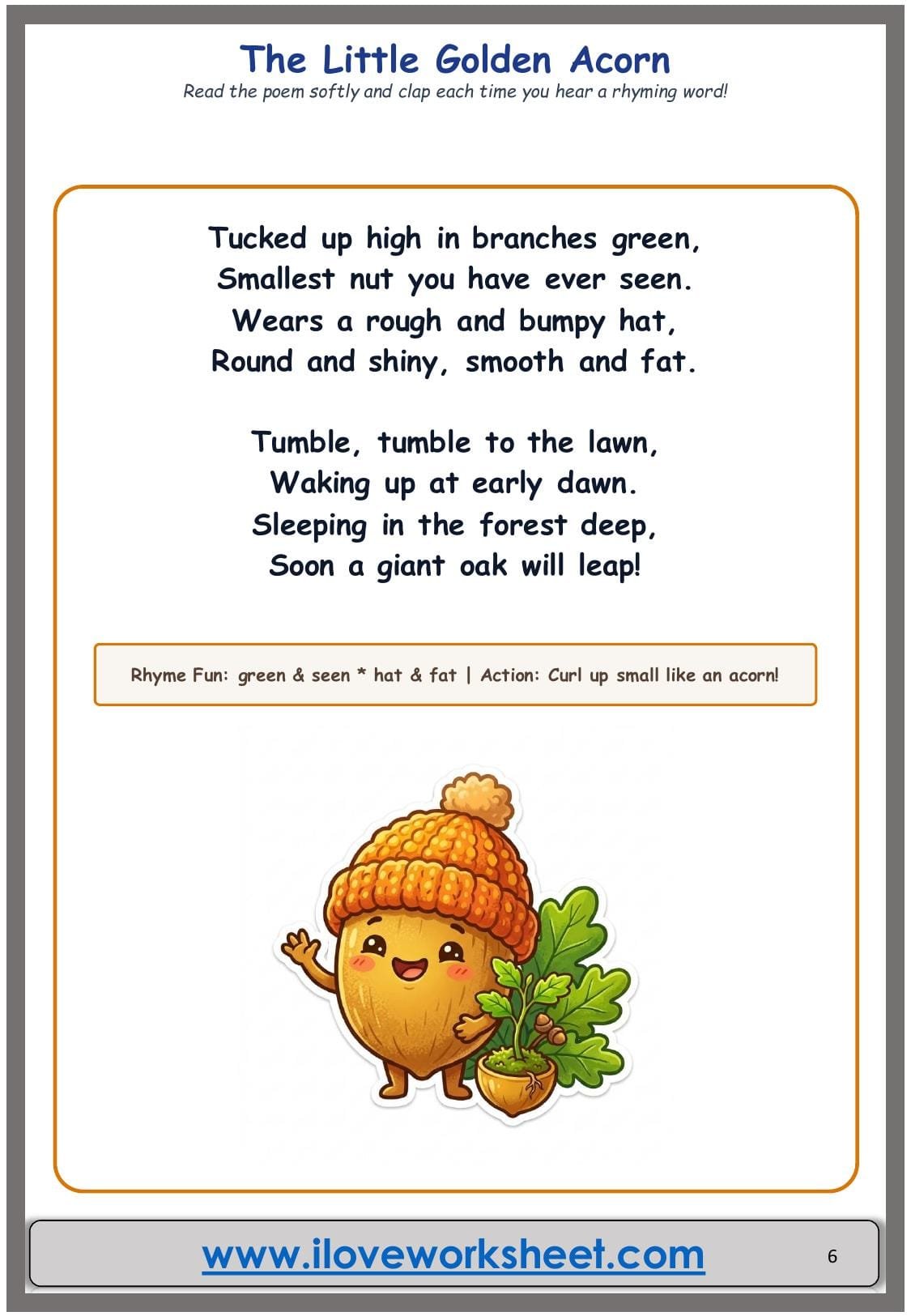
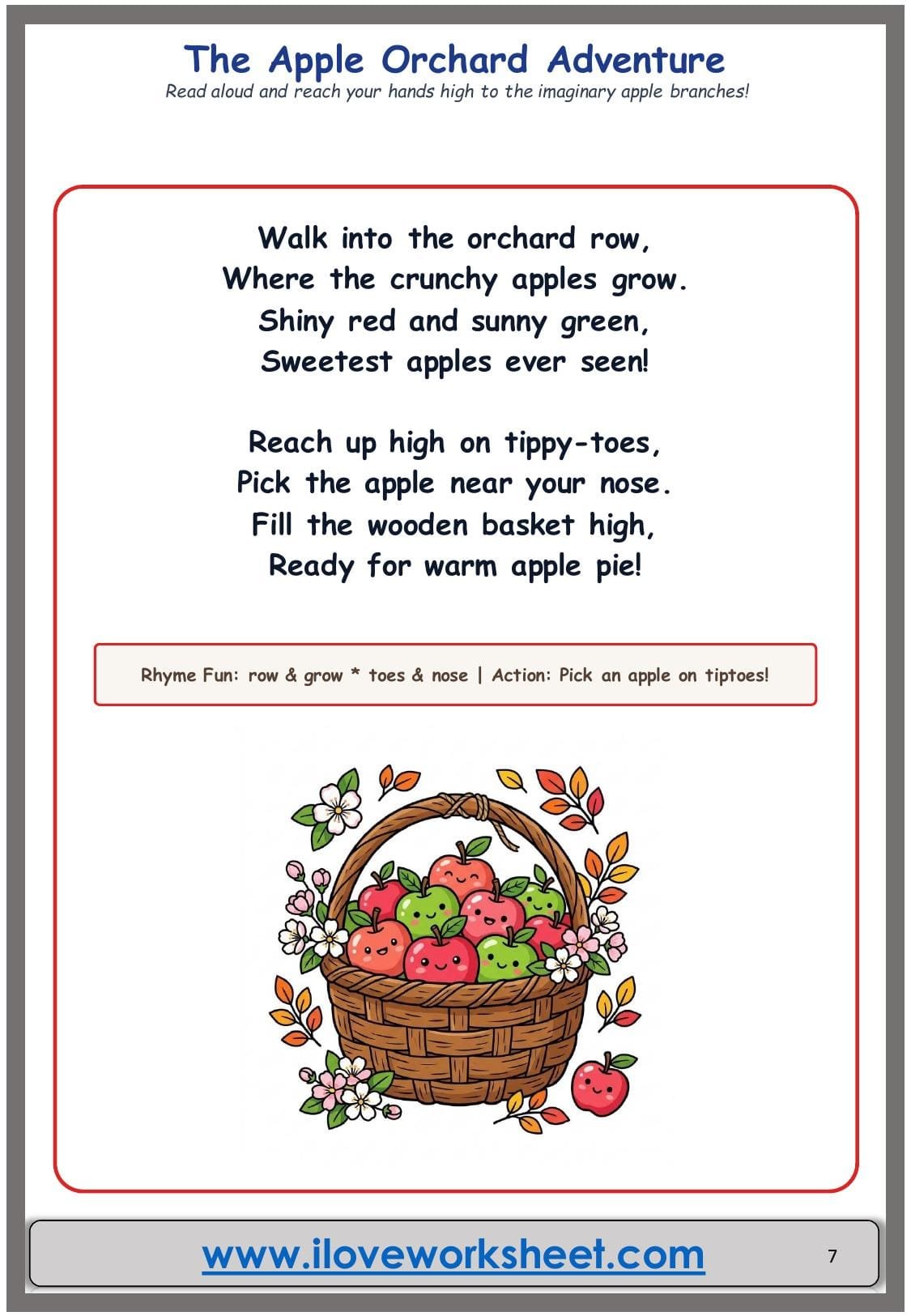
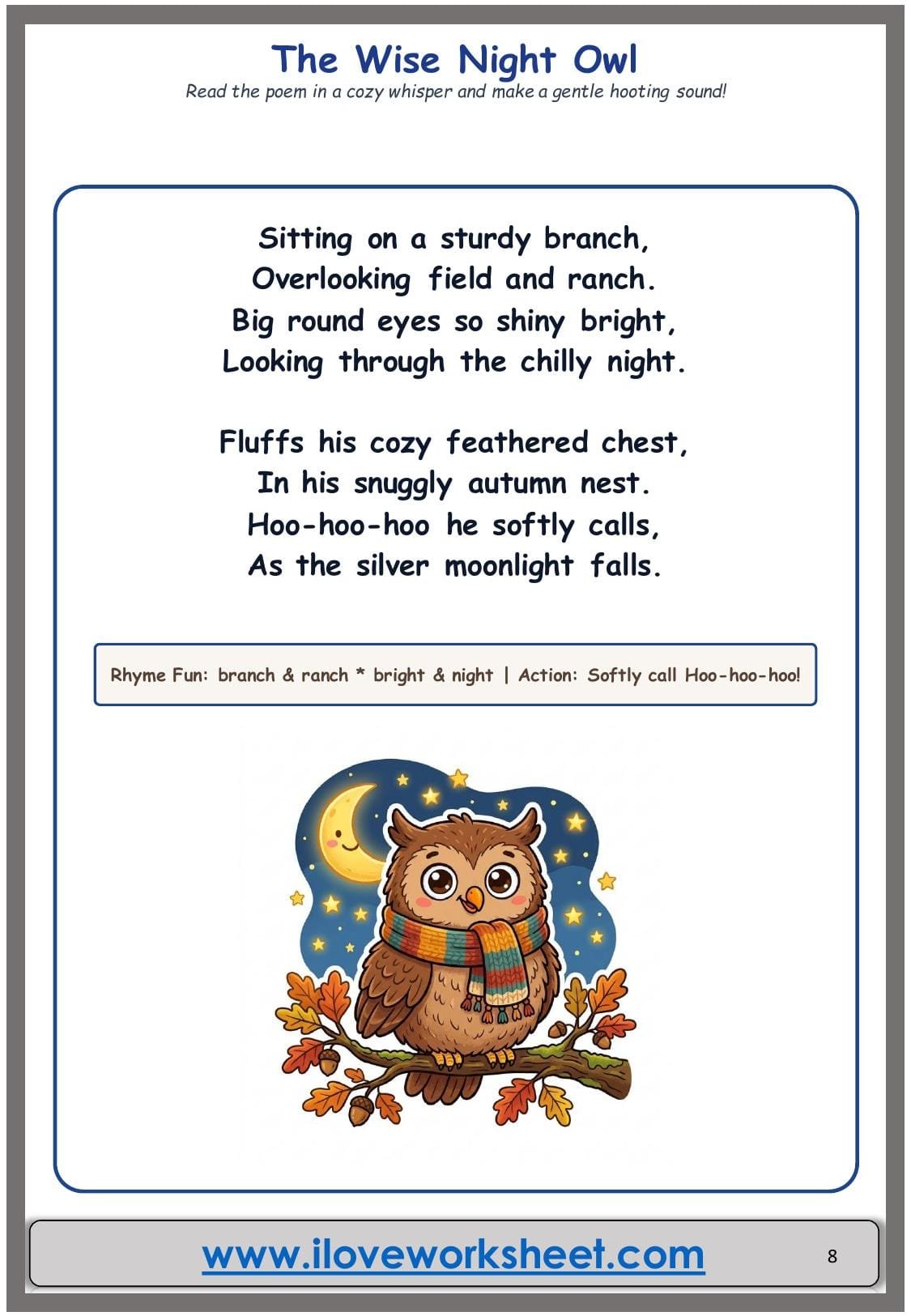
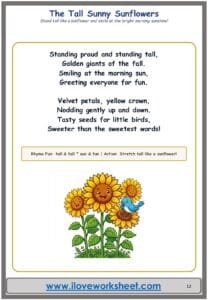
Dual-coding theory, established by cognitive psychologist Allan Paivio, further underscores that the human brain processes textual and pictorial data through separate yet mutually supportive cognitive pathways. Presenting rhythmic verse adjacent to cheerful, high-contrast cartoon illustrations enables emergent readers to cross-reference unfamiliar spoken words with salient visual referents. A colorful illustration depicting plump pumpkins in a harvest patch or a feathered owl perching under the moonlight clarifies poetic vocabulary without requiring lengthy verbal explanations. This immediate visual grounding reduces extraneous cognitive load, allowing young children to concentrate cognitive resources on phonetic rhythm, stanza structure, and oral recitation.

Classroom implementation of seasonal poetry accommodates a wide range of instructional formats, permitting seamless pedagogical differentiation across heterogeneous student populations. Early elementary educators employ diverse recitation techniques to support varying degrees of literacy readiness:
In international school environments across the Netherlands, Germany, and broader European regions, where English often functions as a secondary language of instruction, short-stanza autumn poems provide ideal scaffolds for bilingual fluency. The regular meter and predictable end-rhymes assist non-native English learners in perceiving English vowel variations and consonant clusters that might otherwise present auditory difficulties.