Complete A to Z Phonics Starting Sounds Worksheets for Kindergarten
Learning to read in English starts with hearing the very first sound in a spoken word. Across United States kindergarten classrooms, teachers call this essential skill beginning sounds or starting sounds. When five-year-old and six-year-old children look at a real photograph of a red apple and hear the short /a/ sound at the front of the word, letters stop looking like random shapes on paper. Each uppercase letter becomes a clear visual symbol for a real spoken sound. Strong, well-structured phonics worksheets make this early reading milestone fun, visual, and achievable for every young learner.
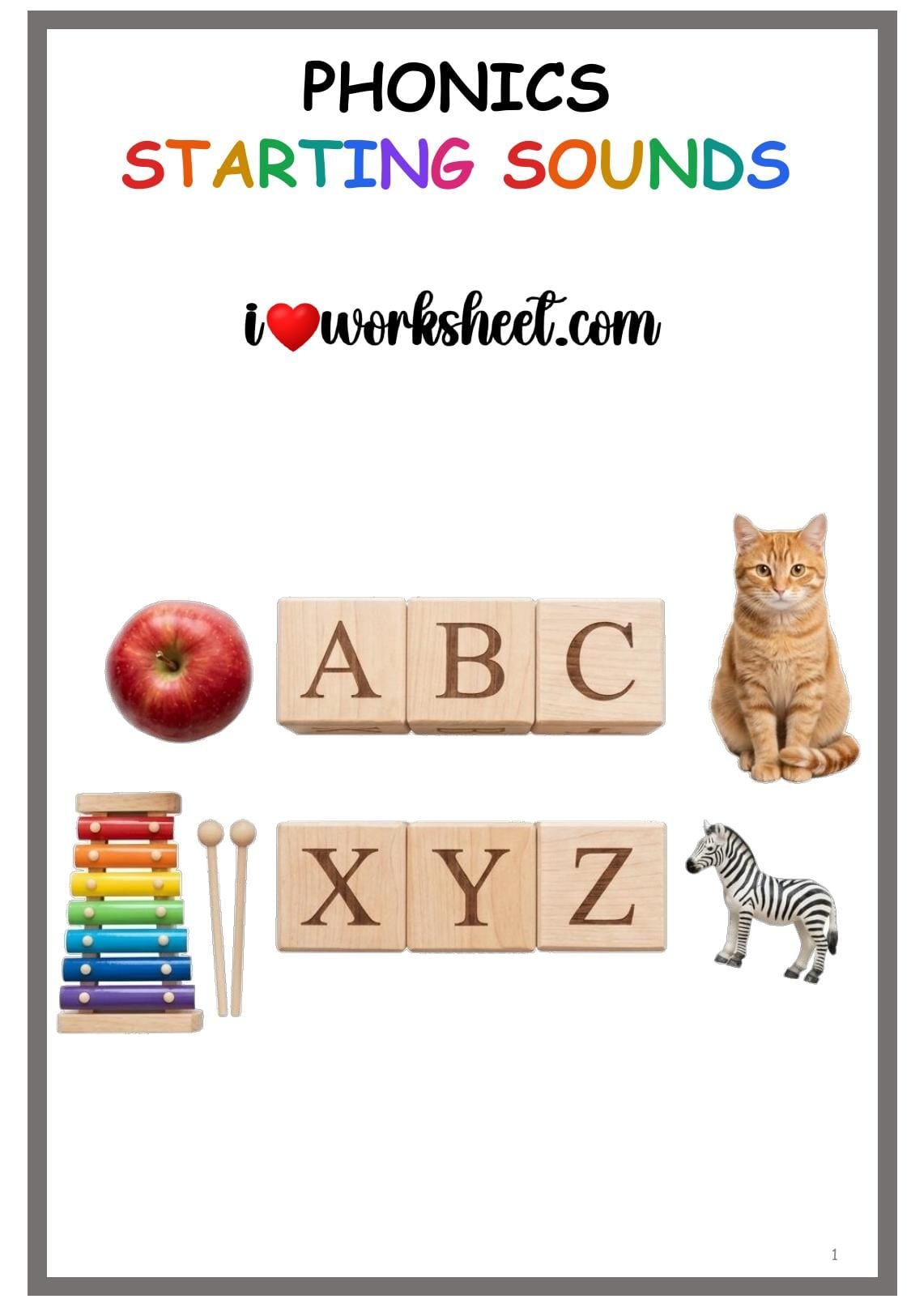
This complete seventeen-slide printable kindergarten phonics packet covers the entire English alphabet from A to Z. Instead of throwing all twenty-six letters at young readers on a single crowded page, the presentation breaks the alphabet into five manageable letter groups. The first four groups cover five letters each: A to E, F to J, K to O, and P to T. The final group covers the last six letters of the alphabet: U to Z. Even the title cover page sets the stage right away with wooden A B C and X Y Z blocks surrounded by a real red apple for A, a ginger tabby cat for C, a colorful rainbow xylophone for X, and a striped zebra for Z.
Why Grouping the Alphabet into Five Sets Works Best for Young Readers
Early childhood reading research across American elementary schools shows that small, focused letter sets build much stronger phonemic awareness than full-alphabet drills. When a kindergartener practices only five or six letters at a time, the brain can focus on how the mouth, lips, teeth, and vocal cords form each distinct starting sound. Children can feel the lips pop together for the /b/ sound in bear or the /p/ sound in penguin, and feel air brush past the teeth for the /f/ sound in fish or the /s/ sound in strawberry.
Each five-letter or six-letter section in this packet includes three matching activity pages: Circle the Starting Sound, Write the Starting Letter, and Match the Starting Sound. Completing the same three activity formats for every alphabet group creates a predictable classroom routine. Once students understand how to circle, write, and match on the A-to-E pages, they can jump straight into F to J, K to O, P to T, and U to Z without needing long explanations from the teacher.
Real Photographs
Many phonics worksheets rely on busy cartoons or abstract clipart doodles that confuse young children. A cartoon drawing of a bird might look like a duck, a pigeon, a seagull, or a quail, causing a child to guess the wrong starting letter. Every single card across this entire A-to-Z packet uses a real-world photograph isolated on a pure white background. Whether a student looks at a real brown bear, a fresh orange carrot, a green iguana, or a wooden violin, object recognition is instant and accurate.
Every worksheet box stays unshaded and pure white so the real photographs stand out clearly and pages print cleanly on any classroom printer. Each picture is zoomed in, centered, and angled neatly inside its frame while leaving plenty of open space below or beside the image for pencil work. In addition, the first item on every activity page includes a bright green sample answer, showing a green circle around the correct letter on circling pages, a green sample letter on the first line of writing pages, and a green dash-dot connecting line on matching pages so kindergarteners can see an example right away.
Three Core Activity Formats Across Every Alphabet Group
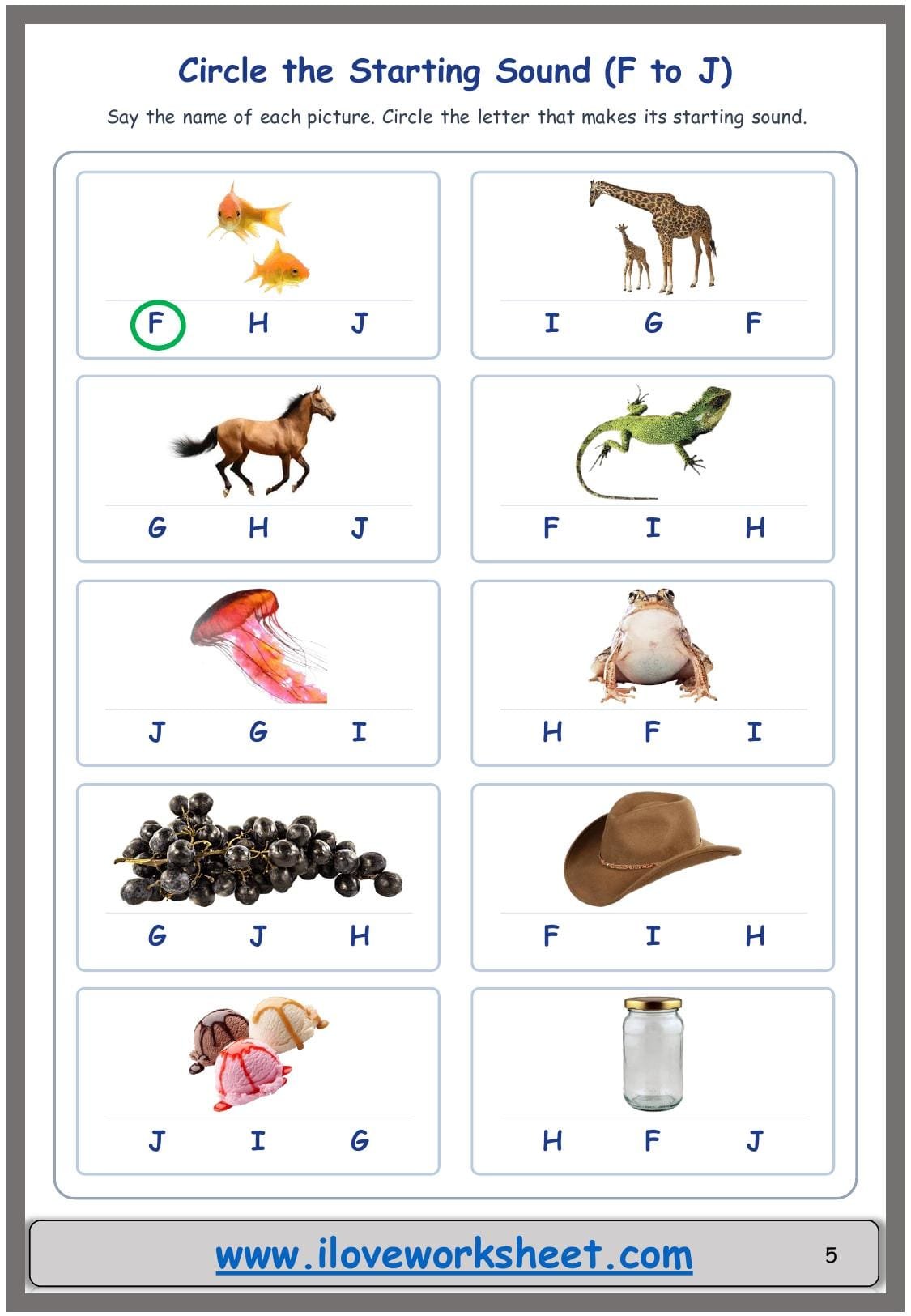
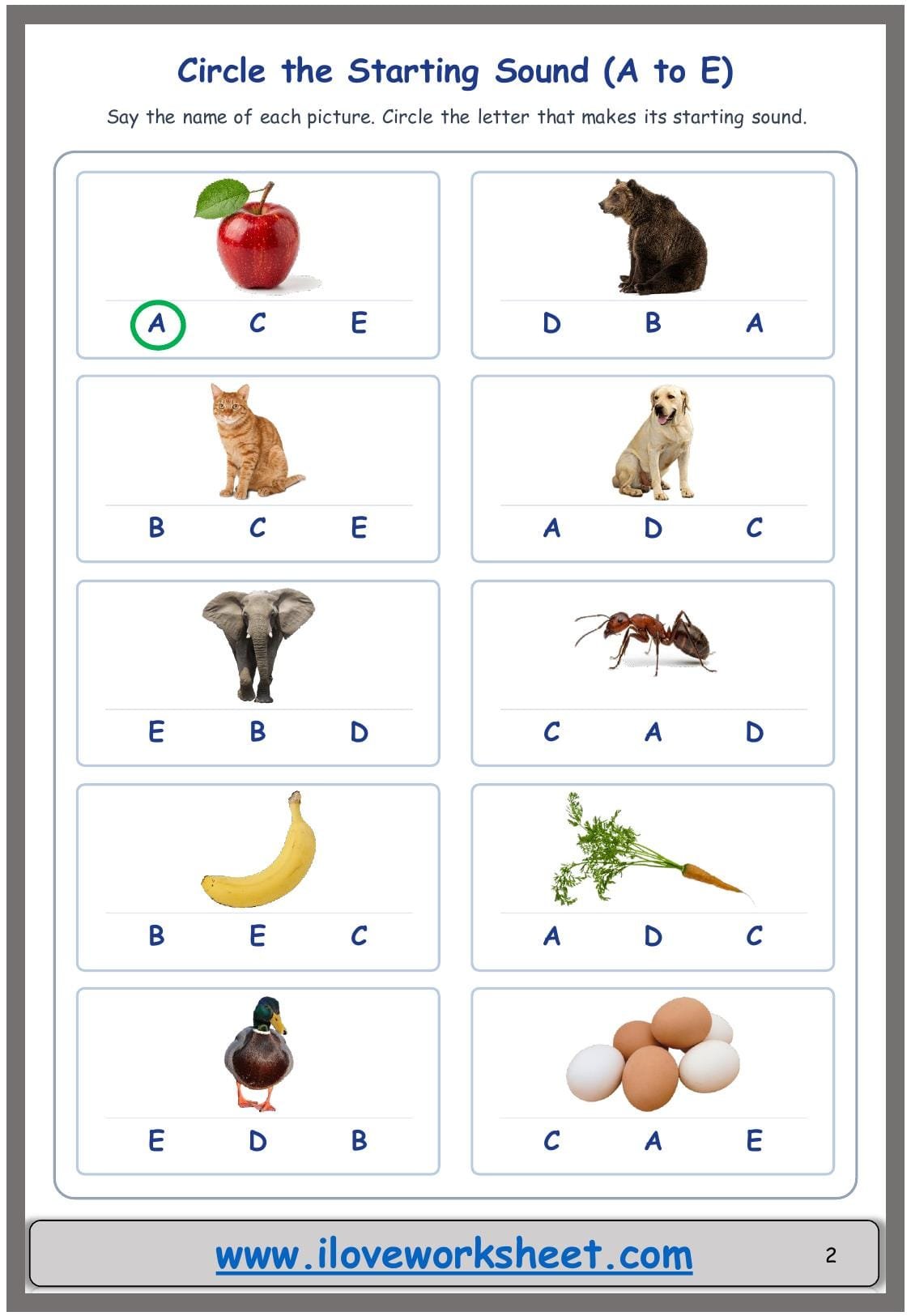
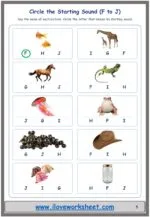
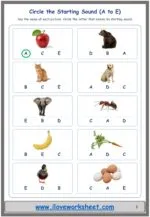
The first page in each alphabet group is Circle the Starting Sound. This page displays ten real photographs arranged in two clean columns of five cards. Underneath each photo sit three uppercase letter choices drawn from that specific letter group. The very first card shows a green circle around the first letter choice as a model. Students say the name of each picture aloud, listen for the beginning sound, and draw a circle around the matching uppercase letter.
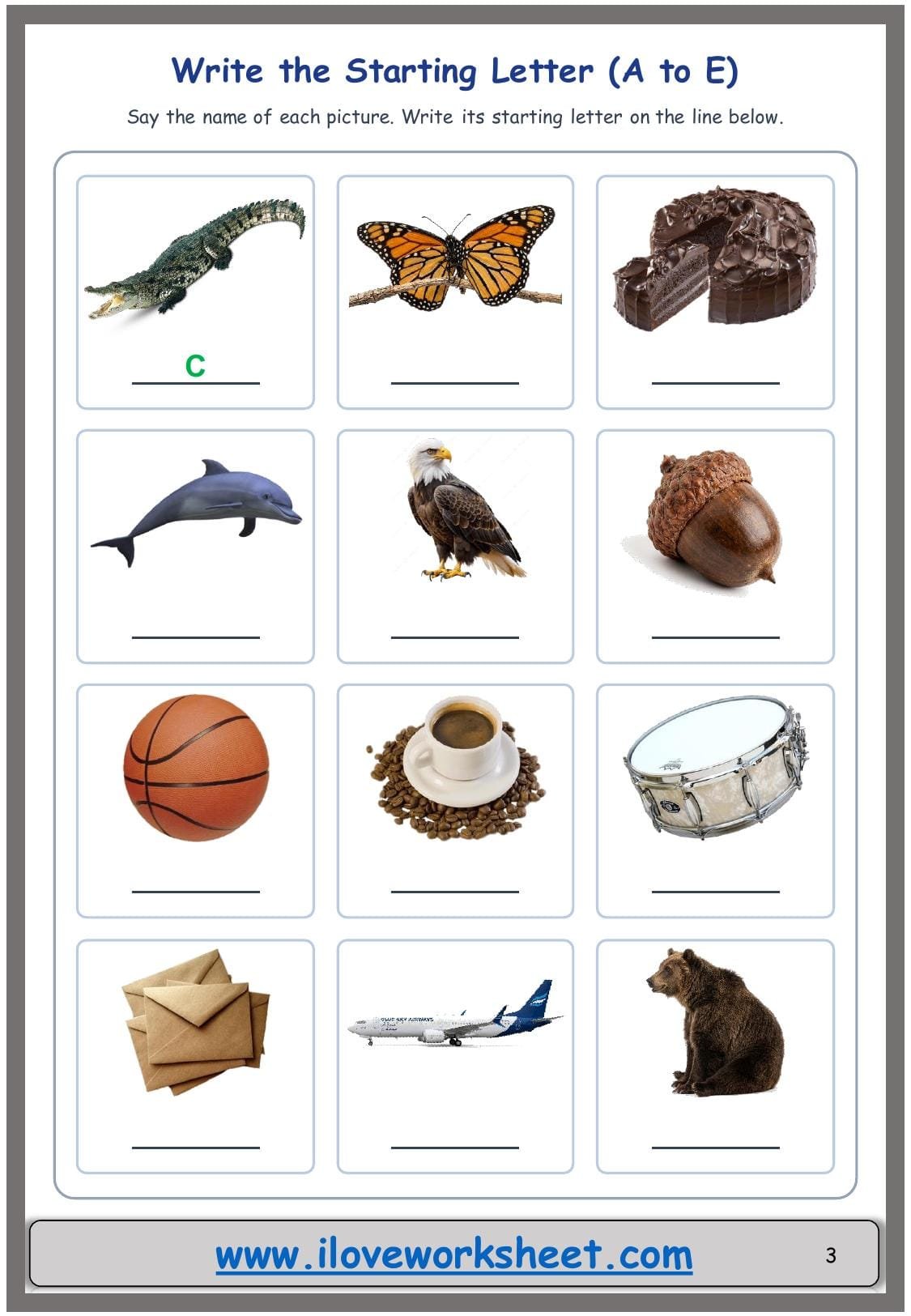
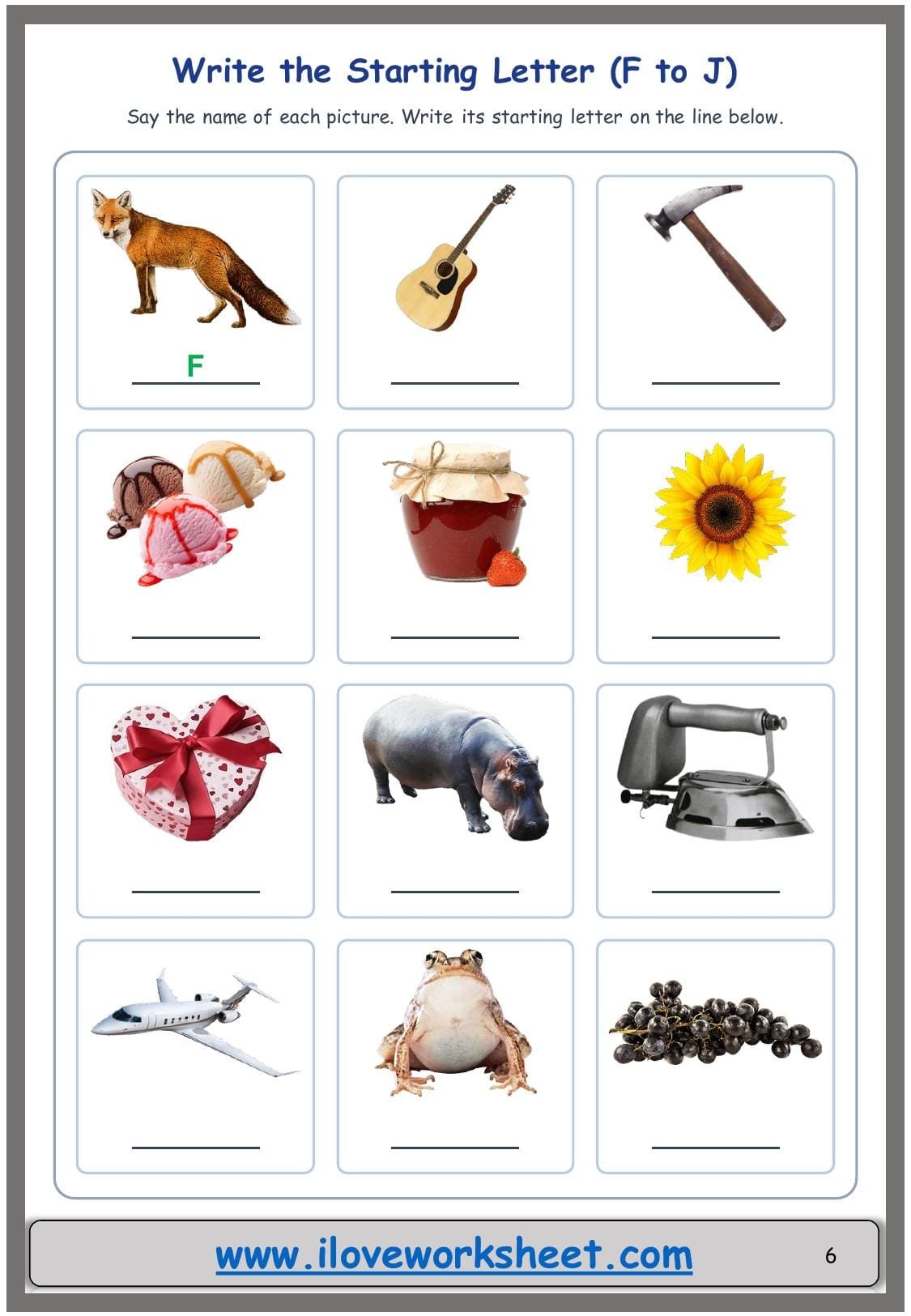
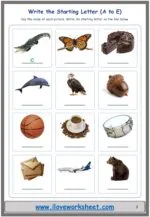
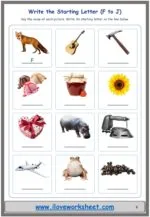
The second page in each alphabet group is Write the Starting Letter. Twelve real photographs fill a neat three-by-four grid, with a solid horizontal line beneath each image. Card one displays a green uppercase letter above the line as a clear visual model. Students name each picture, recall the uppercase letter that makes its starting sound, and write that letter on the line using proper pencil strokes.
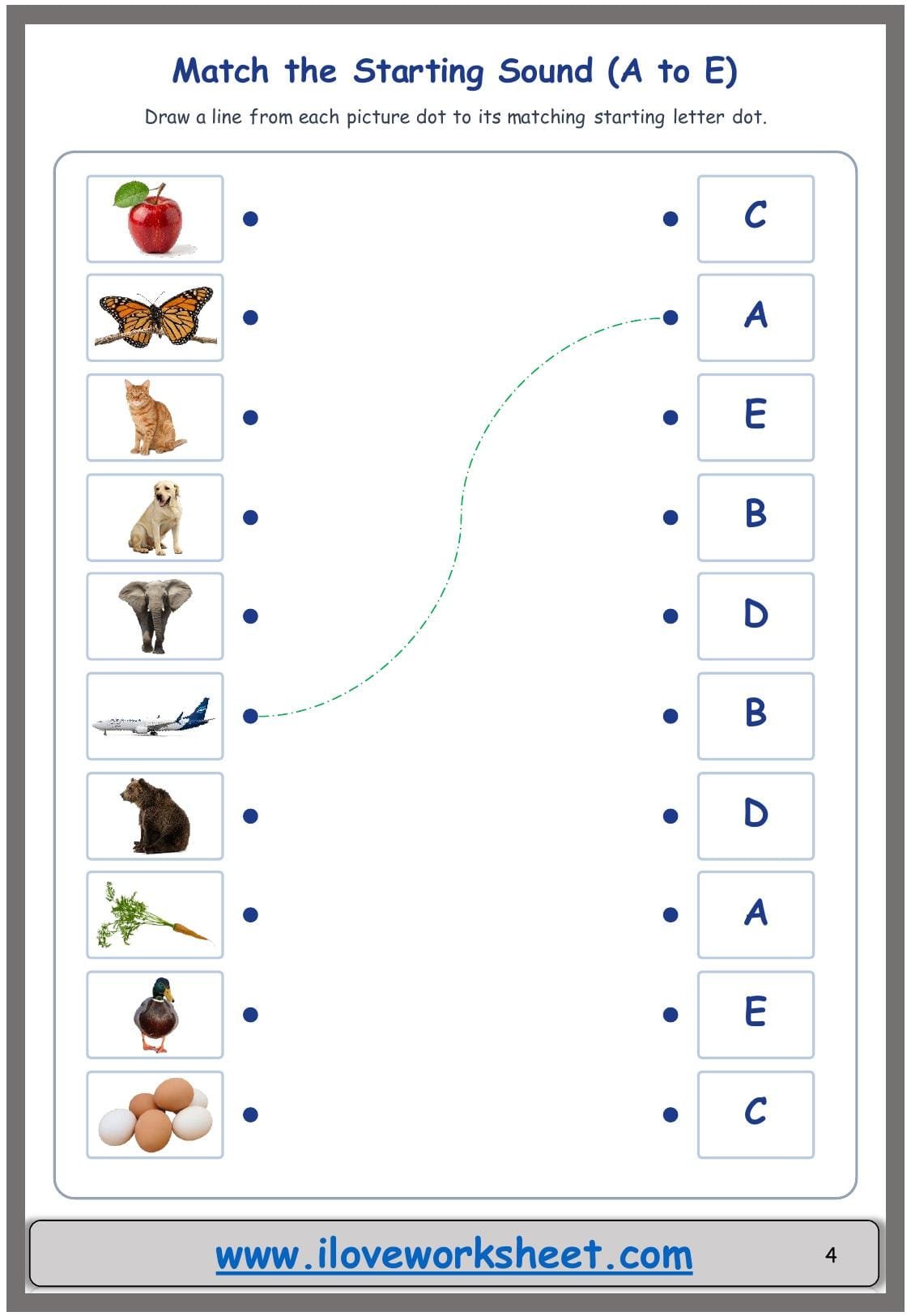
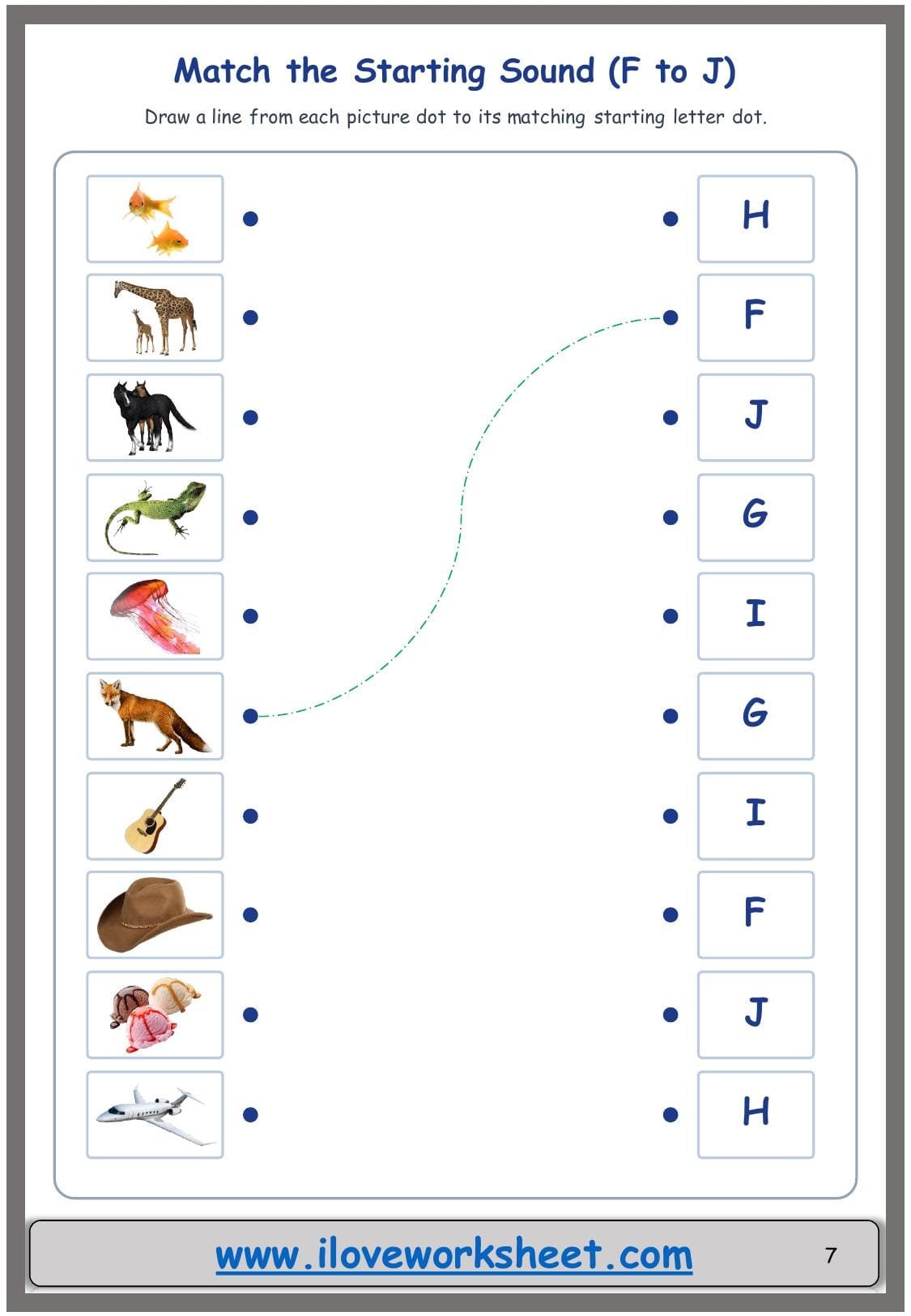
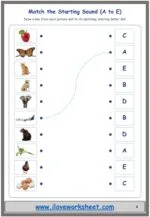
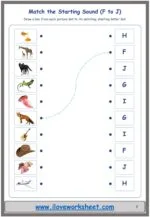
The third page in each alphabet group is Match the Starting Sound. Ten real photographs line up in a left column beside ten blue dots, while ten uppercase letters line up in a right column beside ten matching dots. A green dash-dot curved line connects one left-column picture dot to its matching right-column letter dot as an example. Children trace the starting sound of each picture and draw a steady line from the picture dot to the correct letter dot, building left-to-right visual tracking and fine motor control.
Set One Breakdown: Starting Sounds from A to E
Slides two, three, and four introduce the first five letters of the alphabet: A, B, C, D, and E. This opening set blends two high-frequency short and long vowel letters, A and E, with three crisp consonant stops, B, C, and D. On the Circle the Starting Sound page for A to E, the green example circle highlights letter A under the red apple, followed by real photos of a brown bear, a ginger cat, a yellow dog, an elephant, an ant, a yellow banana, a leafy carrot, a mallard duck, and brown and white eggs.
On the Write the Starting Letter page for A to E, students practice twelve vocabulary pictures arranged in three columns: an alligator, a monarch butterfly, a chocolate cake, a swimming dolphin, a golden eagle, an oak acorn, an orange basketball, a coffee cup, a snare drum, brown paper envelopes, a passenger airplane, and a sitting bear. On the Match the Starting Sound page for A to E, ten real photos including apple, butterfly, cat, dog, elephant, airplane, bear, carrot, duck, and egg connect across the center space to uppercase letters A, B, C, D, and E, with the green sample line linking the airplane in row six to letter A in row two.
Set Two Breakdown: Starting Sounds from F to J
Slides five, six, and seven move to the next five letters of the alphabet: F, G, H, I, and J. This group contrasts continuous fricative sounds like /f/ and /h/ with the hard /g/ stop, the vowel /i/ sound, and the crisp /j/ sound. On the Circle the Starting Sound page for F to J, a green sample circle marks letter F below two orange goldfish. Students then identify a tall giraffe, a black horse, a green iguana, a pink jellyfish, a tree frog, a bunch of dark grapes, a brown cowboy hat, scoops of ice cream, and a clear glass jar.
The Write the Starting Letter page for F to J starts with a green sample letter F beneath a red fox, followed by an acoustic guitar, a claw hammer, three scoops of ice cream, a jar of strawberry jam, a bright yellow flower, a heart-shaped gift box, a gray hippo, a vintage clothes iron, a white jet airplane, a frog, and a cluster of grapes. On the Match the Starting Sound page for F to J, the green sample connector links the red fox in row six to letter F in row two while students match fish, giraffe, horse, iguana, jellyfish, guitar, hat, ice cream, and jet to their uppercase letters.
Set Three Breakdown: Starting Sounds from K to O
Slides eight, nine, and ten cover the middle five letters of the alphabet: K, L, M, N, and O. Kindergarteners love this animal-rich and nature-rich group because sounds like /l/, /m/, and /n/ can be hummed and stretched out aloud. On the Circle the Starting Sound page for K to O, the green sample circle highlights letter K under a jumping kangaroo, followed by a roaring lion, a sitting monkey, a woven bird nest, a flying barn owl, a koala munching leaves, a yellow lemon, sliced mushrooms, a walnut shell for nut, and fresh oranges.
On the Write the Starting Letter page for K to O, card one models a green letter K below the koala. Students then write the starting letter for an autumn leaf, a full moon, a fishing net, ripe oranges, a metal key, a brass padlock, colorful knitted mittens, a sewing needle, a sliced onion, a kangaroo, and a lion. The Match the Starting Sound page for K to O uses the green dash-dot line to connect the koala in row six to letter K in row two, while children match kangaroo, lion, monkey, nest, owl, leaf, mushroom, nut, and orange.
Set Four Breakdown: Starting Sounds from P to T
Slides eleven, twelve, and thirteen focus on five high-utility consonants: P, Q, R, S, and T. These five letters appear at the beginning of hundreds of kindergarten sight words and decodable readers. On the Circle the Starting Sound page for P to T, the green circle marks letter P beneath a standing penguin. Learners then circle the starting sound for a speckled quail, a gray rabbit, a red strawberry, a walking tiger, a yellow wooden pencil, a bird feather quill, a red rose, a bright yellow sunflower, and a swimming sea turtle.
The Write the Starting Letter page for P to T displays a green sample letter P beneath the yellow pencil in card one, followed by a smiling quokka, a red raspberry, an orange starfish, a blossoming tree, a penguin, spotted quail eggs, a diamond ring, a passenger ship, a red tomato, a sea turtle, and a gray rabbit. On the Match the Starting Sound page for P to T, the green sample connector joins the yellow pencil in row six to letter P in row two, and students draw lines for penguin, quail, rabbit, strawberry, tiger, quill, ring, sunflower, and turtle.
Set Five Breakdown: Starting Sounds from U to Z
Slides fourteen, fifteen, and sixteen complete the alphabet with the final six letters: U, V, W, X, Y, and Z. Because the English alphabet has twenty-six letters, including six letters in this final set ensures every letter from U through Z receives complete phonics practice. On the Circle the Starting Sound page for U to Z, a green sample circle highlights letter U under a rainbow umbrella, followed by a wooden violin with a bow, a humpback whale, a colorful xylophone, a white motor yacht, a striped zebra, a wooden ukulele, a glass vase of white lilies, slices of watermelon, and a ball of orange yarn.
On the Write the Starting Letter page for U to Z, card one shows a green sample letter U below a spiny sea urchin, followed by a blue vintage van, a wristwatch, a hand x-ray, a bowl of strawberry yogurt, a black zipper, silver eating utensils, fresh vegetables, a gray wolf, a rainbow xylophone, a yellow bell pepper, and a green zucchini. On the Match the Starting Sound page for U to Z, the green sample line links the striped zebra in row six to letter Z in row two while students match umbrella, violin, whale, xylophone, yacht, ukulele, vase, watermelon, and x-ray.
Ways Teachers Use This Seventeen-Slide Packet in the Classroom
A full A-to-Z phonics packet divided into five letter groups gives kindergarten teachers tremendous flexibility across an entire five-week phonics unit. Teachers can introduce one alphabet group each week, starting with A to E in week one and finishing with U to Z in week five. Within each week, students can complete the Circle the Starting Sound page on Monday, the Write the Starting Letter page on Wednesday, and the Match the Starting Sound page on Friday as a quick progress check.
For literacy centers and morning tubs, teachers can slip the printed pages into clear dry-erase pockets and provide fine-tip wipe-off markers. Students can trace the green sample answers first and then complete the remaining cards at their own pace. Because every page uses clean Comic Sans MS lettering, pure white unshaded boxes, and real-world photography without distracting clutter, this A-to-Z starting sounds resource supports general education kindergarteners, English language learners, and speech-language small groups alike.