
Alphabet word search puzzles offer an engaging way to build foundational reading skills in early elementary classrooms. Young students in kindergarten and primary grades need repeated contact with printed letters to form strong neural connections for phonics and spelling. A well-crafted letter puzzle transforms routine vocabulary practice into an exciting treasure hunt. Children scan across letter grids, look closely at initial consonant sounds, and identify familiar word chunks.
Word puzzles also develop essential visual tracking skills. When early learners search through letter rows and columns, their eyes move left to right and top to bottom in the same sequence required for fluent book reading. This spatial exercise strengthens eye coordination and focus. Teachers observe that students who regularly solve letter puzzles show greater confidence when decoding unfamiliar words in storybooks. The activity promotes active attention to spelling sequences without inducing stress or boredom.
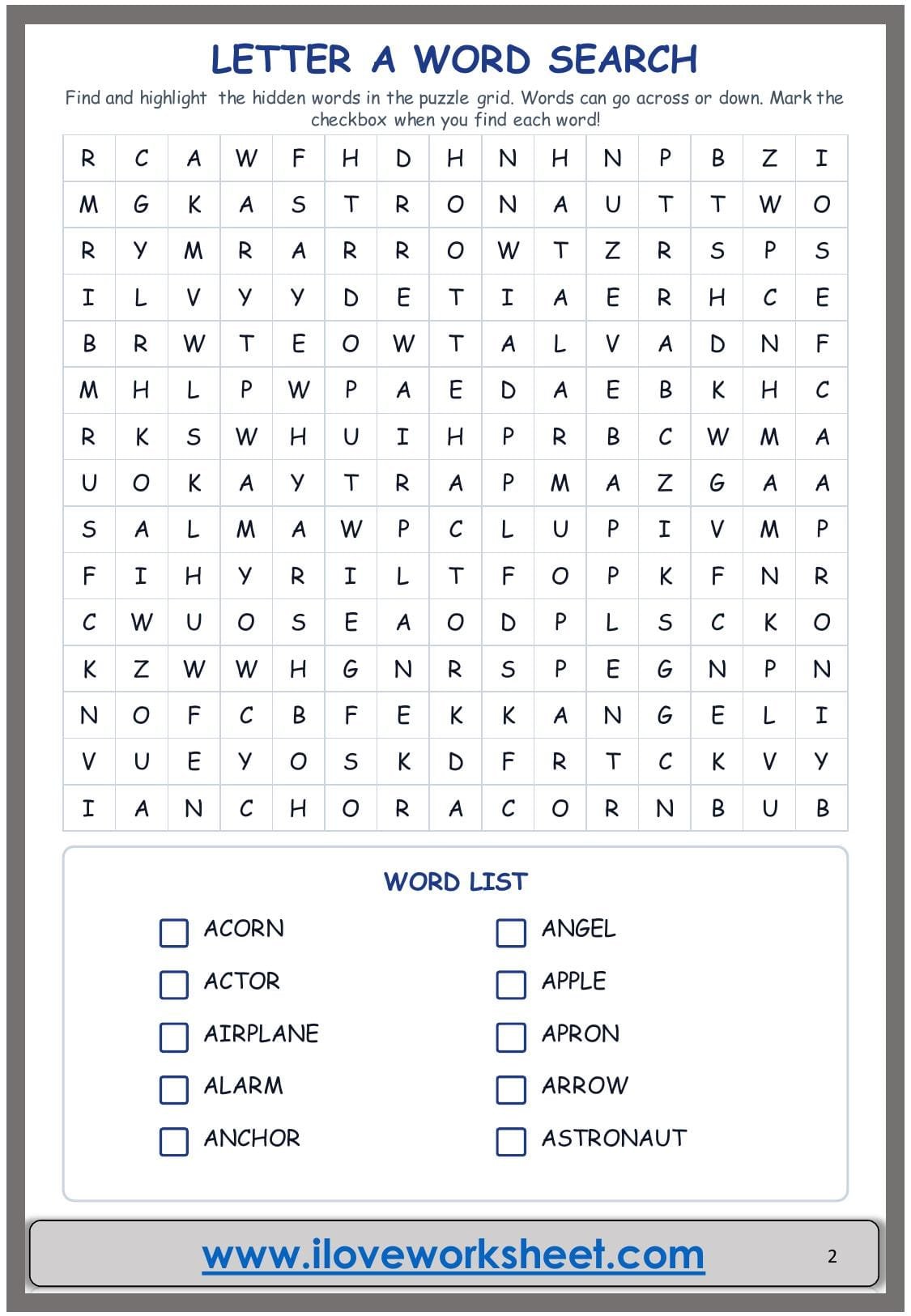
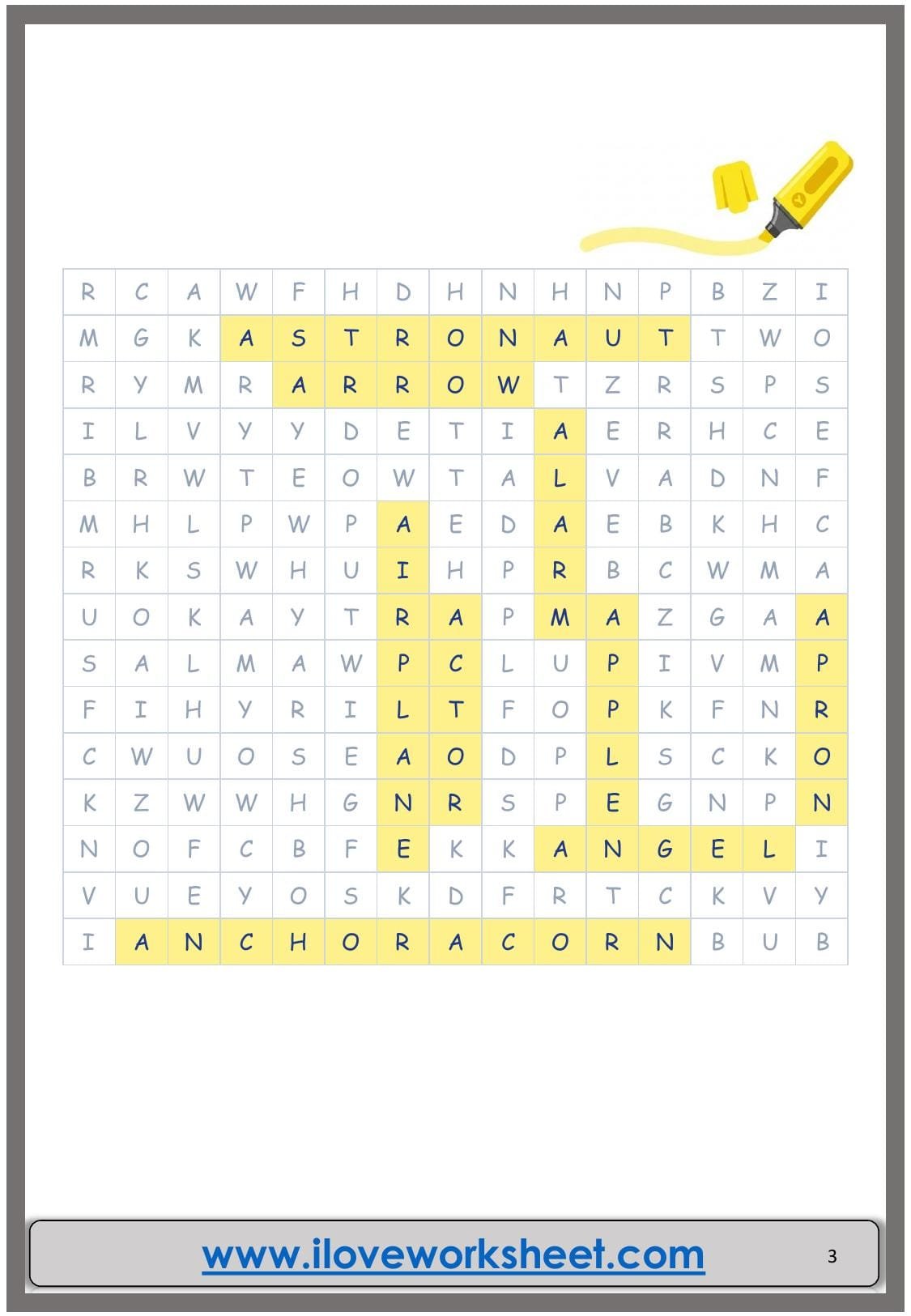
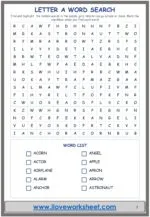
The letter A holds a central place in the English alphabet because it represents several distinct vowel sounds. Introducing letter A vocabulary through varied word lengths helps students grasp both short vowel sounds and long vowel sounds. Words such as apple, acorn, arrow, apron, and alarm introduce children to both everyday household items and nature terms. Longer vocabulary words like airplane and astronaut expand thematic curiosity about science, transportation, and space exploration.
Elementary teachers frequently use letter-focused word searches during morning warm-ups, phonics units, or independent reading centers. Introducing ten specific words beginning with the target letter gives children a clear learning goal. Learners repeat the target sounds aloud as they search the puzzle matrix. This multi-sensory connection between spoken phonemes and printed graphemes supports long-term memory retention. Students gain satisfaction as each hidden word emerges from the letter grid.
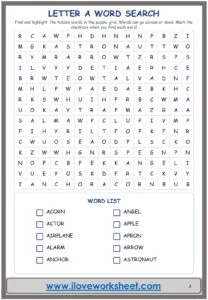
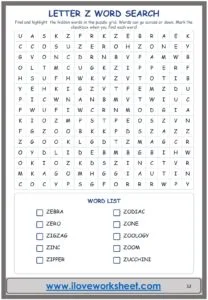
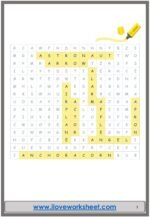
Pattern recognition serves as the backbone of reading comprehension and fluent text decoding. When children search for words like anchor or angel, they do not merely memorize isolated letters. They recognize common blends, digraphs, and letter clusters. This visual analysis helps early readers notice silent vowels, double consonants, and predictable word families.
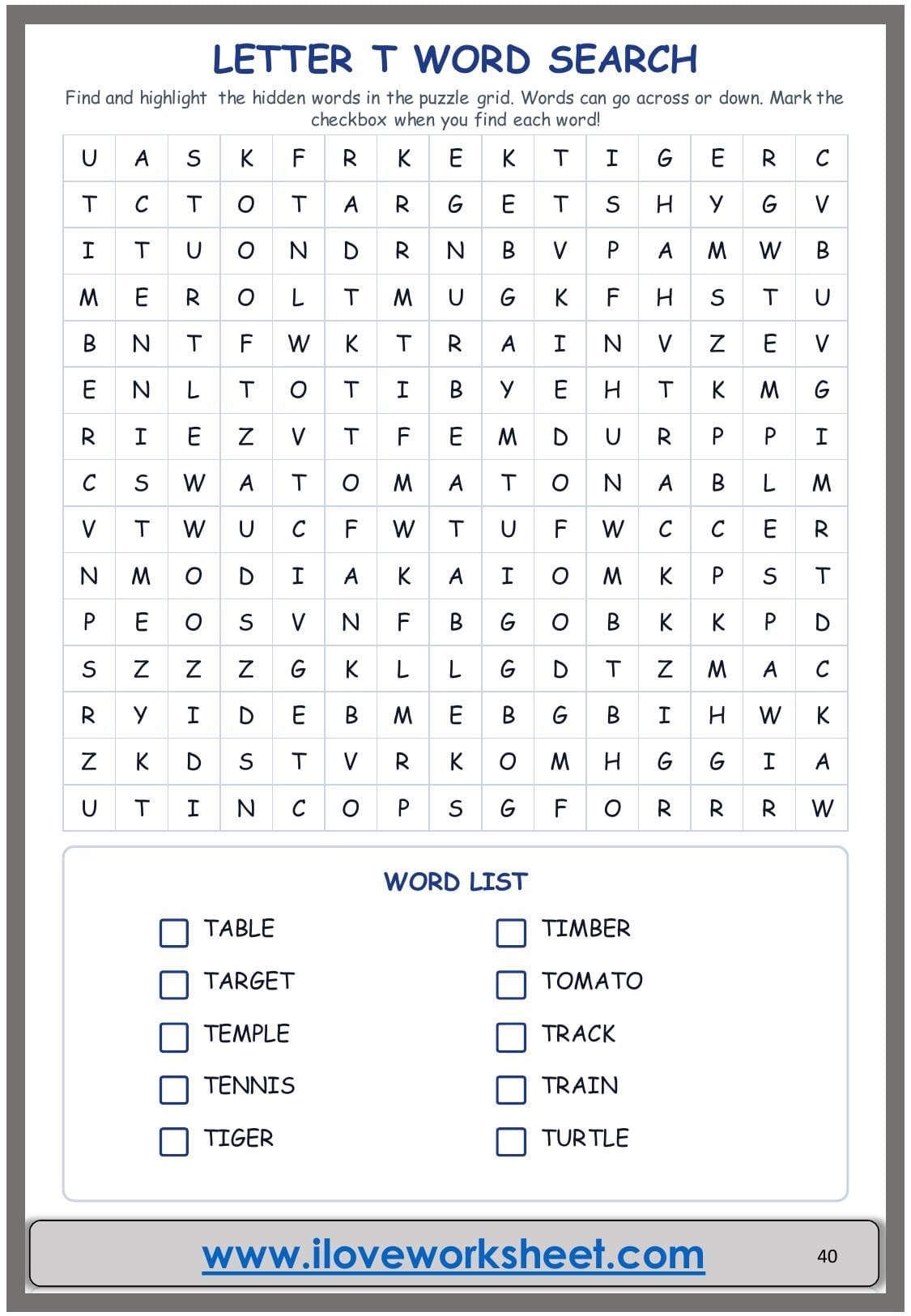
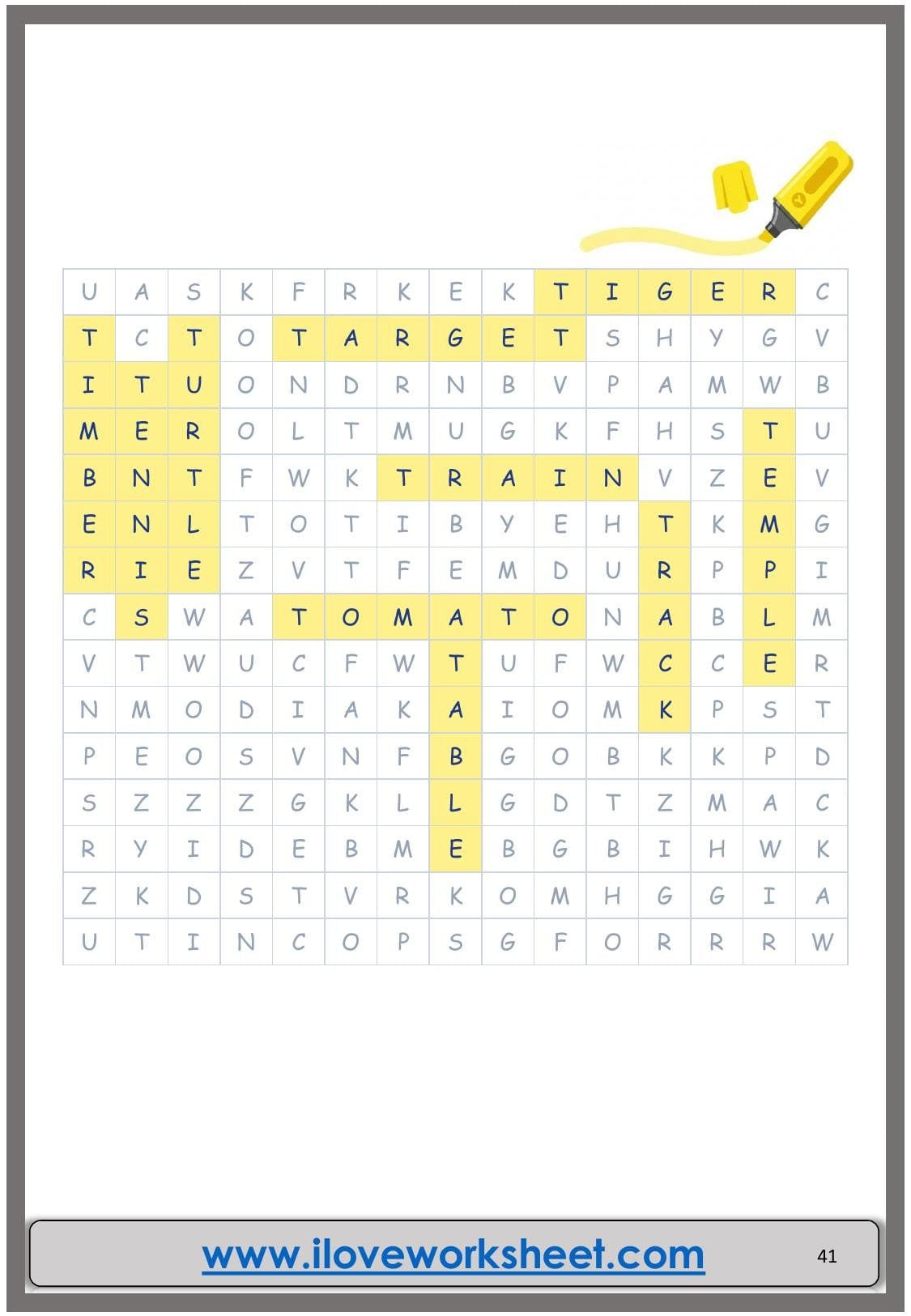
A fifteen-by-fifteen letter grid provides an ideal balance of challenge and accessibility for elementary students. It offers enough complexity to stimulate critical thinking while remaining approachable for young learners. As children trace paths horizontally and vertically across letter rows and columns, they sharpen their spatial awareness. The systematic search process teaches children patience, persistence, and methodical problem-solving habits that transfer directly to mathematics and science tasks.
Teachers can incorporate letter word search printables into daily instructional routines in numerous creative ways. During morning arrival, a clean printed worksheet welcomes students with a calm, purposeful task. Morning work word puzzles allow children to settle into the school day quickly while reviewing core vocabulary words.
Word searches also serve as excellent materials for literacy stations and cooperative learning pairs. In small reading groups, students can partner up to pronounce each word, discuss its definition, and collaborate to find the hidden path. Educators can extend the activity by asking students to write an original sentence for each discovered word on lined handwriting paper. Another effective extension invites children to illustrate two favorite words on the back of the sheet, such as drawing a green apple or a shining star next to an astronaut.
Fast finishers in the classroom benefit immensely from alphabet search activities. When capable students finish their spelling tests or reading assignments ahead of peers, a word search puzzle keeps them academically engaged without disrupting classmates. The printable format requires zero complex preparation, making it a dependable resource for busy educators.
Combining word search activities with handwriting practice reinforces both fine motor control and letter memory. After finding words like apron, alarm, and actor, children can practice writing each word in neat lowercase letters on primary ruled paper. Tracing and copying words immediately after visual discovery cements letter order in the mind.
Teachers can also introduce oral phonics exercises alongside the worksheet. For instance, an instructor can call out the initial sound of apple and ask students to point to the word on their page. This auditory reinforcement connects sound recognition with written text. Teachers can also challenge students to identify rhyming partners or count the syllables in longer words like astronaut. Linking multiple language modalities ensures that literacy concepts take firm root in young minds.
Every elementary classroom includes children with diverse learning profiles, language backgrounds, and developmental speeds. Word search worksheets provide natural scaffolding for differentiated instruction. Emerging readers can search for shorter three-letter or five-letter words first, while advanced readers can tackle longer multisyllabic terms like astronaut and airplane.
For English language learners, visual word puzzles provide low-anxiety exposure to English spelling conventions. Pairing the word list with picture cards or real-world classroom objects deepens conceptual understanding. Teachers can also encourage children to use colored highlighter markers, highlighting each word in a bright hue. This color-coding technique makes letter patterns stand out vividly and aids students who rely on strong visual cues.
Special education teachers find word searches effective for developing fine motor dexterity and visual discrimination. Highlighting letters neatly inside small grid cells strengthens pencil grip and hand muscles needed for legible handwriting. Because the task has clear boundaries and visible success metrics, children experience immediate feelings of accomplishment.
Including a dedicated checkbox beside each word on the printable list transforms the learning experience. Self-monitoring is an essential executive functioning skill for elementary students. When a child locates a word in the grid, highlights the letters, and ticks the small square box, that physical action confirms completion and provides clear visual feedback.
Checkboxes teach children to track their own progress methodically. Students learn to check the list, notice remaining words, and plan their next search strategy. This self-checking mechanism encourages independent work habits, allowing teachers to work uninterrupted with small intervention groups. By the time students mark all ten checkboxes, they feel genuine pride in finishing the entire task independently.
Clean page layouts with gentle spacing, clear fonts, and minimal clutter further support student focus. High quality educational worksheets avoid overwhelming young minds with excessive text or crowded graphics. A neat presentation respects the developmental needs of young children, turning literacy practice into an enjoyable, rewarding classroom adventure.