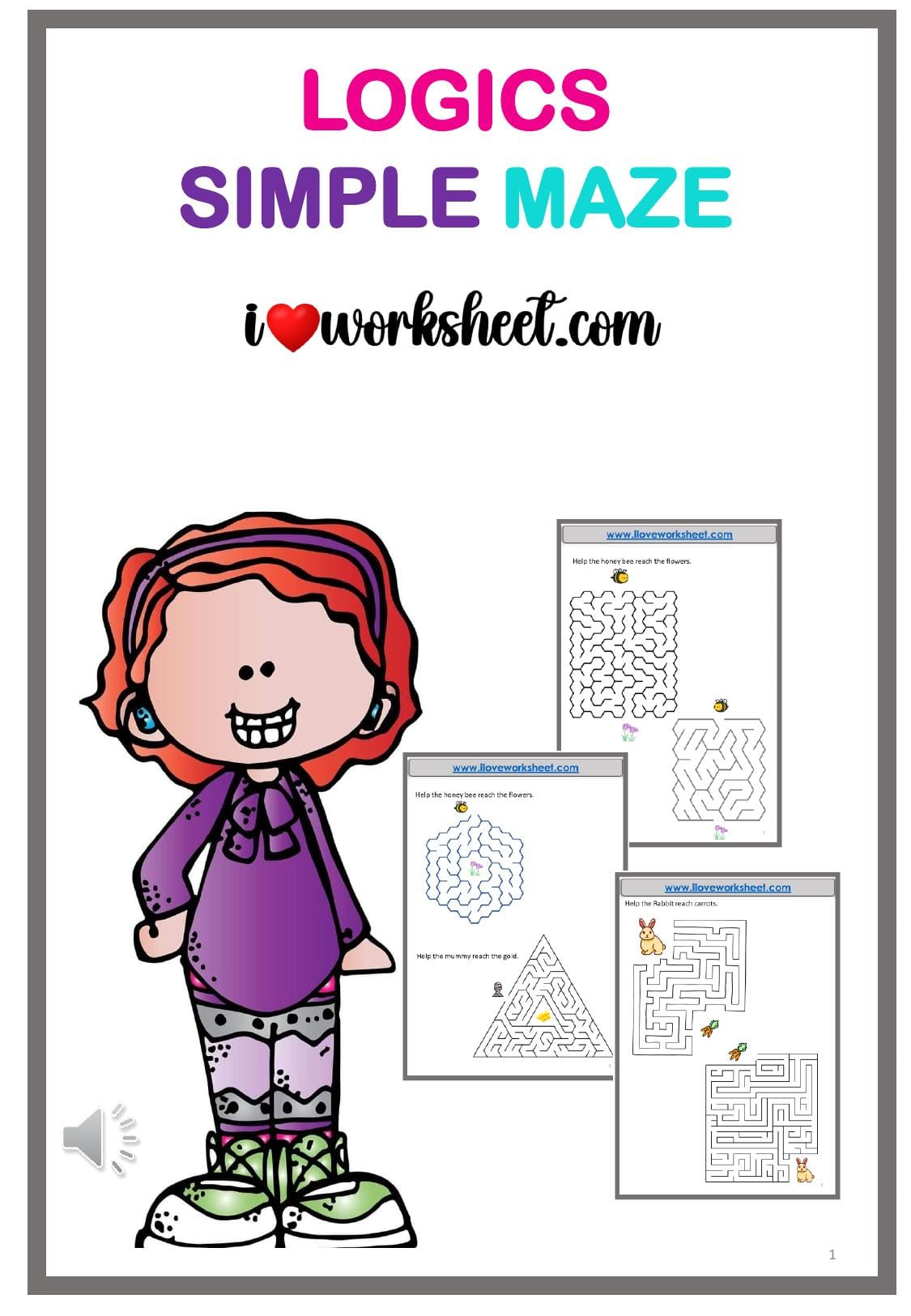
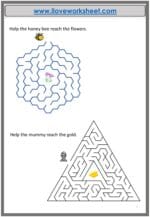
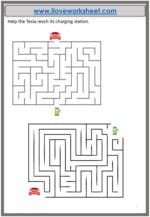

Simple maze activities have long been a favourite learning tool for young children. They combine fun with cognitive development, offering a playful way to strengthen logic, concentration, and early problem‑solving abilities. The Simple Maze worksheet you provided includes several themed mazes featuring honey bees, rabbits, mummies, balls, and even a Tesla car. Each maze encourages children to trace a path from start to finish, building essential thinking skills along the way.
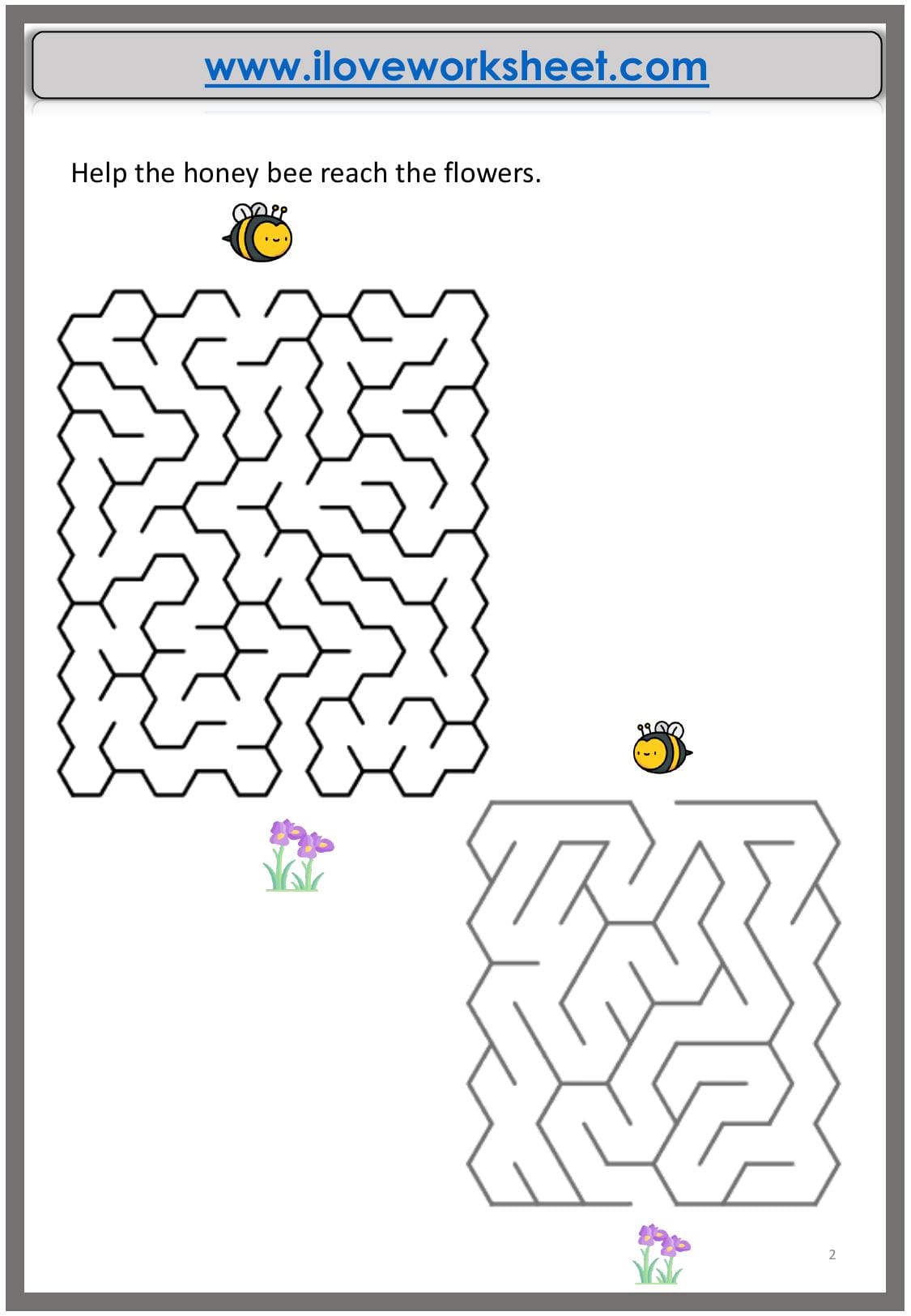
The worksheet opens with a cheerful prompt: “Help the honey bee reach the flowers.” This sets the tone for a series of engaging challenges that motivate children to think, plan, and navigate through winding paths.
Maze worksheets are more than just entertainment. They support a wide range of developmental skills that children need as they grow.
Every maze requires children to make decisions: Which path leads forward? Which route is a dead end? This type of reasoning builds early logic skills that support mathematics, reading comprehension, and everyday problem‑solving.
To complete a maze, children must stay attentive from start to finish. This helps improve concentration and task persistence — skills that are essential in classroom learning.
Tracing a path through narrow passages strengthens hand muscles and improves pencil control. This supports handwriting readiness and overall coordination.
Mazes require children to follow lines visually, strengthening eye movement control. This is important for reading fluency and spatial awareness.
Finishing a maze gives children a sense of accomplishment. Each completed challenge builds confidence and encourages them to take on more complex tasks.
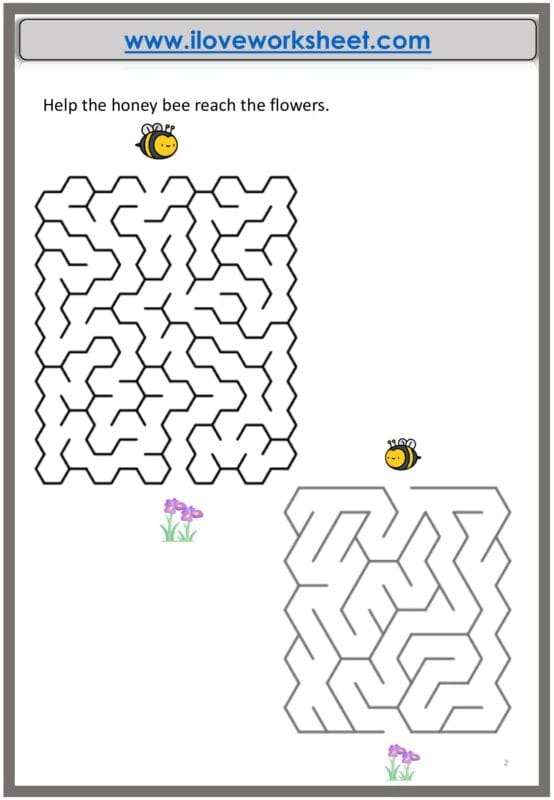
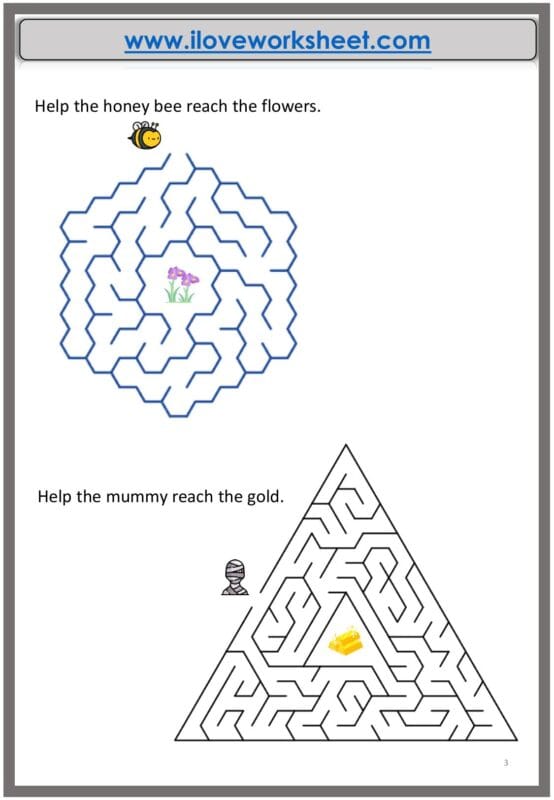
The worksheet contains multiple themed mazes, each designed to capture a child’s imagination while reinforcing cognitive skills.
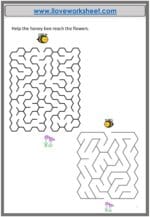
Several pages repeat the prompt “Help the honey bee reach the flowers.” These mazes feature winding paths that encourage children to guide the bee safely to its destination. The theme is friendly and familiar, making it ideal for preschool and kindergarten learners.
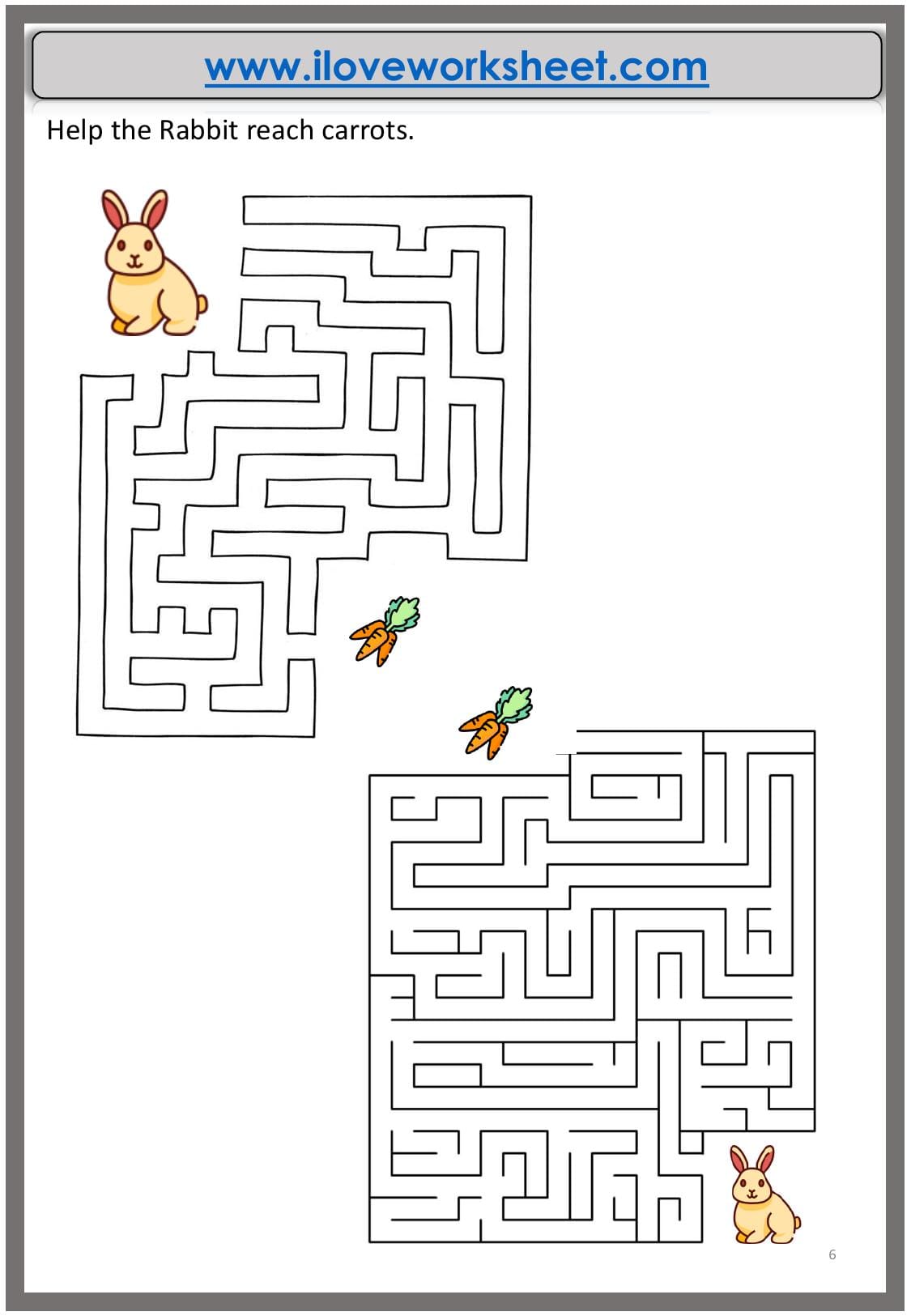
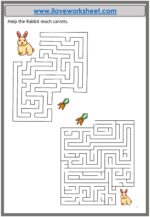
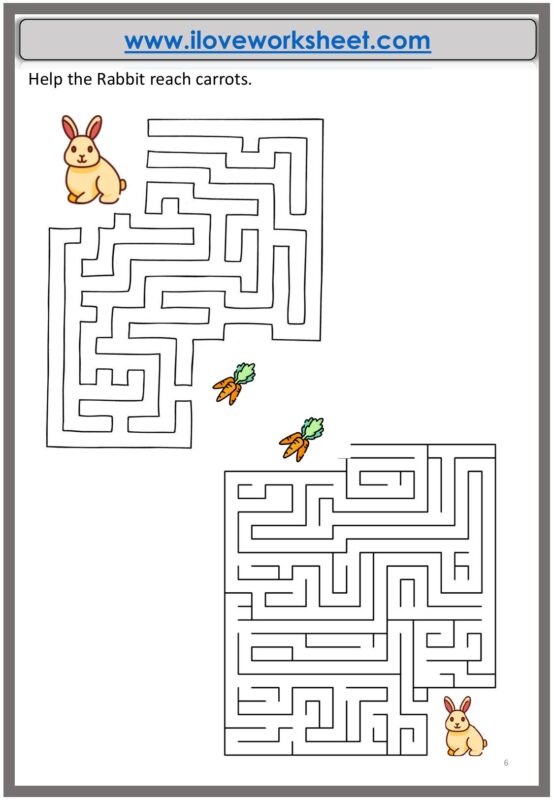
Another page invites children to “Help the Rabbit reach carrots.” This maze uses a food‑motivated goal that children instantly understand. The rabbit theme adds charm and keeps learners engaged.
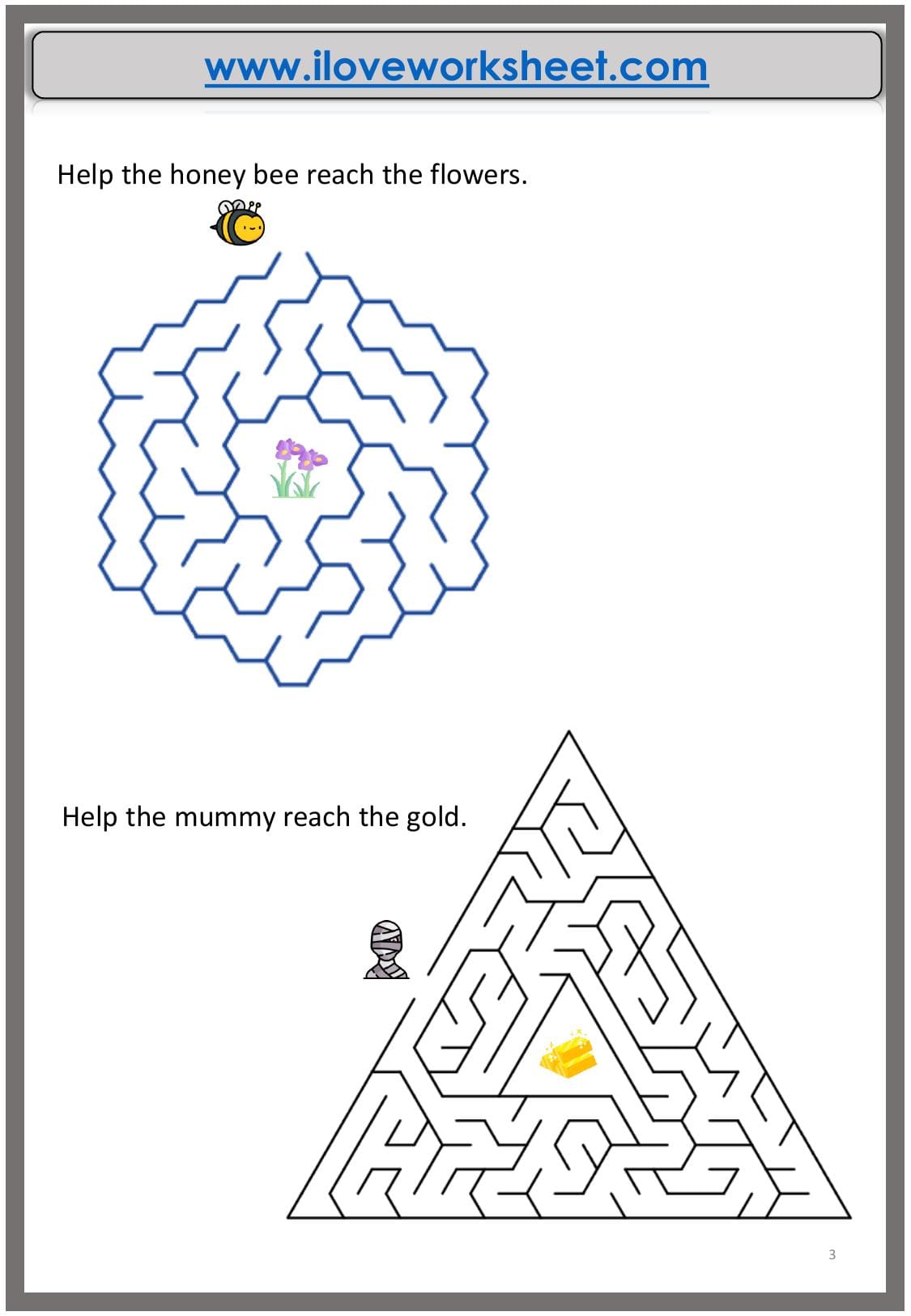
A more adventurous maze includes the prompt “Help the mummy reach the gold.” This introduces a playful treasure‑hunt element, encouraging curiosity and imagination.
One page shifts to a sports theme: “Trace the ball to reach the net.” This maze helps children connect movement with direction, reinforcing the idea of cause and effect.
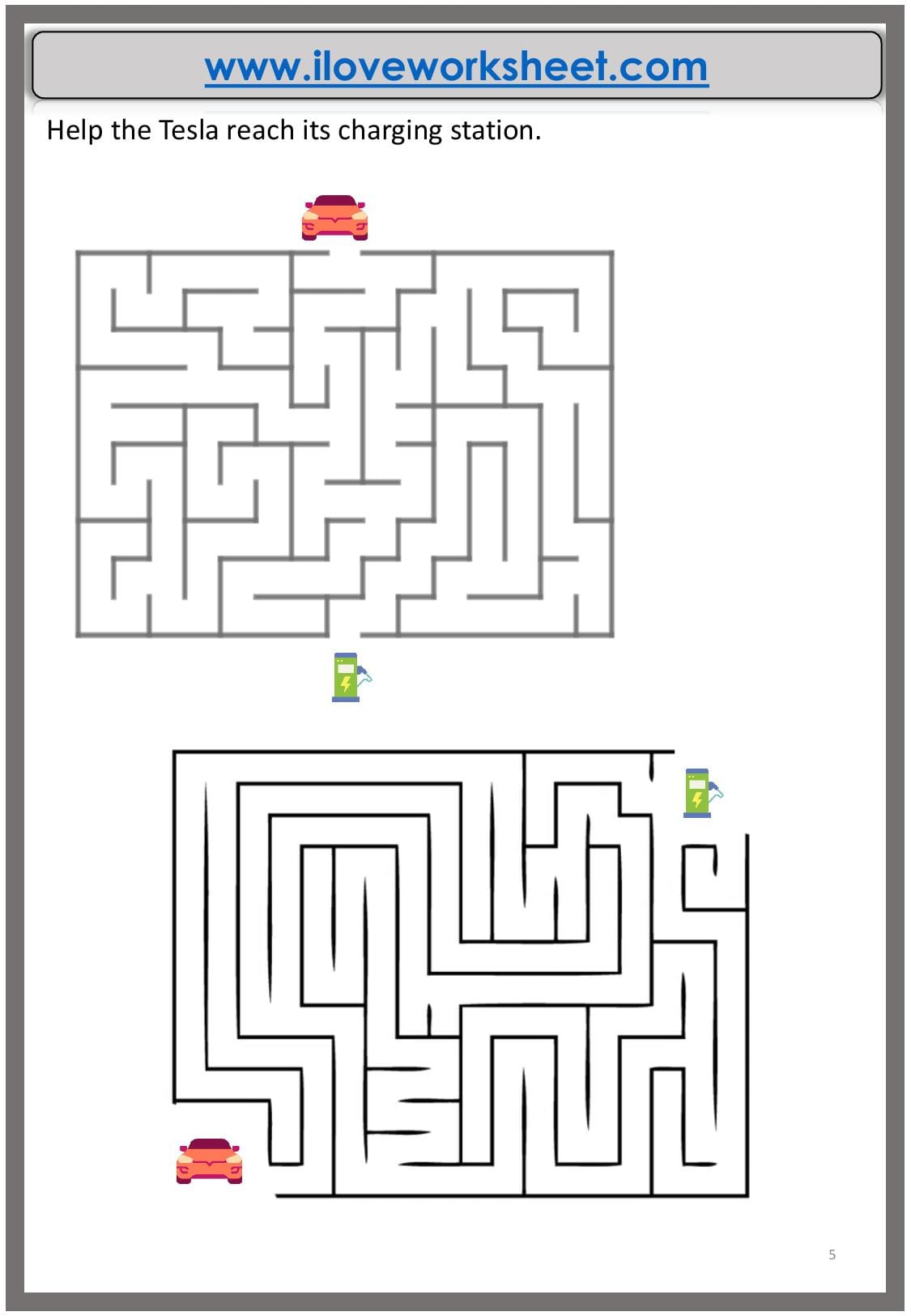
A modern twist appears in the prompt “Help the Tesla reach its charging station.” This introduces children to everyday technology in a fun, age‑appropriate way. The maze encourages them to think about movement, energy, and direction.
Each maze is visually distinct, offering variety while maintaining a consistent learning structure.
Children learn to understand distance, direction, and spatial relationships. This skill is essential for mathematics, geometry, and even sports.
Every turn in a maze requires a choice. Children learn to evaluate options, anticipate outcomes, and adjust their approach.
Mazes often include repeating shapes and pathways. Recognising these patterns helps children predict routes and avoid dead ends.
Before tracing, children often scan the maze visually. This builds planning and foresight — abilities that support academic success.
The themes in the worksheet — bees, rabbits, mummies, sports, and vehicles — are intentionally engaging. They help children stay motivated and emotionally connected to the task.
A child guiding a bee to flowers or a rabbit to carrots feels like participating in a small story. This narrative element increases engagement.
Flowers, carrots, balls, and cars are everyday items children recognise. Familiarity reduces cognitive load and increases enjoyment.
Although each maze has a different theme, the structure remains consistent. This balance helps children feel confident while still experiencing novelty.
Simple maze worksheets can be used in many settings:
Teachers often use mazes as a calm, focused activity at the start of the day.
Mazes fit perfectly into handwriting or motor skills centres.
They help children stay engaged during independent work periods.
Parents can use mazes to support concentration and pencil control in a fun, low‑pressure way.
Occupational therapists frequently use mazes to strengthen hand coordination and visual tracking.
Rushing leads to mistakes. Slow tracing improves accuracy and control.
Scanning the maze visually helps build planning skills.
Finishing a maze boosts confidence and encourages continued learning.
Children can colour characters like the bee, rabbit, or mummy after completing the maze, extending the activity.