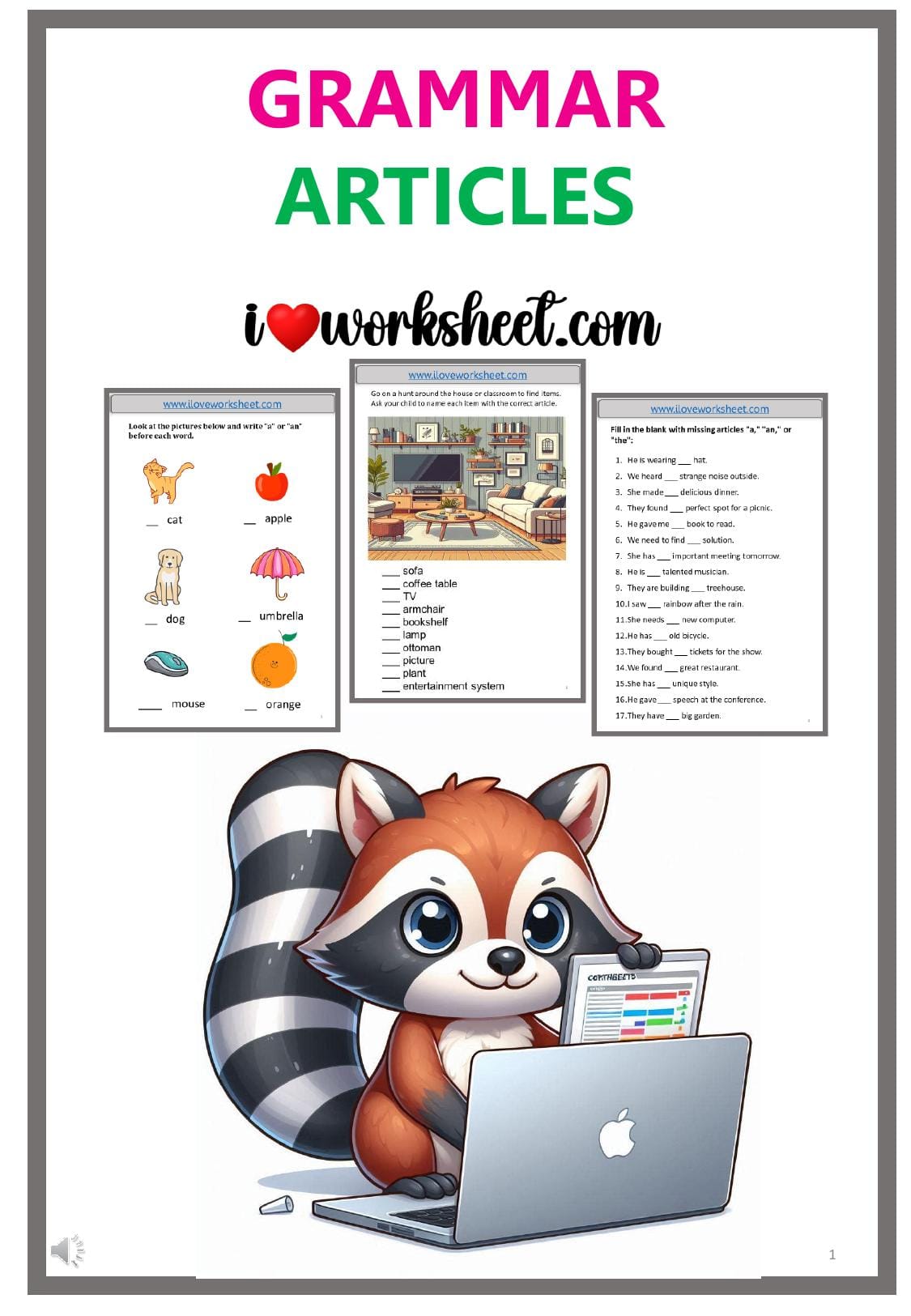
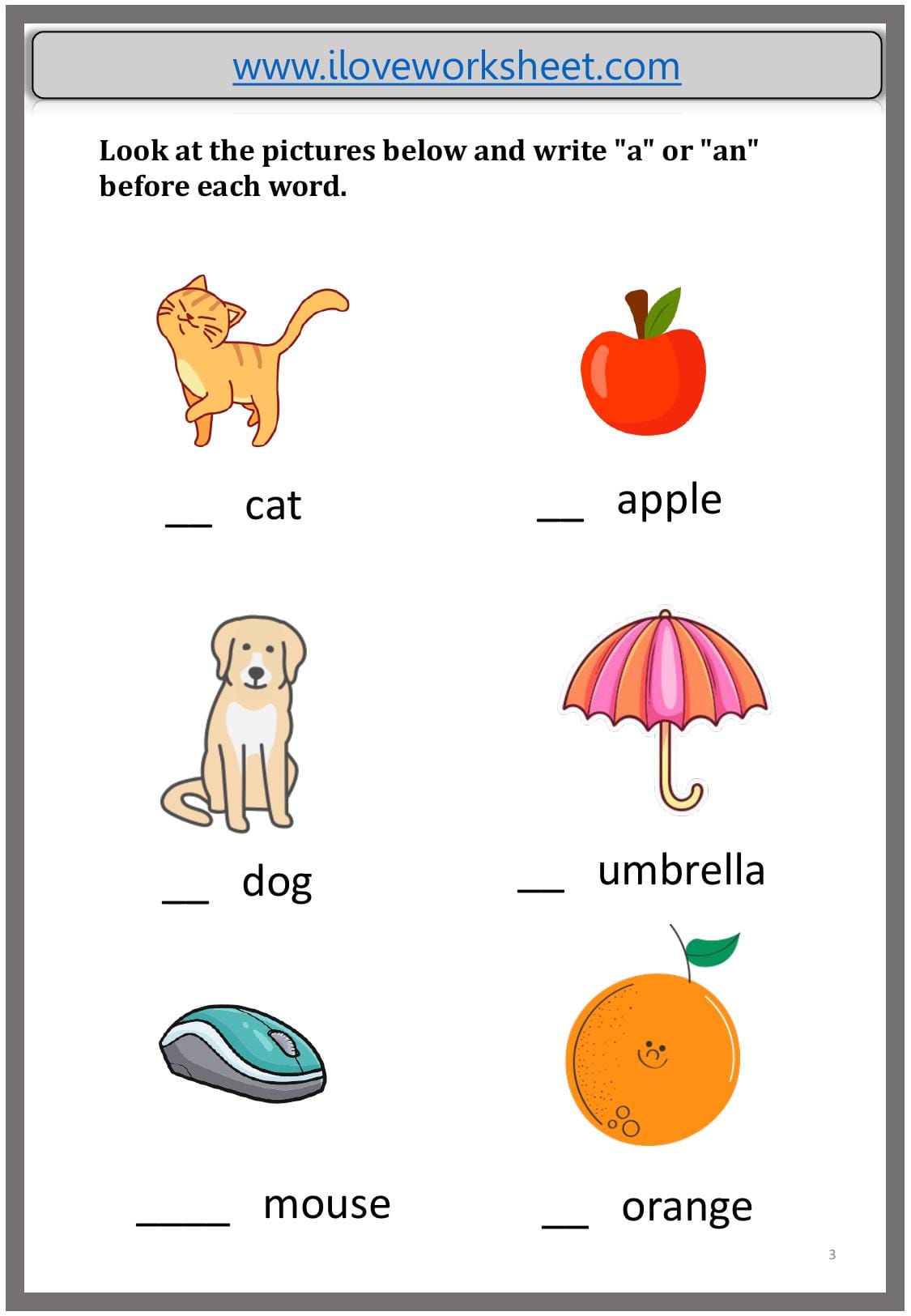
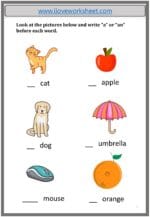

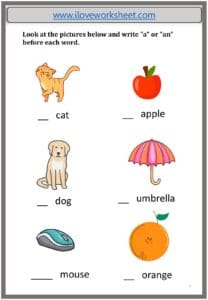
Articles are small but essential words in English. They help children speak clearly, write accurately, and understand meaning in everyday sentences. The An_A_The worksheet introduces these articles through pictures, fill‑in‑the‑blank tasks, object naming activities, and simple explanations. Children begin by looking at familiar images such as a cat, an apple, a dog, a mouse, an umbrella, and an orange. The instruction “Look at the pictures below and write ‘a’ or ‘an’ before each word” encourages them to connect grammar with visual recognition.
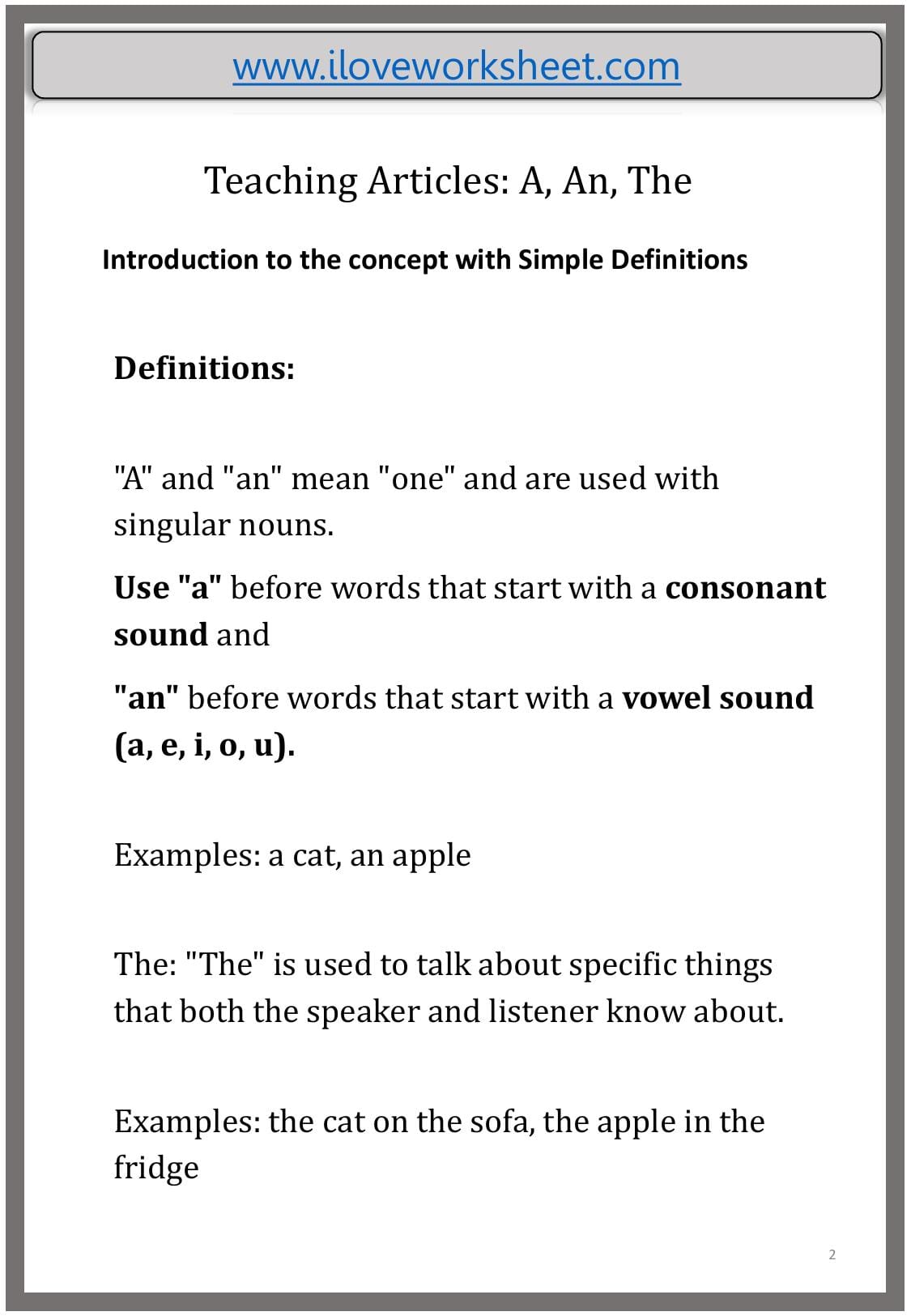
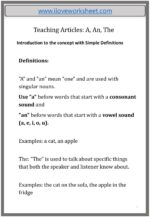
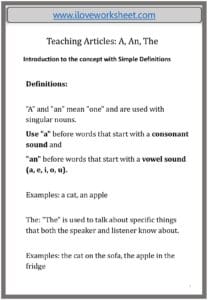
The worksheet explains that “a” and “an” both mean “one” and are used with singular nouns. Children learn that “a” appears before words beginning with a consonant sound, while “an” appears before words beginning with a vowel sound. Examples such as a cat and an apple help them understand the difference. The worksheet also introduces “the,” explaining that it refers to something specific that both the speaker and listener know. When children see examples like the cat on the sofa or the apple in the fridge, they begin to understand how “the” points to a particular object rather than any object.
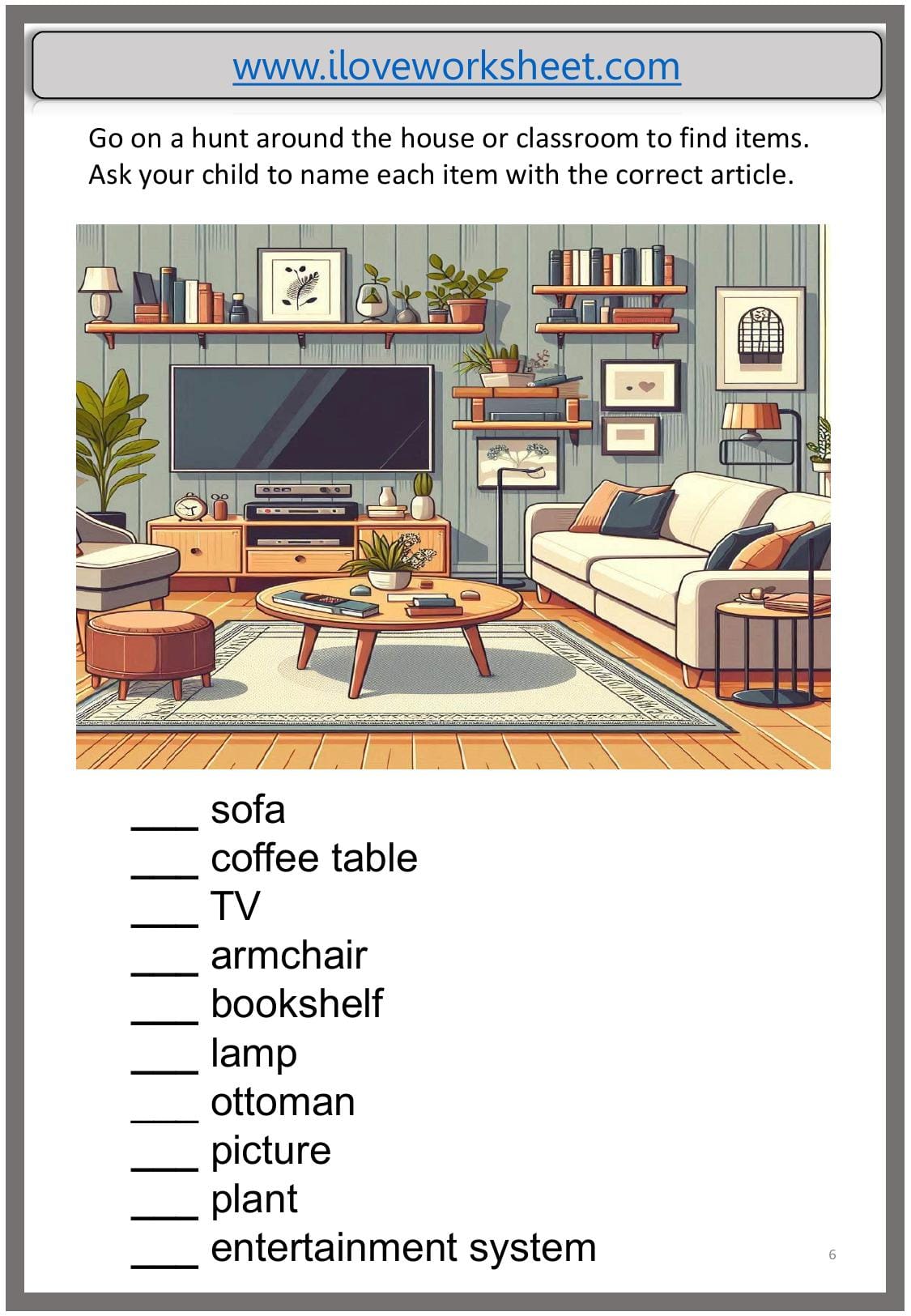
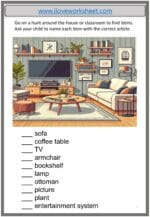
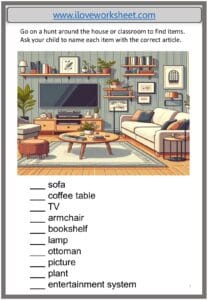
One section encourages children to explore their surroundings. The instruction invites them to go on a hunt around the house or classroom and name items using the correct article. Words such as sofa, coffee table, TV, armchair, bookshelf, lamp, ottoman, picture, plant, and entertainment system appear as examples of objects they might identify. This activity helps children understand that grammar is not abstract; it applies to the objects they see every day.
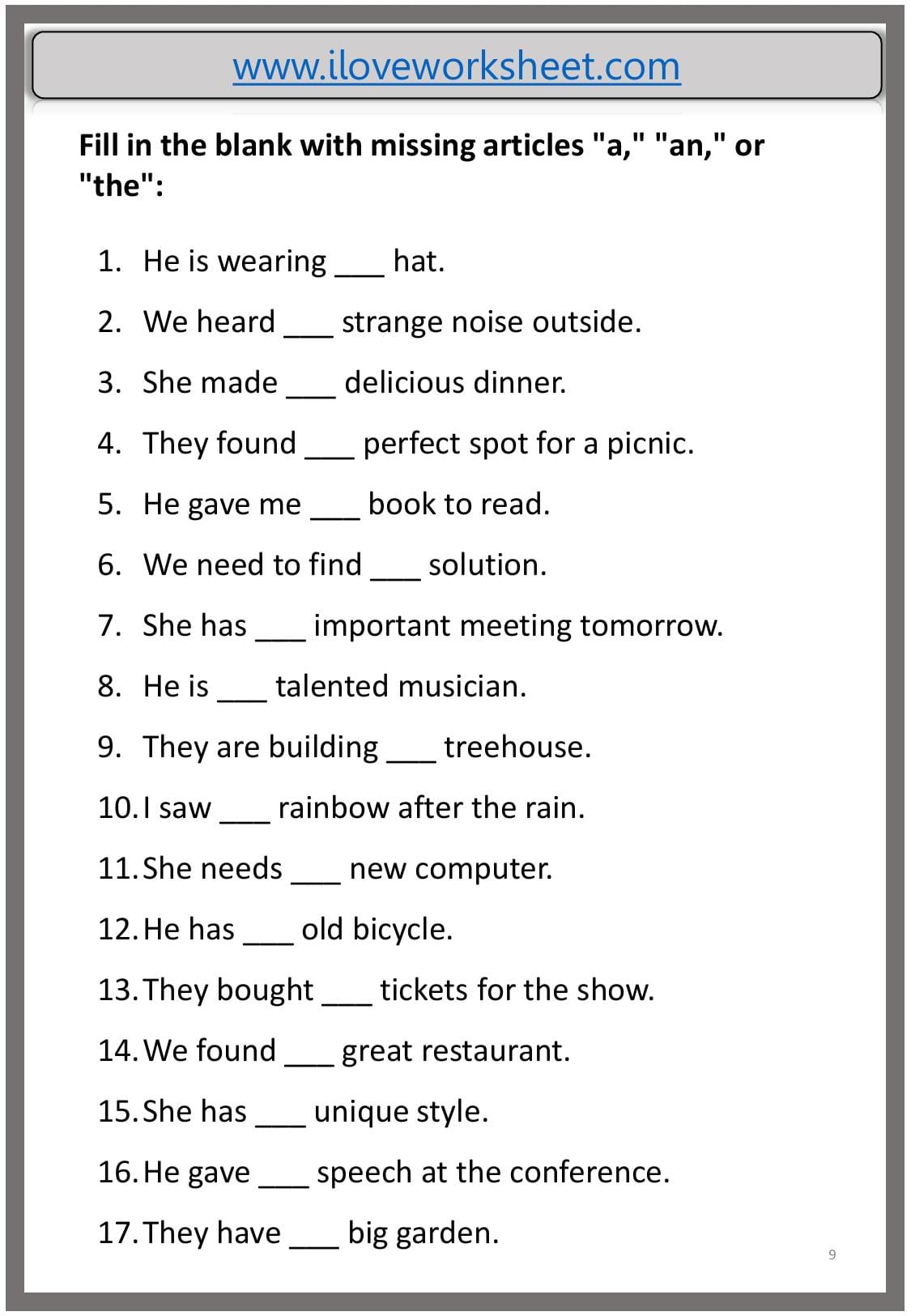
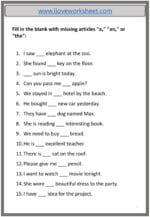
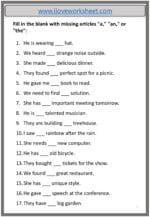
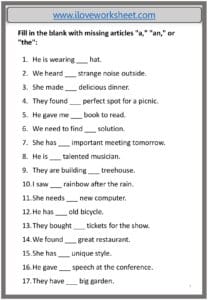
The worksheet includes several pages of fill‑in‑the‑blank sentences that require children to choose the correct article. Sentences such as “He is wearing ___ hat,” “We heard ___ strange noise outside,” and “She made ___ delicious dinner” help children apply the rules in context. As they continue, they encounter sentences involving specific references, such as “I saw ___ rainbow after the rain,” or “They bought ___ tickets for the show.” These exercises reinforce the difference between general and specific nouns.
Children also encounter sentences that include adjectives. Examples such as “She has ___ important meeting tomorrow,” “He is ___ talented musician,” and “They found ___ perfect spot for a picnic” help them understand how articles work when descriptive words appear before nouns. The worksheet shows that the choice between “a” and “an” depends on the sound of the word immediately following the article. For instance, an important meeting uses “an” because “important” begins with a vowel sound, while a unique style uses “a” because “unique” begins with a consonant sound despite starting with the letter “u.”
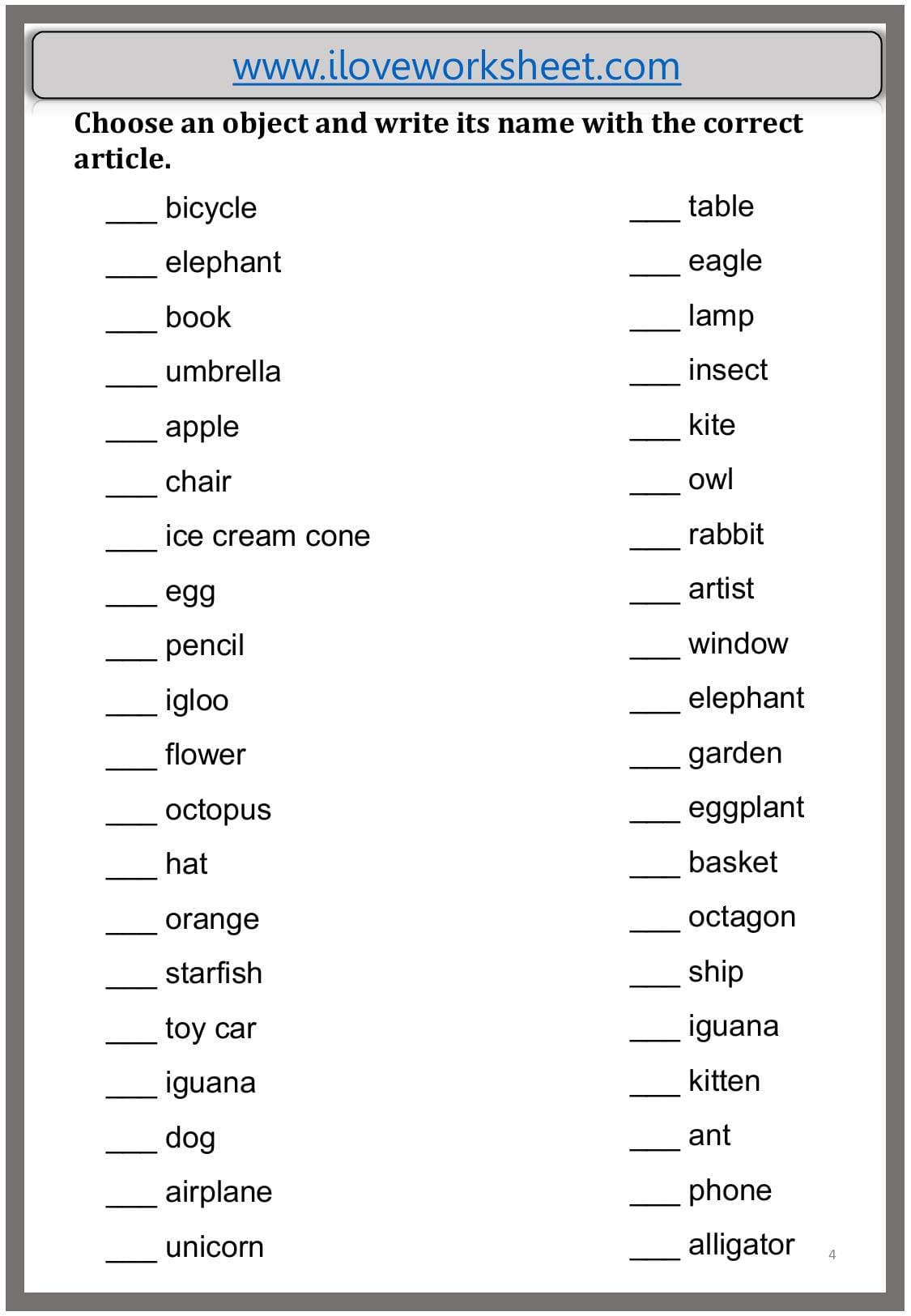
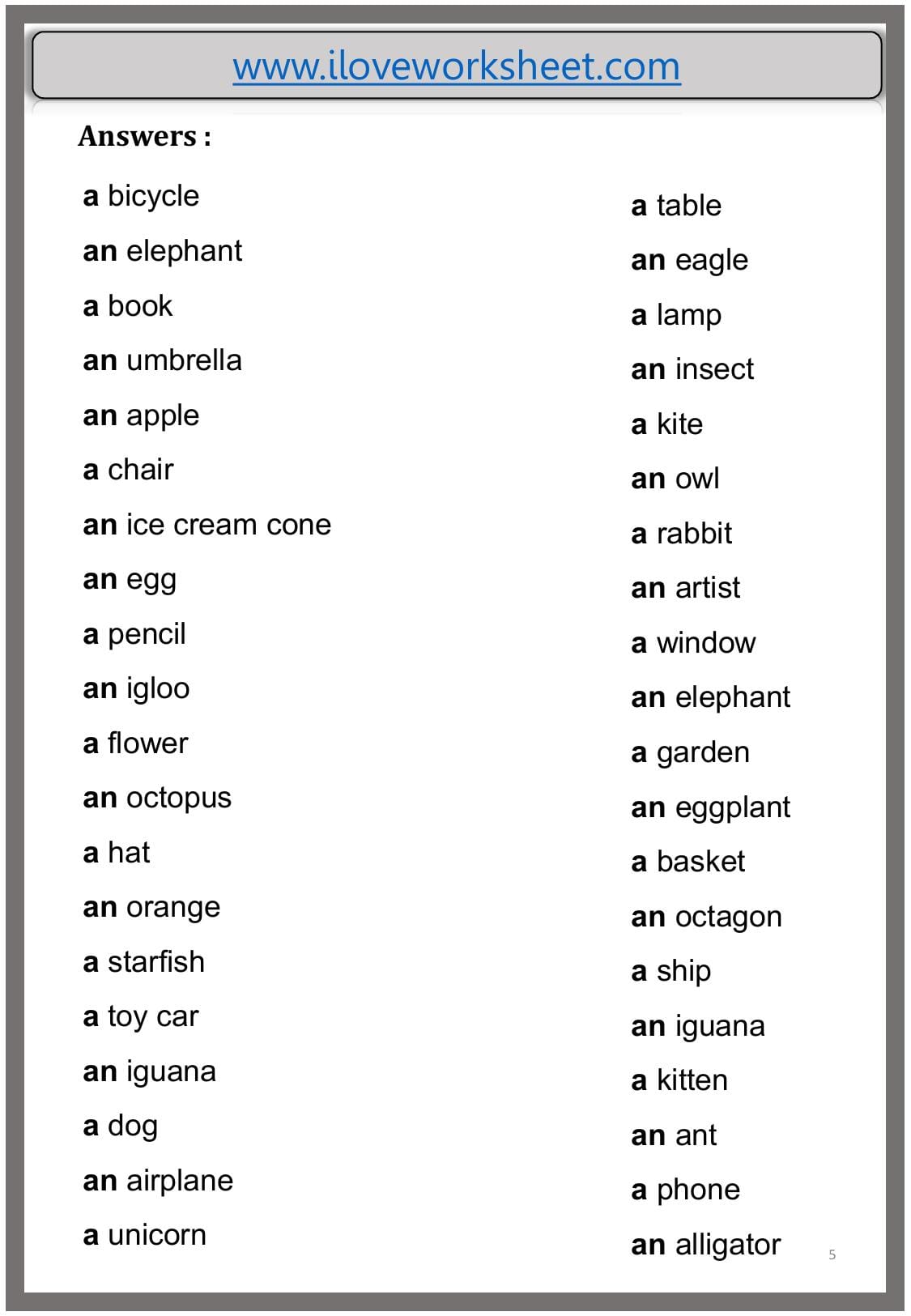
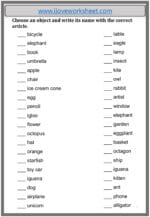
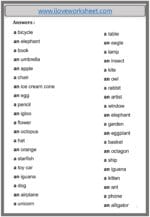
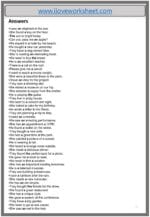
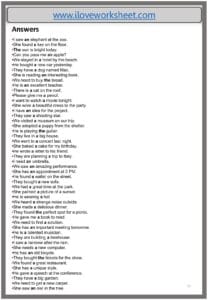
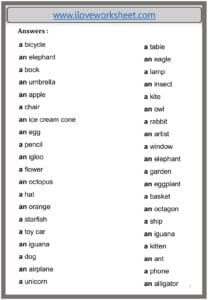
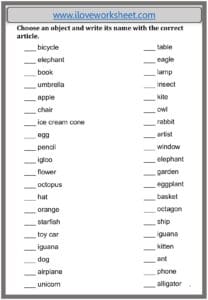
Another section invites children to choose an object from a table and write its name with the correct article. The table includes words such as bicycle, table, elephant, eagle, book, lamp, umbrella, insect, apple, kite, chair, owl, ice cream cone, rabbit, egg, artist, pencil, window, igloo, flower, garden, octopus, eggplant, hat, basket, orange, octagon, starfish, ship, toy car, iguana, kitten, dog, ant, airplane, phone, unicorn, and alligator. This activity encourages children to think about the initial sound of each word and apply the rule for “a” and “an.” The worksheet later provides the correct answers, showing examples such as a bicycle, an elephant, a book, an umbrella, an apple, a chair, an ice cream cone, an egg, a pencil, an igloo, a flower, an octopus, a hat, an orange, a starfish, a toy car, an iguana, a dog, an airplane, and a unicorn. Seeing the completed answers helps children check their understanding and correct any mistakes.
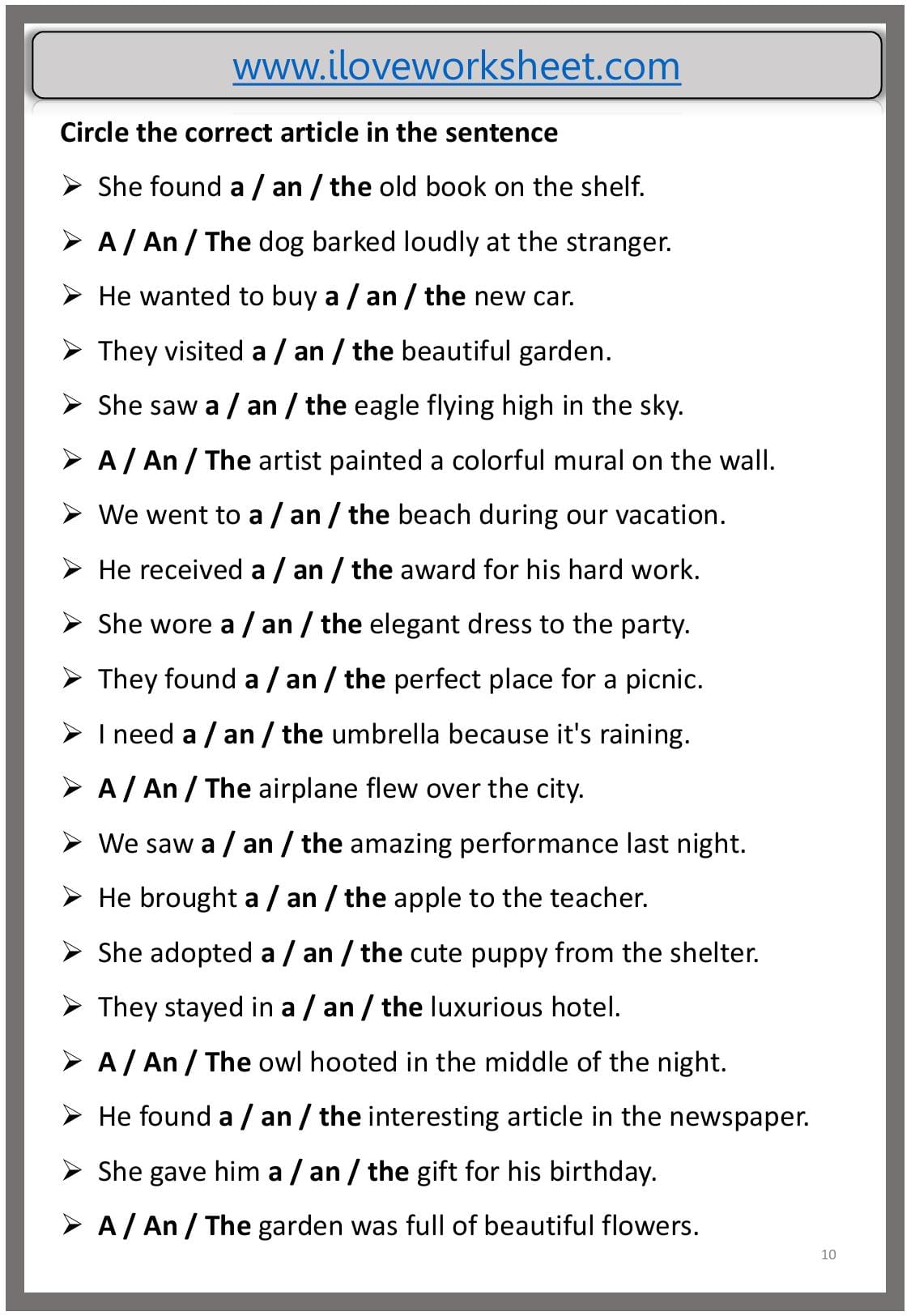
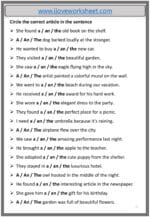
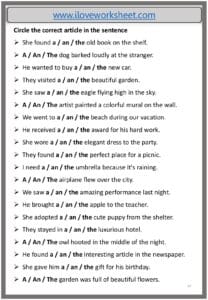
The worksheet includes a section where children must circle the correct article in a sentence. Sentences such as “She found a / an / the old book on the shelf,” “A / An / The dog barked loudly at the stranger,” and “He wanted to buy a / an / the new car” encourage children to think carefully about meaning. When they choose between “a,” “an,” and “the,” they must consider whether the noun is general, specific, or begins with a vowel sound. This type of decision‑making strengthens grammar awareness and reading comprehension.
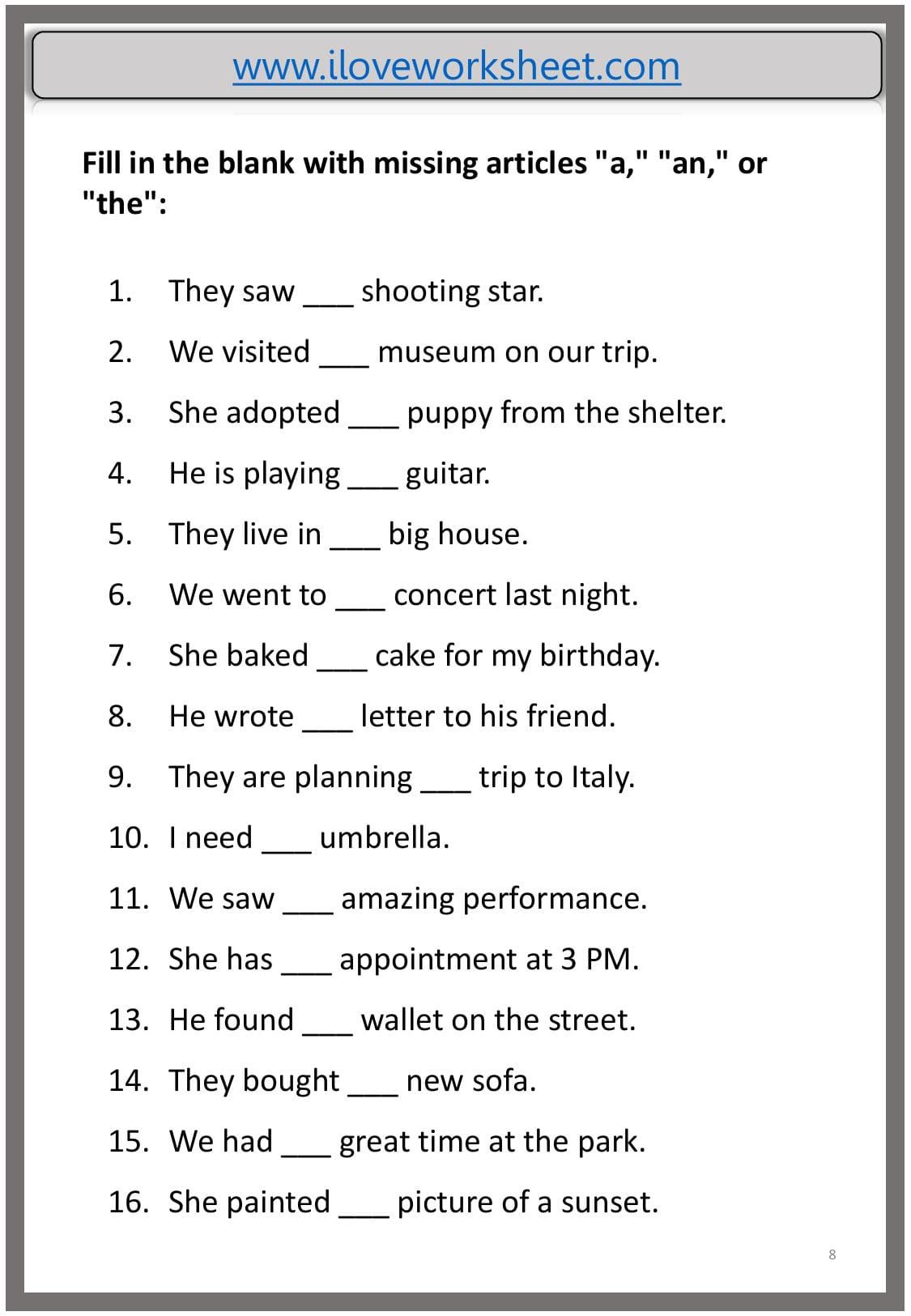
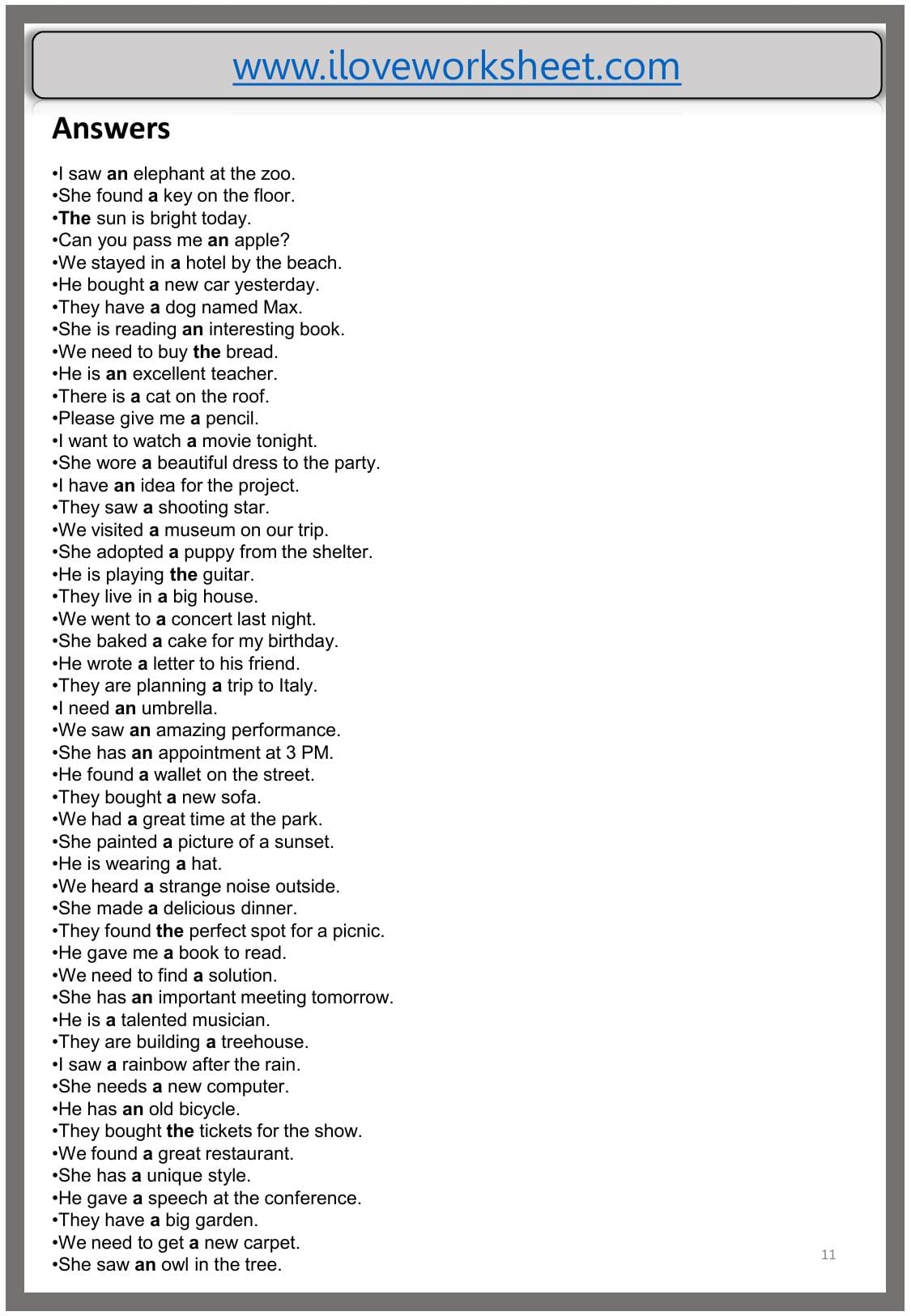
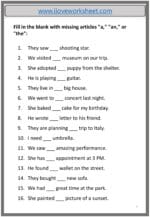
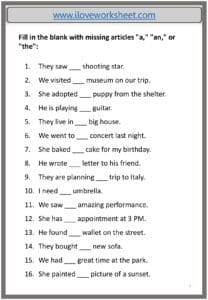
More sentences appear throughout the worksheet, offering additional practice. Children encounter examples such as “They visited ___ museum on our trip,” “She adopted ___ puppy from the shelter,” “He is playing ___ guitar,” “They live in ___ big house,” and “We went to ___ concert last night.” These sentences expose children to a wide range of vocabulary and sentence structures. They also help children understand how articles interact with nouns that describe places, animals, objects, and events.
The worksheet continues with sentences such as “She baked ___ cake for my birthday,” “He wrote ___ letter to his friend,” “They are planning ___ trip to Italy,” “I need ___ umbrella,” and “We saw ___ amazing performance.” These examples reinforce the use of “an” before vowel sounds and “a” before consonant sounds. They also show how “the” is used when referring to something specific, such as the tickets, the perfect spot, or the garden.
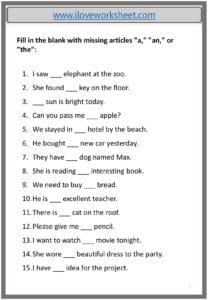
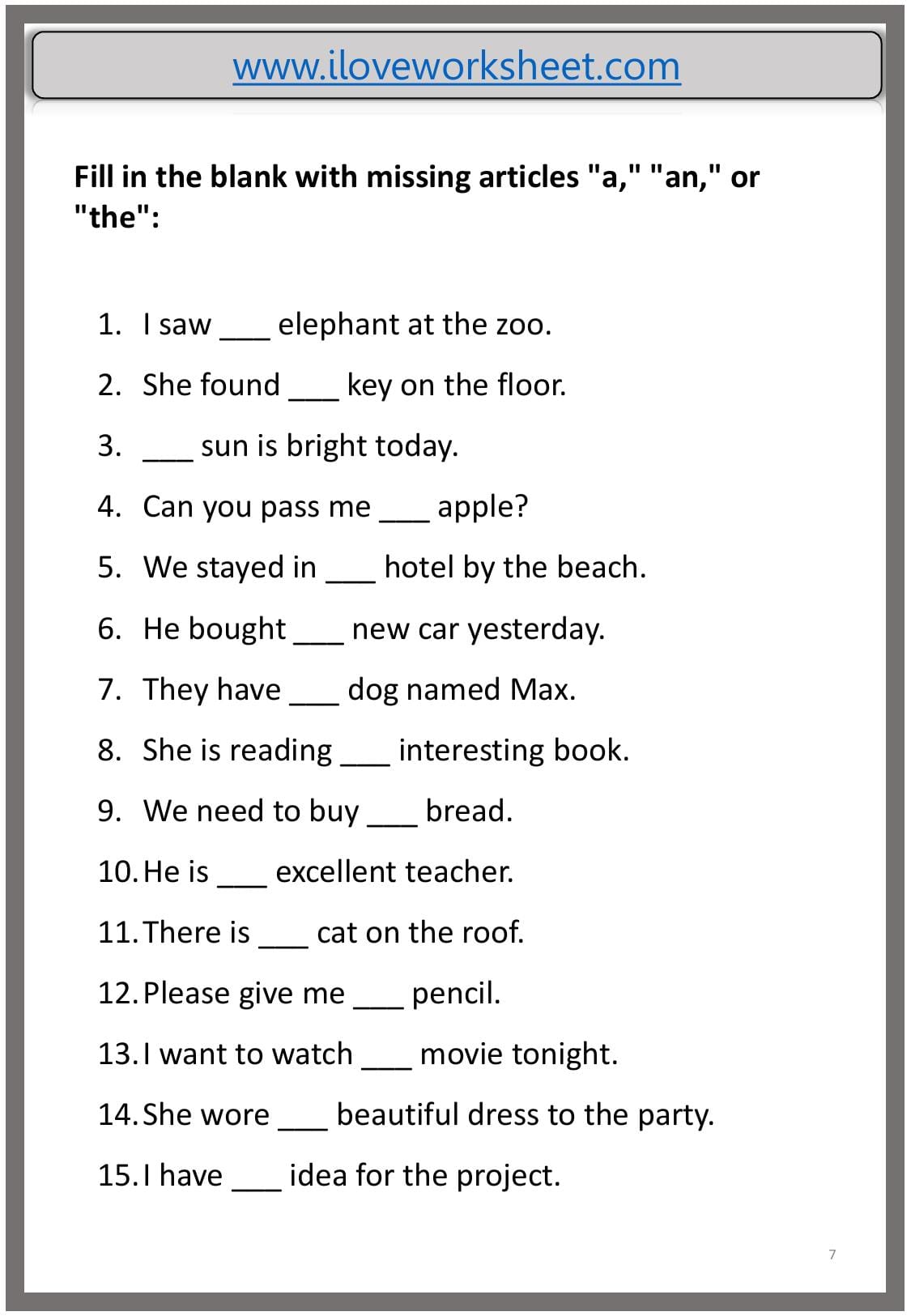
Throughout the worksheet, children see articles used with adjectives, occupations, and nouns that describe everyday objects. They encounter examples such as the sun is bright today, the cat on the roof, the movie tonight, and the luxurious hotel. These examples help children understand when to use “the” to refer to something known, familiar, or previously mentioned.
By combining pictures, object naming, fill‑in‑the‑blank sentences, article selection tasks, and real‑world vocabulary, the worksheet creates a rich learning experience. Children learn to recognise when to use “a,” “an,” and “the” through repeated exposure and meaningful practice. They see articles used with animals, foods, places, and descriptive phrases, helping them understand how articles shape meaning in everyday language.